The Larimer County Coroner’s Office has identified the man killed in the August 29 Tour de Fat crash as Joshua Robert Douglass, 33, of Denver. 9NEWS also reported that eight people total were affected by the crash — one killed, seven injured — a figure higher than the six initially transported by ambulance, as two additional people were either treated on scene or sought medical treatment on their own. The investigation into what caused the driver to move forward onto the sidewalk, including whether impairment played a role, remains ongoing. No charges have been filed as of this writing. (9NEWS, September 2, 2026; Denver7, September 3, 2026)
The original blog published August 31, 2026 continues below.
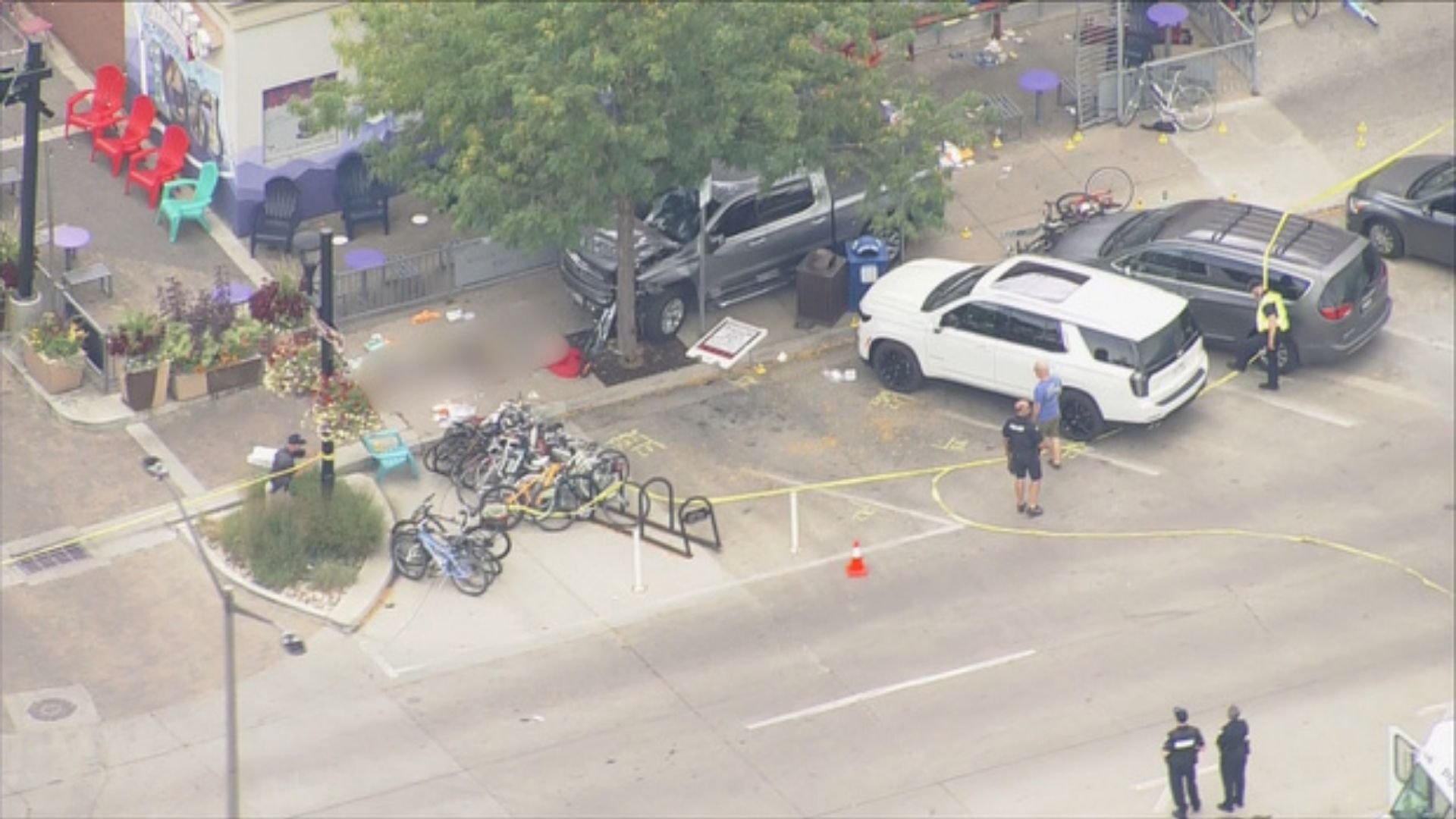
At 11:44 a.m. on Saturday, August 29, 2026, a silver Chevrolet pickup truck reversed out of a parking spot on West Mountain Avenue in Old Town Fort Collins, struck another vehicle, then drove forward onto the sidewalk. Dozens of people were on that sidewalk. The Tour de Fat bicycle parade was underway. Families, cyclists, and festival-goers had filled the block in front of Walrus Ice Cream for one of Fort Collins’ most beloved summer events.
Mountain Avenue was closed for approximately six hours while Fort Collins Police Services investigated. The identity of the person who was killed has not been released pending next-of-kin notification by the Larimer County Coroner’s Office. Investigators are still working to determine what caused the driver to move forward onto the sidewalk, and whether impairment was a factor. Fort Collins Police have stated they do not believe pedestrians were intentionally targeted.
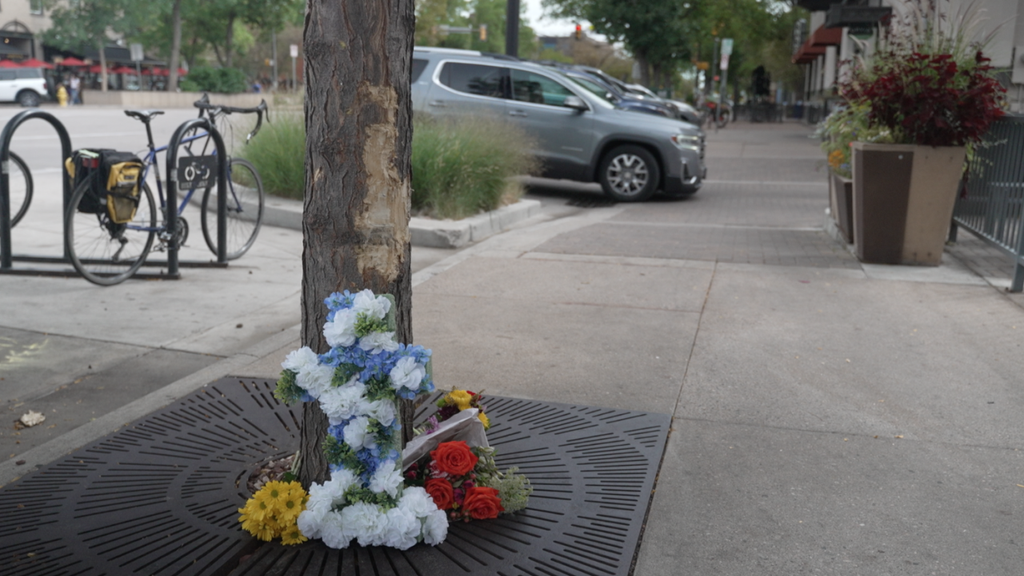
A community is grieving. A memorial is forming outside Walrus Ice Cream. And the families of those who were killed and seriously injured face legal questions they are not prepared to answer alone.
What Happened: The Sequence of Events Matters
The sequence Fort Collins Police have described is specific and legally significant. The driver first reversed out of a parking spot and struck another vehicle — a separate collision that preceded the sidewalk impact. The truck then drove forward onto the sidewalk.
That sequence raises immediate questions. Was the initial reverse collision the result of driver error, mechanical malfunction, or impairment?
What happened in the seconds between that first collision and the forward movement onto the sidewalk? Did the driver attempt to brake? Was there any attempt to steer away from the crowd?
Each of those questions is answerable through evidence that exists right now — event data from the vehicle, surveillance footage from Mountain Avenue, witness accounts from the hundreds of people present, and the physical evidence markers that SkyFOX footage showed on the street and in the handicap parking spot leading up to the crash. That evidence is most reliable today. It becomes less reliable with every day that passes.
Colorado Law: Drivers Owe Pedestrians a Clear Duty of Care
Colorado law is unambiguous on what drivers owe pedestrians. Under C.R.S. Section 42-4-703, every driver has a duty to exercise due care to avoid colliding with any pedestrian. On a closed festival street during a major public event, with pedestrians visibly filling the sidewalk, that duty is not diminished — it is heightened.
A driver who reverses into another vehicle and then drives forward onto a crowded sidewalk has, at minimum, failed to exercise reasonable care. Whether that failure is the result of simple negligence, impairment, a medical event, or some other factor will be determined by the investigation. But the baseline duty existed, and its breach caused real and devastating harm to real people.
Impairment: The Investigation Is Ongoing
Fort Collins Police have confirmed they are examining whether impairment was a factor. Toxicology results will take time. Until they are available, no conclusion should be drawn about the presence or absence of impairment.
But the impairment question matters significantly for the civil case. If the driver was impaired by alcohol or drugs at the time of the crash, the legal consequences extend well beyond standard negligence damages.
Under C.R.S. Section 18-3-205, vehicular assault — causing serious bodily injury to another while driving under the influence — is a felony in Colorado. A criminal charge or conviction for vehicular assault does not control the civil case, but it provides powerful evidence of negligence and opens the door to exemplary damages.
Under C.R.S. Section 13-21-102, exemplary damages can be awarded when a defendant’s conduct demonstrates willful and wanton disregard for the safety of others. A driver who operates a vehicle while impaired in the middle of a crowded public festival — regardless of whether intentional targeting is alleged — may present exactly the pattern that supports such a claim.
Three Seriously Injured Victims: What Their Claims Look Like
Three people are currently hospitalized with serious injuries in stable condition. The nature of those injuries has not been described in detail by police, but pedestrians struck by a vehicle on a sidewalk can sustain traumatic brain injuries, spinal injuries, multiple fractures, internal trauma, and severe soft tissue damage — injuries with consequences that extend far beyond the initial hospitalization.
Under C.R.S. Section 13-21-111, Colorado’s comparative negligence framework, the pedestrians who were on the sidewalk at a public festival bear no discernible fault for what happened. They were exactly where they were legally and reasonably entitled to be. Their claims against the driver are not subject to reduction on fault grounds.
Recoverable damages for the seriously injured victims may include all medical costs past and future, lost wages and lost earning capacity, pain and suffering, and long-term consequences including permanent disability or disfigurement.
Source: Denver7
Wrongful Death Rights for the Family of the Person Who Was Killed
For the family of the person who died Saturday, Colorado’s wrongful death statute, C.R.S. Section 13-21-202, provides the right to seek compensation when a death results from the wrongful act or neglect of another. That right does not depend on criminal charges being filed. The civil standard of proof — more likely than not — is separate from and lower than the criminal standard.
Under C.R.S. Section 13-21-203, recoverable damages include medical and emergency response costs before death, funeral and burial expenses, lost income and financial support, and noneconomic damages including grief, loss of companionship, pain and suffering, and emotional stress experienced by surviving family members.
The statute of limitations for a wrongful death claim in Colorado is two years from the date of death under C.R.S. Section 13-80-102. Two years is not as long as it feels when a family is in the immediate aftermath of loss. The investigation, the evidence gathering, the insurance picture, and the legal preparation all take time to do right.
The Driver’s Insurance: What It May and May Not Cover
Standard auto insurance policies cover negligent crashes. If impairment is confirmed, the policy’s exclusions for intentional acts do not apply — driving drunk is not considered intentional in the way that deliberately targeting someone is. The driver’s liability coverage is the primary source of compensation for all injured parties and the family of the deceased.
With six people affected — five injured and one killed — the driver’s policy limits will be stretched across multiple claims. When limits are insufficient, each injured party and each family should examine their own uninsured and underinsured motorist coverage, as well as whether any resident relative coverage extends to them under a family member’s policy.
Evidence That Is Available Right Now
Old Town Fort Collins on Tour de Fat Saturday was one of the most well-documented public spaces in northern Colorado at that moment. The evidence available includes:
• Surveillance and security camera footage from businesses along the 100 block of West Mountain Avenue, including Walrus Ice Cream and neighboring establishments
• Personal cell phone video and photographs from the hundreds of festival attendees who were present
• Police body camera footage — patrol officers were already in the area providing security for Tour de Fat when the crash occurred and responded immediately
• Event documentation from Tour de Fat organizers, including any camera coverage of the parade route
• Event data recorder information from the Chevrolet pickup truck, capturing speed, braking, steering, and throttle in the moments before and during the crash
• Physical evidence documented on the street — CBS footage showed evidence markers on Mountain Avenue and in the handicap parking spot leading to the tree
• The condition of the other vehicle struck during the initial reverse collision
• Toxicology results from the driver, which will take several weeks to process
Fort Collins Police Corporal Brandon Barnes told Denver7 that detectives are still actively calling witnesses for information. Anyone who witnessed the crash and has not already spoken to officers is asked to contact Officer David Kaes or Officer Kevin Alexander at 970-416-6540.
A Note on This Ongoing Investigation
Fort Collins Police have confirmed the crash did not appear intentional. The cause of the forward movement onto the sidewalk has not been determined. Impairment has not been confirmed or ruled out. The driver’s identity has not been released.
What is confirmed is that a person died and five others were seriously or moderately injured on a Fort Collins sidewalk on a Saturday morning while celebrating a community event. Every one of those people and families deserves a thorough understanding of what happened and what their legal options are.
If You Were Injured in This Crash, or if You Lost Someone
If you were injured in the August 29 crash on Mountain Avenue in Fort Collins, or if you lost someone, we are available for a confidential conversation at no charge and no obligation.
Jerry Bowman, J.D., M.A., Owner and managing attorney of Bowman Law LLC, takes his responsibility to the legal profession seriously and dedicates his time and effort to providing quality and competent legal representation to clients in Denver and throughout all of Colorado. He holds an MA in Political Science from Wayne State University and earned his law degree in two and a half years from Michigan State University College of Law.
At 8:15 p.m. on Friday, September 26, 2026, Aurora Police responded to a vehicle versus pedestrian crash near the intersection of South Peoria Street and East Tennessee Avenue. A 35-year-old ...
Around 9:15 p.m. on Monday, September 1, 2026, two men were crossing southbound Highway 287 on foot near West 66th Avenue in the Berkley area of Adams County when a ...
Source: AP Images Around 5 a.m. on Saturday, July 26, 2026, a vehicle stalled on Interstate 25 near the Auraria Parkway interchange in Denver. The driver or a passenger got ...


 Return to All News & Resources