Return to All News & Resources

100 mph Through a Red Light in Greeley: Who Is Liable?
Around 9:40 p.m. on Friday, October 9, 2026, a motorcyclist traveling westbound on West 10th Street in Greeley was moving at more than 100 miles per hour when they ran ...
Keep Reading



https://youtu.be/CBf8M811YxU?si=llngGCTqaqF5rfPw
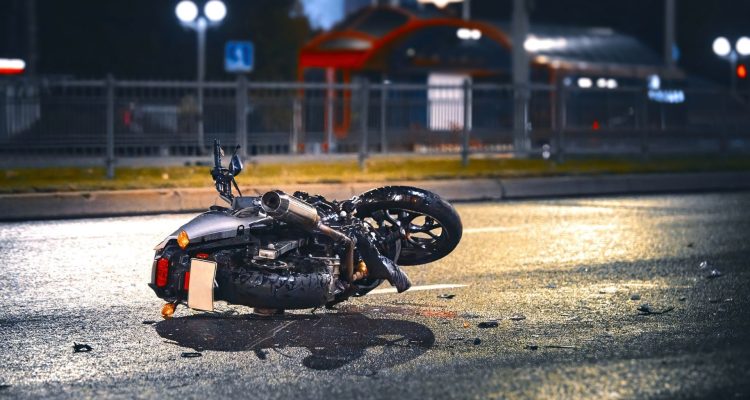
On the morning of June 1, 2026, a motorcyclist riding westbound on Fillmore Street in Colorado Springs never made it to wherever he was going. A vehicle turning left into a business parking lot cut directly across his path. The collision was fatal. The motorcyclist was pronounced dead at the scene. The driver of the turning vehicle reported no injuries and was released. (KKTV, June 1, 2026)
That is a devastating and familiar story. And it raises a question that the family of every motorcyclist killed in this type of crash eventually asks: who is responsible, and what can be done about it?
The answer, in most cases, is clearer than people expect.
Motorcycle crashes do not all look the same, but a disproportionate number of fatal ones share a common thread: a driver turning left across the path of an oncoming motorcycle. It is one of the most recognized and deadly collision patterns in highway safety, and Colorado’s roads are no exception.
The physics of these crashes work against motorcyclists in every way. The turning driver often fails to see the motorcycle, underestimates its speed, or simply does not look. By the time the driver commits to the turn, there is no time for either party to react. The motorcycle is smaller, lighter, and offers none of the structural protection of a car. The rider absorbs the impact directly.
What makes these crashes especially painful from a legal standpoint is how avoidable they are. There is almost never a mechanical malfunction, a road defect, or some freak act of nature involved. There is a driver who turned when it was not safe to do so.
Under Colorado law, a driver making a left turn has a legal obligation to yield to oncoming traffic. That duty is codified in Colorado Revised Statutes Section 42-4-702, which requires the turning driver to yield the right-of-way to vehicles approaching from the opposite direction and to ensure the turn can be completed safely before proceeding.
When a driver turns left in front of an oncoming motorcyclist and a crash results, the presumption — both legally and practically — is that the turning driver failed that duty. The burden shifts to the at-fault driver to explain why the turn was made and whether any factors contributed to the collision.
In a case like the Fillmore Street crash, investigators will examine:
Colorado uses a modified comparative negligence system under C.R.S. Section 13-21-111, which means that if both parties share some fault, damages are reduced proportionally. However, the injured party — or their estate, in a wrongful death claim — can still recover as long as their share of fault does not exceed 50 percent.
In most straightforward left-turn-across-path crashes, the motorcyclist is not found to bear significant fault. The driver who turned is.
The hours and days immediately following a fatal motorcycle crash are critical. Evidence that can define a case — or destroy it — begins to disappear almost immediately.
Surveillance footage is often the most valuable and the most fragile. Businesses along corridors like Fillmore Street routinely overwrite their camera systems within 24 to 72 hours. Without a formal preservation demand, that footage is gone. Permanently.
The crash scene itself changes quickly. Skid marks fade. Debris is cleared. Weather affects physical evidence. The physical condition of the intersection — lighting, signage, sight lines, road markings — may be altered in subsequent weeks for entirely unrelated reasons. Documenting the scene as it existed at the time of the crash matters.
Vehicle evidence is equally time-sensitive. Both motorcycles and passenger vehicles often contain electronic event data recorders that capture speed, braking behavior, steering input, and throttle position in the moments before a collision. That data exists. But accessing it requires proper legal steps — and if the vehicle is repaired, sold, or scrapped before a preservation demand is issued, that data may be lost entirely.
Witness memories fade. People who saw exactly what happened at an intersection move on with their lives. Statements taken close in time to the crash are far more reliable than recollections gathered months later, when a lawsuit is underway.
The first days after a serious crash often determine what evidence survives.
Motorcyclists face a bias problem that extends well beyond the road. In negotiations and courtrooms alike, there is a persistent cultural assumption that riders take risks — that somehow being on a motorcycle implies a tolerance for danger, and perhaps some degree of fault.
Insurance adjusters know this. They use it strategically. In the early stages of a claim, adjusters may contact a surviving family member before legal counsel is involved, gather statements, and begin building a narrative that assigns some portion of blame to the rider. Statements made without counsel — however innocent they seem — can be used to complicate or reduce a claim.
A thorough investigation is the answer to that bias. When the evidence is preserved, the scene is documented, and the facts are fully understood, the narrative of the negligent left-turning driver is clear and defensible. The goal of a serious investigation is not just to establish what happened — it is to tell the story of what happened in a way that cannot be dismissed.
When a motorcyclist is killed, the legal process does not end with the police report. Colorado’s wrongful death statute, C.R.S. Section 13-21-202, provides surviving family members with the right to pursue compensation for the loss of their loved one. Learn more about how wrongful death claims work in Colorado on our practice area page.
In a wrongful death claim, recoverable damages may include:
Colorado law imposes a two-year statute of limitations on wrongful death claims, running from the date of death. While that may feel like ample time, the reality of a serious investigation — gathering evidence, identifying all responsible parties, understanding insurance coverage, and building a case — means that time moves faster than grieving families expect.
Early involvement by an attorney is not about rushing a family through grief. It is about ensuring that the window to preserve critical evidence and protect legal rights stays open.
Out of respect for the family of the motorcyclist killed on June 1, 2026, we are not speculating about the specific legal merits of that case. We do not know all the facts. The initial report from KKTV indicates investigators are still working to piece together a complete picture of what occurred.
What we do know is that the pattern — a vehicle turning left in front of an oncoming motorcycle — is one of the most thoroughly studied and documented collision types in highway safety research. And what the evidence shows, consistently, is that these crashes are preventable, and that liability most often rests with the driver who failed to yield.
The family of a motorcyclist killed in this way deserves a thorough investigation, not a summary dismissal. They deserve to understand exactly what happened, who is responsible, and what options exist.
Losing a family member in a crash is one of the most disorienting and painful experiences imaginable. In the aftermath, insurance companies will begin their own investigations, often within hours. Their goal is to understand the claim and manage their exposure. Your goal — and the goal of an attorney who represents you — is something different: truth, accountability, and fair compensation for everything that has been taken from your family.
At Bowman Law, we handle serious motorcycle accident and wrongful death cases throughout Colorado. We investigate early, preserve evidence, and take the time to understand the full human impact of what happened — not just the legal paperwork.
If you have questions about a recent motorcycle crash in Colorado Springs, Denver, or anywhere along the Front Range, we are available for a confidential conversation. Contact us here or give us a call at 720-863-6904– there is no charge for an initial consultation, and there is no obligation.

Owner and Managing Attorney
Jerry Bowman, J.D., M.A., Owner and managing attorney of Bowman Law LLC, takes his responsibility to the legal profession seriously and dedicates his time and effort to providing quality and competent legal representation to clients in Denver and throughout all of Colorado. He holds an MA in Political Science from Wayne State University and earned his law degree in two and a half years from Michigan State University College of Law.
Around 9:40 p.m. on Friday, October 9, 2026, a motorcyclist traveling westbound on West 10th Street in Greeley was moving at more than 100 miles per hour when they ran ...
Keep Reading
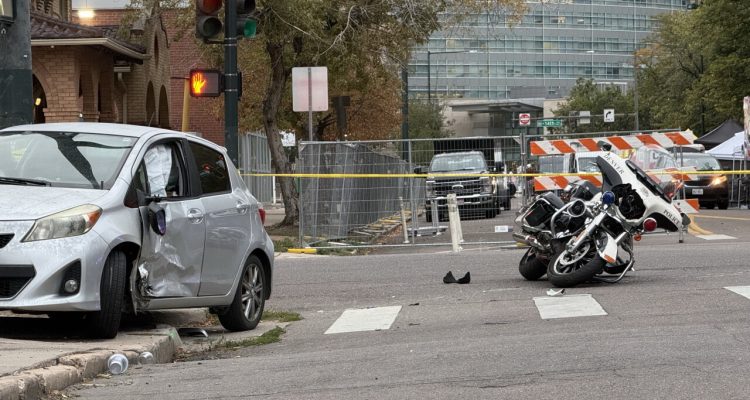
Source: KMGH Thursday evening, September 25, 2026, a Denver Police Department motorcycle officer was responding to a call with lights and sirens activated when another vehicle collided with the officer ...
Keep Reading
Just before 10:30 p.m. on Friday, August 22, 2026, a motorcyclist was killed in a single-vehicle crash on the eastbound Highway 58 flyover to Interstate 70 in Wheat Ridge. Officers ...
Keep Reading