Return to All News & Resources

100 mph Through a Red Light in Greeley: Who Is Liable?
Around 9:40 p.m. on Friday, October 9, 2026, a motorcyclist traveling westbound on West 10th Street in Greeley was moving at more than 100 miles per hour when they ran ...
Keep Reading



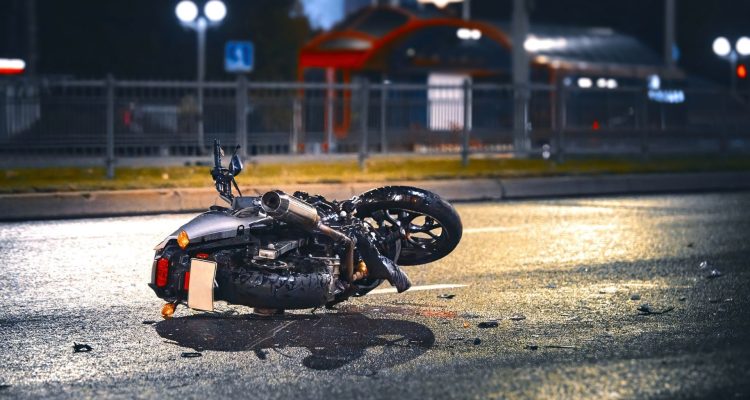
Just after 6 a.m. on Wednesday, July 8, 2026, a motorcyclist was killed at the intersection of northbound Santa Fe Drive and westbound Highway 285 in Sheridan. The rider rear-ended an Xfinity work truck at the junction. The Sheridan Police Department closed the intersection for more than three hours while officers and investigators worked the scene. (Denver7, July 8, 2026; FOX31/KDVR, July 8, 2026)
No further details have been released about the identity of the motorcyclist, the circumstances leading up to the crash, or the positioning of the work truck at the time of impact. The investigation is ongoing.
A rear-end crash involving a motorcycle and a commercial work vehicle raises liability questions that go well beyond the initial collision report. Understanding who may be responsible depends on facts that are still being gathered — and on evidence that begins to disappear within hours.
In most rear-end crashes between passenger vehicles, Colorado law presumes the following driver is at fault. But motorcycle accident cases involving work vehicles and commercial trucks are more nuanced. The question is not just who hit whom — it is whether the vehicle that was struck was positioned lawfully, whether it was visible, and whether proper warnings were in place.
When a work truck is stopped or operating near or in a travel lane, the driver and the company deploying that vehicle carry legal obligations. Those obligations include ensuring the truck is properly positioned off the roadway where possible, that hazard lights or warning devices are in use, and that the vehicle does not create an unreasonable hazard for approaching traffic.
Whether the Xfinity work truck was positioned in compliance with those obligations at the time of the crash is one of the central questions investigators will examine. If the truck was stopped in a lane, partially blocking a lane, or positioned in a way that reduced reaction time for approaching motorcyclists, that creates potential liability on the part of the truck driver and the company.
Colorado’s work zone and highway maintenance statutes set specific requirements for vehicles operating in or near traffic. Under C.R.S. Section 42-4-614, drivers and companies working in highway zones carry specific obligations around warning devices, signage, and vehicle positioning. Violations of those requirements can establish negligence in a civil claim.
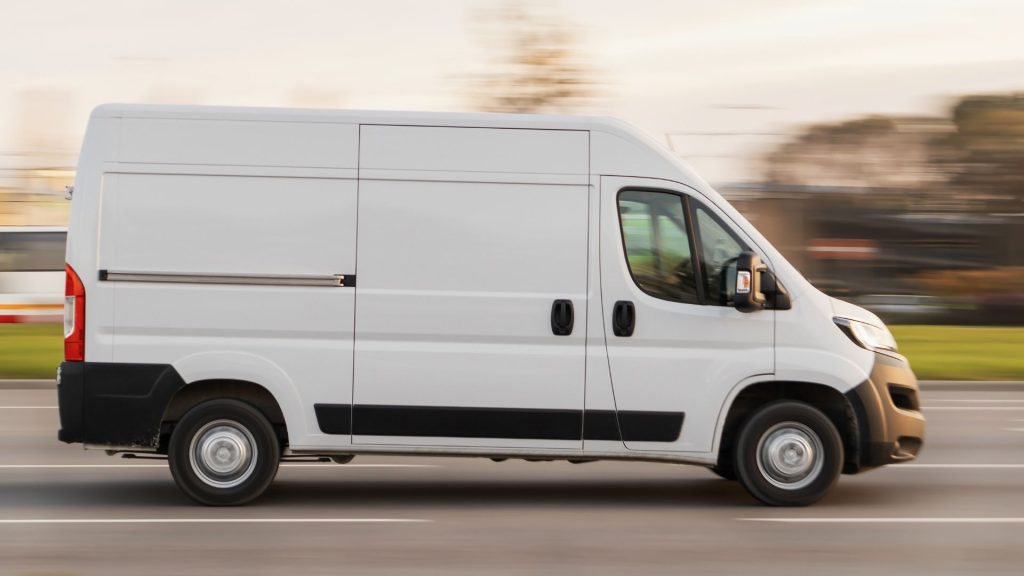
The Xfinity work truck at this intersection was not a private vehicle — it was a commercial vehicle deployed by a company to perform work in or near a public roadway. That distinction matters.
When an employee operating a company vehicle causes or contributes to a crash in the course of their employment, the employer can be held liable under a legal doctrine called respondeat superior. The company is responsible for how its drivers operate its vehicles on the job.
Beyond that, the company itself may have independent liability if it failed to properly train its driver on safe work zone practices, failed to equip the vehicle with required warning devices, dispatched the vehicle to a location without adequate safety planning, or failed to follow applicable regulations for utility vehicles operating near traffic.
Those are not hypothetical questions. They are exactly what a civil investigation into this crash would pursue — starting with the company’s safety records, driver training documentation, and the specific protocols in place for this type of roadside work.
In the early stages of a crash investigation like this one, evidence comes from multiple directions at once. Key areas include:
Investigators will also examine whether alcohol or drugs were a contributing factor for any party involved. While there is no indication of impairment in initial reporting, toxicology is standard in any fatal crash investigation.
When a motorcyclist is killed, surviving family members have rights under Colorado’s wrongful death statute, C.R.S. Section 13-21-202. A wrongful death claim allows the estate and surviving family to seek compensation for the full range of losses caused by the death — including medical and emergency costs before death, funeral and burial expenses, the income and financial support the rider would have provided, and the grief, loss of companionship, and emotional suffering the family now carries.
Colorado uses a modified comparative negligence framework under C.R.S. Section 13-21-111. Even if the rider bears some degree of fault for the rear-end collision, the family may still recover if that fault does not exceed 50 percent. How fault is ultimately apportioned between the motorcyclist and the truck — and its company — depends entirely on the facts the investigation uncovers.
The statute of limitations for a wrongful death claim in Colorado is two years from the date of death under C.R.S. Section 13-80-102. That window is firm. And the evidence needed to build a strong case is most available now, in the days immediately following the crash.
A crash involving a private motorcycle and a private vehicle is one legal situation. A crash involving a private motorcycle and a commercial work vehicle deployed by a major corporation is another.
Companies like Xfinity carry significant insurance coverage, employ legal teams, and begin their own investigation immediately after a crash involving one of their vehicles. Their goal is to understand the claim and protect their exposure. The family of a rider killed in that crash deserves an investigation that is equally thorough — and that begins before critical evidence is gone.
Work zone and utility vehicle crashes are a specific area of personal injury law that requires understanding both standard negligence principles and the regulatory framework governing commercial vehicles operating in public rights-of-way. The company’s compliance — or lack of it — with those regulations becomes central evidence.
The Sheridan Police Department has confirmed the crash and its fatality but has not released the identity of the rider or further details about the circumstances. This blog does not speculate about the specific fault in this crash. The investigation is active and the full picture of what occurred at Santa Fe Drive and Highway 285 on the morning of July 8, 2026 is still being assembled.
What we can say is that crashes involving motorcyclists and commercial work vehicles warrant thorough investigation that goes beyond the police report — into the company, the vehicle, the work authorization, and the safety practices in place at the time.
Bowman Law handles serious motorcycle accident cases and wrongful death claims throughout Denver and the surrounding metro area, including crashes involving commercial vehicles and work zone situations. We investigate early, preserve evidence, and take cases against companies — not just individual drivers.
If your family was affected by this crash or a similar motorcycle incident involving a work vehicle, the time to act is now. Evidence from the scene, from the company’s records, and from any available cameras fades quickly.
Call us at 720-863-6904 or visit coloradopersonalinjuryhelp.com for a free and confidential consultation.

Owner and Managing Attorney
Jerry Bowman, J.D., M.A., Owner and managing attorney of Bowman Law LLC, takes his responsibility to the legal profession seriously and dedicates his time and effort to providing quality and competent legal representation to clients in Denver and throughout all of Colorado. He holds an MA in Political Science from Wayne State University and earned his law degree in two and a half years from Michigan State University College of Law.
Around 9:40 p.m. on Friday, October 9, 2026, a motorcyclist traveling westbound on West 10th Street in Greeley was moving at more than 100 miles per hour when they ran ...
Keep Reading
Source: KMGH Thursday evening, September 25, 2026, a Denver Police Department motorcycle officer was responding to a call with lights and sirens activated when another vehicle collided with the officer ...
Keep Reading
Just before 10:30 p.m. on Friday, August 22, 2026, a motorcyclist was killed in a single-vehicle crash on the eastbound Highway 58 flyover to Interstate 70 in Wheat Ridge. Officers ...
Keep Reading