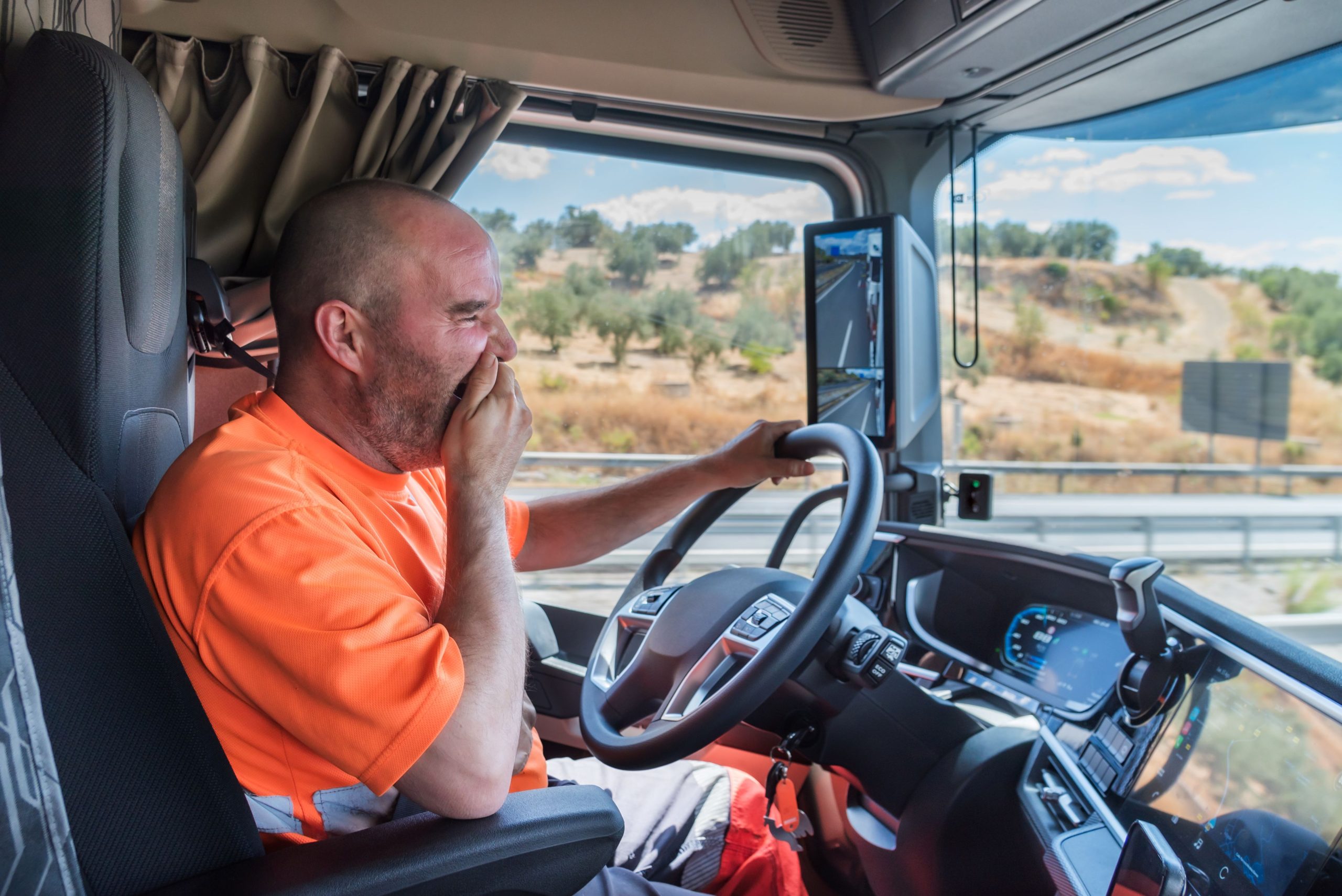
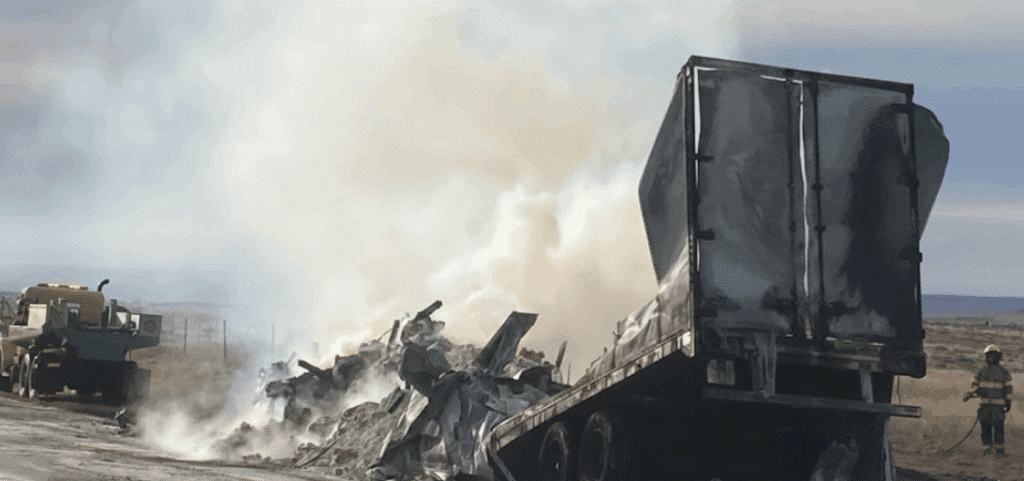
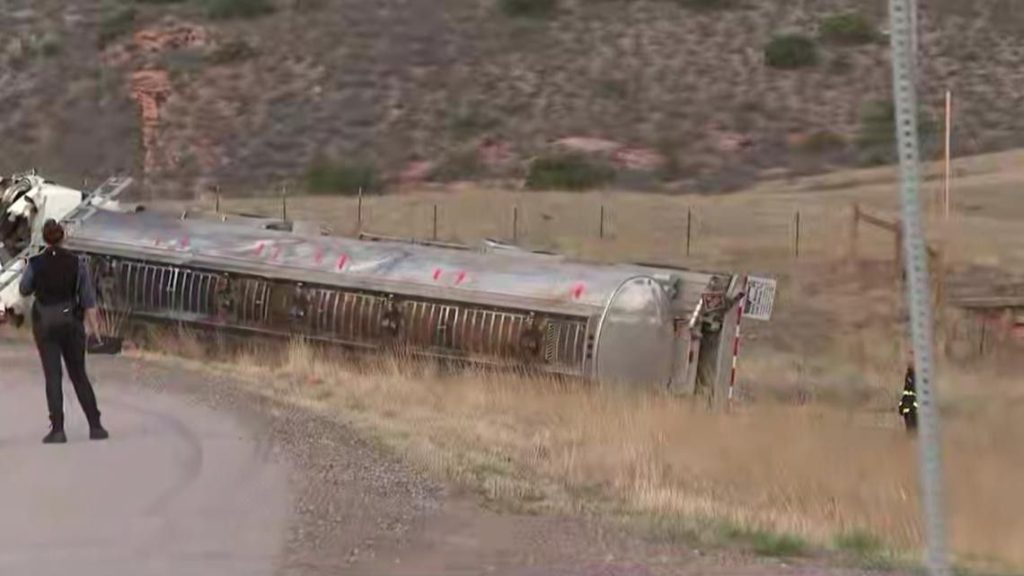
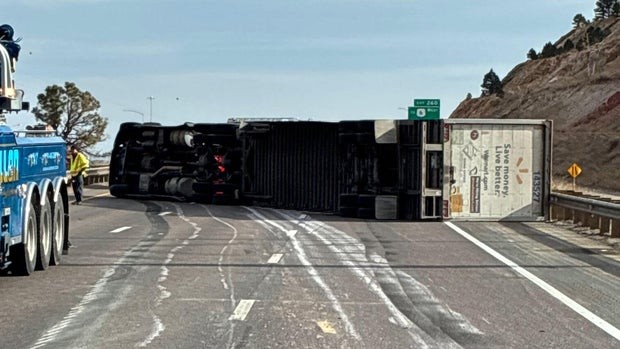
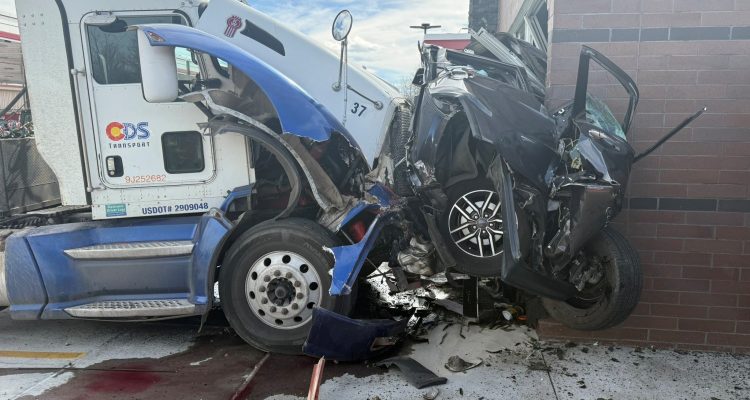
Colorado recorded two fatal commercial truck crashes within two months of each other this year. Both crashes raise serious questions about fatigued driving and hours-of-service compliance.
According to the Colorado State Patrol, the semi-truck was traveling northbound in the southbound lanes when it struck the passenger vehicle. The collision also seriously injured the 20-year-old driver of the Toyota, who was transported to a hospital.
The timing of both the rollover and wrong-way crashes around 4 a.m. suggest fatigue likely played a role. The hours between midnight and 6 a.m. are some of the most dangerous for drivers. The FMCSA even suggests semi-truck drivers stay off the road entirely, rather than risk impaired judgment, slowed reaction time, and loss of lane control.
Experienced Colorado semi-truck attorneys know the risks of fatigued driving and what to do to help you if you suffered a serious or catastrophic truck accident injury.
Hours of Service Regulations: What Federal Law Requires of Commercial Truck Drivers
State and Federal regulators know the dangers that fatigued driving presents and the catastrophic injuries and property damage that can result. And for this reason regulators have strict hours of service (HOS) rules to try and minimize the dangers of fatigued driving.
49 CFR § 395.3 sets out the limits on how long a commercial truck driver may drive in a day and week. Specifically semi-truck drivers:
May not drive more than 11 hours after first taking 10 consecutive hours off duty;
May not drive past the 14th hour after coming on duty, regardless of how much driving time remains available;
Must take a 30-minute break if they have driven for 8 cumulative hours;
Are capped at 60 hours of on-duty time over 7 consecutive days, or 70 hours over 8 consecutive days;
Require a 34-hour break to reset their weekly cap.
The FMCSA’s Large Truck Crash Causation Study found that fatigue affected 13 percent of semi-truck drivers at the time of their crash. Fatigue was the sixth most common driver-associated factor in serious truck crashes.
Sleep deprivation can be as dangerous as drunk driving. The FMCSA’s own safety guidance notes that being awake for 18 hours produces impairment equivalent to a blood alcohol concentration of 0.08 percent, the legal threshold for drunk driving.
Motor Carrier Responsibilities: What Trucking Companies Are Required to Do
Motor carriers and trucking companies have a duty under the FMCSRs to monitor their drivers and ensure they are in compliance with hours of service regulations. Under 49 CFR § 395.8, drivers must keep a record of duty status (RODS) for each 24-hour period and certify the accuracy of each entry.
Since 2017 federal regulations have required most semi-trucks to have an electronic logging device (ELD) that automatically records engine hours, vehicle movement, miles driven, and changes in the driver’s duty status. The ELD syncs with the vehicle’s engine control module (ECM), making it much harder to hide driving time than under the old paper log system.
Trucking companies must also monitor and review drivers’ HOS logs to identify violations. Ignorance is no defense for a motor carrier when drivers violate HOS regulations. The trucking company’s duty is active, not passive. A motor carrier whose drivers’ logs show a pattern of violations or evidence of tampering faces fines and potentially revocation of operating authority if it fails to address the conduct.
Drivers and Trucking Companies can “Cook the Books” to Evade Hours of Service Requirements
Despite the ELD mandate, experienced Denver semi-truck crash lawyers know that log falsification remains a serious and persistent problem in the commercial trucking industry. In 2022, falsifying logs was the third most frequent violation uncovered in roadside inspections, slightly behind speeding and failing to obey traffic devices. The FMCSA found over 60,000 violations for falsified logs during roadside inspections. That accounts for approximately 5.6 percent of all violations, or 1 out of every 18 violations was the result of a driver falsifying a log.
There are several common methods semi-truck drivers use to manipulate logs.
The personal conveyance exception allows a driver to log certain driving time as personal use not counted against their HOS. Drivers abuse it by logging return trips to the trucking yard from dropping off cargo, “bobtailing” an empty trailer to reposition it, or driving to have maintenance performed as “personal conveyance.” None of these qualify as personal conveyance under the FMCSRs.
Drivers can directly manipulate the ELD. Drivers will claim their ELD was malfunctioning and then forge or rewrite paper logs to give themselves additional hours. ELDs also allow for edits to the logs that can be abused to change drive time to show a driver was in the sleeper berth, off-duty, and on-duty not-driving. The ELD changes will not reflect reality.
Finally, and most obviously, they can disconnect the ELD and continue driving. This gives the appearance in the logs that the big rig teleported a great distance. Not a particularly crafty cheat, but more common than you would expect.
FMCSA auditors are trained to detect these patterns. They will cross-reference the ELD data against fuel receipts, toll records, GPS coordinates, and odometer readings. Every edit to an ELD log is automatically tracked with a timestamp, giving auditors and experts a detailed edit history to review.
Motor carriers and trucking companies can indirectly encourage or pressure drivers to violate HOS regulations. Motor carriers that reward hours driven over safety often directly encourage drivers to skirt the rules. Some trucking companies set delivery schedules or compensation structures that cannot be met without violating HOS limits, or ignore obvious violations.
Drivers and motor carriers who falsify logs face steep financial penalties, on top of being placed out of service. Fines can exceed $15,000. Motor carriers can be fined $1,584 for each day the violation continues, up to $15,846. Carriers that direct or knowingly allow falsified logs face separate penalties, fleet-wide investigations, potential revocation of operating authority, and personal criminal liability for individual managers who authorized the conduct.
How Colorado Truck Crash Lawyers Investigate and Develop HOS and Fatigued Driving Cases
The first priority in any suspected fatigued driving semi-truck crash is preservation of evidence. An experienced truck accident lawyer knows that motor carriers and insurance companies move quickly after a crash to protect their interests. Those interests often conflict with a truck crash victim’s and do not favor preserving evidence of driver or motor carrier fatigue.
Semi-trucks and motor carriers will have a wealth of data relevant to any suspected fatigued driving crash. But all this data can disappear without immediate action to ensure preservation. Experienced truck crash attorneys know to specifically identify each device or type of data so that the motor carrier or insurance company is on notice to preserve it. Getting the proper team of experts together to inspect the semi-truck, download and analyze this data is important whenever fatigue is a suspected factor in a crash.
Truck drivers and trucking companies face immense pressure to complete runs quickly, and many ways exist to cut corners. Having an experienced truck crash law firm behind you means having a team that knows how to find the evidence to prove it. They will know what to look for to prove a driver or motor carrier was falsifying records, pressuring drivers to push hours-of-service, dispatching or routing drivers so that compliance was impossible, or simply not tracking or reviewing available information.
If you or a loved one has been seriously injured or killed in a truck crash in Colorado, you need a legal team with the experience and track record to handle complex commercial trucking cases. You cannot simply find any personal injury attorney and expect to get the compensation you deserve from a trucking company and its insurance carrier. The attorneys at Bowman Law have the experience and knowledge of federal trucking regulations necessary to handle complex truck accident claims throughout Colorado. Call Bowman Law today at 720-863-6904 for a free consultation.
Carlo Bonavita
Carlo is a trial attorney who focuses heavily on trucking and transportation litigation. With more than seventeen years of experience handling complex civil cases, he has represented clients in matters involving trucking liability, product liability, insurance coverage disputes, and other high-stakes litigation. Carlo earned his J.D. from Seton Hall University School of Law in 2004 after completing his undergraduate studies at Fordham University in 2001.
Image Source: Jefferson County Sheriff’s Office On March 12, 2026, powerful windstorms ripped across the Colorado Front Range and Eastern Plains, with gusts topping 90 mph in some areas. Unsurprisingly, ...
Image: South Metro Fire Rescue A semi-truck hauling a heavy trailer reportedly lost its brakes traveling south on Santa Fe Drive in Littleton this week. The semi-truck driver exited Santa ...
Not necessarily. Research consistently shows that age alone is not the best predictor of crash risk for commercial truck drivers. Instead, health, fatigue, training, workload, and regulatory compliance play a ...


 Return to All News & Resources