Return to All News & Resources
Cattle Spill on I-76: Who Is Liable for the Chain Reaction?
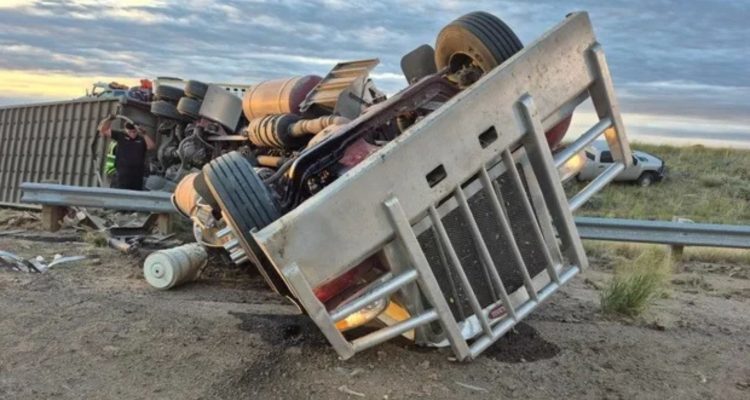
Source: Colorado State Patrol Just before 3 a.m. on Tuesday, September 15, 2026, a semi hauling 48 cattle traveled westbound on Interstate 76. It was east of Brush when it ...
Keep Reading


When an NFL linebacker delivers a helmet-to-helmet hit, the collision lasts milliseconds and the forces involved are, by physics standards, moderate. The NFL spent nearly a billion dollars settling concussion litigation because those hits destroy brains. An 80,000-pound semi-truck rear-ending a stopped passenger vehicle at 15 miles per hour involves a different kind of physics entirely.
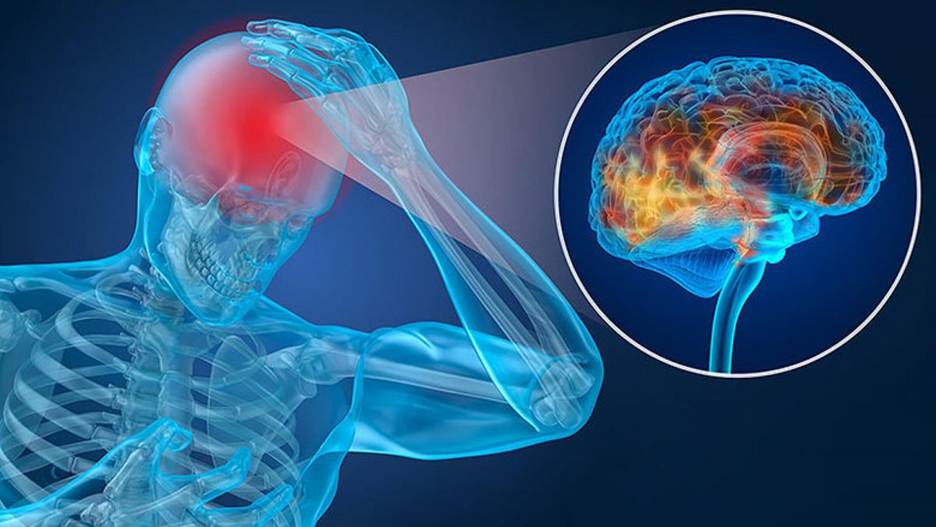
The physics are not intuitive. Crash speed doesn’t cause a concussion. The brain moving inside the skull causes it. Rapid acceleration and deceleration, the kind that happens in even a low-speed rear-end collision, can produce enough internal motion to stretch and shear axons throughout the brain.
This is the same mechanism behind the concussions that sideline running backs and hockey players after a routine hit. With sports injuries, a 200-pound athlete absorbs a collision with another 200-pound athlete and sustains a mild traumatic brain injury (mTBI).
In a truck crash, a 3,500-pound passenger car absorbs the energy of a vehicle weighing 20 to 40 times as much. The momentum behind a semi-truck is 25 times that of a passenger car at 30 mph. To match the forces of a semi-truck in a 50 mph crash, a passenger car must be traveling 500 mph!
This mass differential means the occupant of a passenger car involved in a semi-truck crash experiences significant forces even at objectively low speeds. This greatly increases the risk of serious head injuries in truck wrecks regardless of the speed.
Counterintuitively, the hours immediately after a low-speed truck crash can be a poor time to accurately assess for a brain injury. Many victims of low-speed semi-truck crashes don’t get diagnosed right away, and some don’t even realize they’ve suffered a concussion.
Emergency room doctors will typically order x-rays or CT scans to rule out life threatening injuries like a skull fracture or brain bleed. But a CT will more often than not come back normal when someone has suffered a concussion. In fact, ER doctors miss nearly half of all concussions and one study found that up to 69% of patients admitted after a car crash would meet clinical criteria for a concussion or mTBI diagnosis.
Even low-speed truck crashes happen fast. A brief loss of consciousness can seem like just confusion. Adrenaline and cortisol flood the system. Acute pain from other injuries dominates the clinical picture. Crash victims are often focused, communicative, and ambulatory at the scene. They feel shaken, not incapacitated. They decline the ambulance and drive themselves home.
What is happening inside the brain during those same hours is a different story. The mechanical forces of the crash trigger a neurometabolic cascade: a wave of ionic disruption, glutamate release, and mitochondrial stress that unfolds over 24 to 72 hours following the initial trauma. It is a failure of the brain’s energy systems at the cellular level, and it takes time to produce noticeable symptoms. This is why many crash victims report being “ok” to first responders at the scene.
Experts now recommend a few days of rest followed by a return to light physical activity as soon as possible following a concussion, with new research finding it can help recovery. However, concussion protocols still call for rest (and sleep) as much as possible in the immediate aftermath of a concussion. In particular, doctors recommend that mTBI patients stay off screens like phones or computers in the immediate aftermath of the injury.
Even after that initial rest period, someone involved in a semi-truck crash will understandably focus first on treating their physical injuries. Someone injured in a low-speed semi-truck crash also might not notice post-concussion symptoms for weeks or months following the crash. Treating pain and physical impairments takes priority and they may attribute the headaches, vision issues, and their struggles to concentrate to stress, sleep issues, or lingering pain if they notice them at all.
Post-concussion symptoms often do not come to the forefront until someone returns to work, school, or their regular daily routine. Symptoms of a TBI can be manifest in many ways as the following chart identifies:
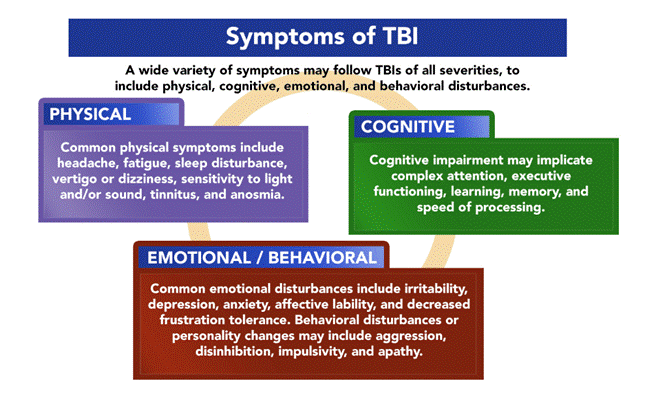
Source: U.S. Dept. of Veterans Affairs
Often it is loved ones or coworkers who notice the cognitive changes. The injury itself and the deficits it creates can prevent the injured person from noticing the problem. This can delay diagnosis and treatment, and insurance companies and defense attorneys can exploit that delay to slow down or deny a claim.
A laceration or broken bone is visible and has a recovery timeline doctors can accurately predict and most people understand. Brain imaging following a mTBI will often appear normal. Cognitive impairment from post-concussion syndrome is invisible and can persist for months or years.
Yet post-concussion symptoms will affect a person’s ability to concentrate, manage complex tasks, tolerate stressful environments, and maintain consistent work performance. Recently, the medical community has taken steps to change how doctors diagnose concussions and post-concussion symptoms, recognizing the difficulties patients have faced.
The American Congress of Rehabilitation Medicine overhauled its diagnostic criteria for concussions in 2023, replacing the old standard with a six-part framework for identifying mTBI. A diagnosis under the new framework requires a plausible injury mechanism, plus at least one supporting finding. That finding can be a clinical sign tied to brain injury, two acute symptoms paired with a clinical or lab finding, clinical or laboratory evidence on its own, positive neuroimaging, or a workup that rules out other factors that could explain the symptoms.
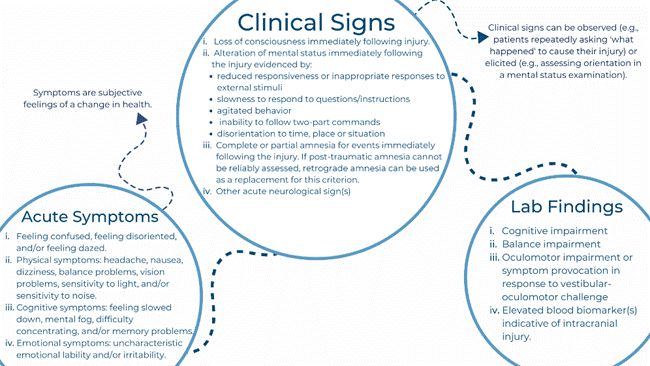
Source: Living Concussion Guidelines
The drafters built this framework with delayed diagnosis in mind, not just emergency-room evaluation. Three of these pathways work especially well when a doctor is assessing a patient weeks after the injury rather than immediately after. That flexibility matters a lot in practice, since so many concussions and mTBIs go undiagnosed in the immediate aftermath of car crashes.
By now, one thing should be clear: a crash with a semi-truck, no matter the speed, can leave you seriously injured.
Despite what insurance companies and defense attorneys will argue, failure to document a loss of consciousness or a missed ER diagnosis are not dead ends. The best truck crash lawyers will recognize the seriousness of your injuries and know how to prove the commercial vehicle caused them.
Experienced truck crash attorneys understand that to establish a brain injury you may have to look beyond the medical records. In all truck accident cases, it is important to look into the victim’s world to see the impact. This means speaking to family members, friends, or co-workers who have insight into the before and after effects of the crash.
Finding the right experts is also critical. Neuropsychological testing is the gold standard to assess brain function following a head injury. A formal evaluation quantifies deficits in memory, processing speed, attention, and executive function, then benchmarks them against pre-injury baselines using collateral history, prior records, and population norms. When deficits are identified in testing, connecting them to real world symptoms through the testimony of friends and family builds a case that is hard for defense experts to rebut.
Many doctors take a wait-and-see approach to post-concussion symptoms. Many people do improve in time. However a significant portion do not. You do not have to simply wait. There are treatments available to address post-concussive symptoms.
Cognitive rehabilitation therapy (CRT) targets the deficits that linger once the acute phase resolves, working on attention, memory strategies, processing speed, and executive function through structured intervention. Specialists tailor CRT to a patient’s specific job demands, so a truck driver, a surgeon, and an accountant each have different targets and different return-to-work timelines.
Concussions often lead to persistent vision issues that neuro-ophthalmologists will be able to document and treat. For example, concussions commonly lead to convergence insufficiency; that is when your eyes have trouble working together to focus on something close up, like a phone, a book, or a computer screen. This can cause significant difficulty at school or work. Vision exercises with a qualified vision therapist can improve or even completely resolve these symptoms.
You need a team that understands not only the forces that occur in low-speed truck accident claims, but will understand the seriousness and difficulties that can arise in establishing post-concussion injuries and impairments. Insurance companies will try to minimize the crash or dismiss a delayed diagnosis. The best truck crash attorneys know how to establish the facts of the crash and how it led to the serious injury.
If you or someone you love suffered a traumatic brain injury or concussion in a Colorado truck crash, you need attorneys who understand the medicine as well as the law. Truck crash lawyers at Bowman Law, LLC, represent seriously injured people in commercial trucking cases across the state. Contact Bowman Law, LLC, today for a free consultation.

Carlo is a trial attorney who focuses heavily on trucking and transportation litigation. With more than seventeen years of experience handling complex civil cases, he has represented clients in matters involving trucking liability, product liability, insurance coverage disputes, and other high-stakes litigation. Carlo earned his J.D. from Seton Hall University School of Law in 2004 after completing his undergraduate studies at Fordham University in 2001.
Source: Colorado State Patrol Just before 3 a.m. on Tuesday, September 15, 2026, a semi hauling 48 cattle traveled westbound on Interstate 76. It was east of Brush when it ...
Keep Reading
A unanimous decision by the United States Supreme Court in Montgomery v. Caribe Transport II, LLC, on May 14, 2026, held that plaintiffs in truck crash cases can hold brokers ...
Keep Reading
A recent 60 Minutes investigation drew attention to a dangerous practice affecting more than one in five trucking companies in the United States. The investigation focused on so-called “chameleon carriers,” ...
Keep Reading