Return to All News & Resources
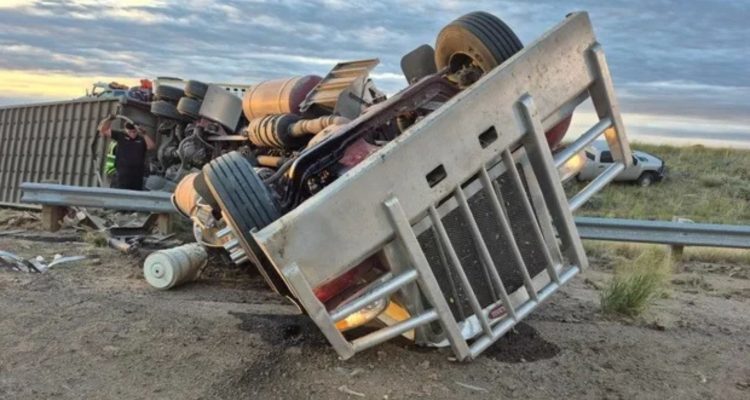
Cattle Spill on I-76: Who Is Liable for the Chain Reaction?
Source: Colorado State Patrol Just before 3 a.m. on Tuesday, September 15, 2026, a semi hauling 48 cattle traveled westbound on Interstate 76. It was east of Brush when it ...
Keep Reading



A unanimous decision by the United States Supreme Court in Montgomery v. Caribe Transport II, LLC, on May 14, 2026, held that plaintiffs in truck crash cases can hold brokers and shippers of interstate goods liable for state-level torts, such as negligent selection.
Trucking companies haul goods and materials for sellers across the country. Many of these motor carriers are connected with these sellers by third-party brokers. Like dating apps, brokers act as matchmakers between sellers and trucking companies.
Whether or not a truck crash victim could hold brokers liable for failing to properly vet trucking companies was an unsettled issue, with many courts reaching opposite conclusions on the scope of the FAAAA’s preemption and whether the safety exemption allowed state level negligent selection claims to proceed.
This decision has significant implications for any victim of a truck crash in Colorado.
Shawn Montgomery, a truck driver himself, lost his leg when his tractor was struck by another semi-truck operated by Caribe Transport II, LLC. Caribe Transport was not a model trucking company. The FMCSA had given it a “conditional” safety rating owing to a history of driver qualification issues, violations of hours-of-service regulations, vehicle and maintenance problems, and prior crashes.
The shipment Caribe was hauling had been coordinated by C.H. Robinson Worldwide, Inc., one of the largest freight brokers in North America. As a broker, C.H. Robinson does not own semi-trucks or employ drivers. Instead, it connects shippers with a network of approximately 450,000 contract motor carriers, managing over 37 million shipments and $23 billion in freight annually for roughly 75,000 customers worldwide. Essentially a company contracts with C.H. Robinson to deliver a load of freight. C.H. Robinson then contracts with a trucking company to deliver that load of goods.
Montgomery filed a lawsuit, alleging that C.H. Robinson was negligent in selecting Caribe Transport and that it knew or could have easily known that Caribe Transport was not a fit motor carrier before arranging for them to haul the load. C.H. Robinson argued that it was immune from liability under a provision of the Federal Aviation Administration Authorization Act (FAAAA) that preempted the states from enacting or enforcing a law related to a price, route, or service of any motor carrier or broker with respect to the transportation of property. 49 U.S.C. §14501(c)(1). The court hearing Montgomery’s case agreed and dismissed his claims against C.H. Robinson. The Seventh Circuit later upheld that dismissal. Because federal courts across the country have come to different conclusions, the Supreme Court agreed to hear the case and oral arguments were heard on March 4, 2026.
In a rare unanimous 9-0 opinion written by Justice Amy Cohen Barrett, the Supreme Court held that even if the FAAAA did preempt state law negligence claims, a safety exception Congress included in the law allows such claims to survive. The safety exception found in 49 U.S.C. §14501(c)(2)(A) states that the preemption provision “shall not restrict the safety regulatory authority of a State with respect to motor vehicles.”
The Supreme Court’s decision turned on the meaning of the phrase “with respect to motor vehicles.” Looking at plain language meaning of the terms, the Court found that a state law negligence claim is “with respect to motor vehicles” when it “concerns” or “regards” the vehicle used in the transportation of property. Requiring a broker like C.H. Robinson to exercise reasonable care in selecting a trucking company to deliver goods on its behalf “concerns” motor vehicles, particularly the semi-trucks that will be used to transport the goods across the country.
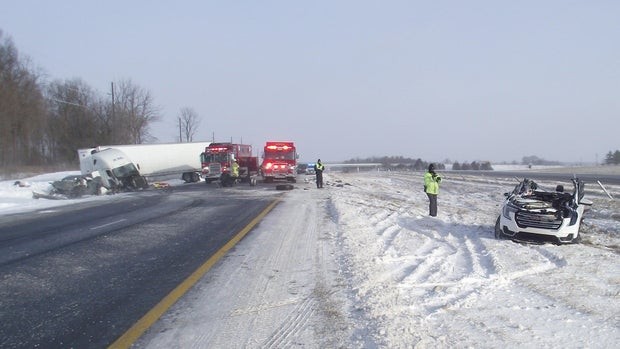
Montgomery v. Caribe Transport is extremely important to Colorado Truck Crash cases. State and federal courts in Colorado have recently been dismissing claims against brokers and shippers on the grounds that the FAAAA preempted such claims. This meant that truck crash victims could not hold brokers responsible when a dangerous or unqualified trucking company they assigned to haul freight through Colorado injured or killed someone.
Motor carriers must carry a minimum of $750,000 in liability insurance coverage. While that sounds like a lot of money, when you or someone you love are killed or catastrophically injured, $750,000 will not be enough to make you whole.
What Montgomery means for Colorado truck crash victims is that now, in truly catastrophic semi-truck crashes, a broker like C.H. Robinson cannot escape liability for contracting with dangerous trucking companies.
It is now more important than ever to ensure you are working with experienced truck crash attorneys who know how to uncover brokers and hold them accountable.
Finding the broker in a semi-truck crash can be complicated. And it is particularly difficult to do early on, before a lawsuit is filed. It will not be immediately obvious whether a broker was even involved.
Experienced truck crash lawyers know that there are a handful of documents that, if found early on, can quickly clarify the “who’s who” in a truck crash.
The Bill of Lading can quickly identify the parties in the shipping chain. Importantly, it must identify the consignor and consignee, which can quickly out the broker, shipper, and any intervening motor carrier that may have initially been responsible for the shipment. Locating this document early on can be a boon to any investigation.
Montgomery addressed whether claims for negligent selection could proceed against a broker after a truck crash. Colorado law requires a hiring party like a broker to exercise reasonable care in selecting a qualified contractor to perform the work competently and carefully. To succeed, a Colorado truck crash victim has to establish that the broker or shipper failed in its duty to confirm the motor carrier was capable of safely operating an 80,000-pound semi-truck on the roads and highways.
How should your truck crash lawyer do this? There is a wealth of publicly available information on motor carriers that truck crash attorneys can access to determine if a possible claim exists against a broker or shipper in your crash.
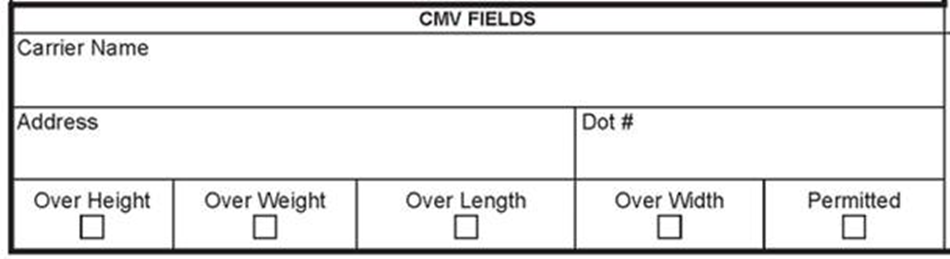
Finding the motor carrier or trucking company is relatively straightforward. Every Colorado traffic crash report should include the driver’s identification information, VINs for the tractor and trailer, and the insurer of record. There will also be a field for commercial motor vehicles that identifies the motor carrier and provides its Department of Transportation (DOT) Identification Number:
If the report is incomplete, you should be able to find the motor carrier by simply looking at the side of the semi-truck. Federal regulations require carriers to display DOT and motor carrier numbers. Those numbers link directly to the motor carrier’s identity and, importantly, allow you to check public information on that trucking company’s history.
The DOT’s Safety and Fitness Electronic Records System (SAFER) provides publicly available data on every motor carrier with operating authority in the US. A SAFER search can return the motor carrier’s identity, addresses, minimum insurance coverage, fleet size, operating status, and the most recent 24 months of inspection history. Capture this data quickly. The 24-month window rolls forward, so older violations, which are important for establishing negligent selection, will fall off over time.
SAFER also links to the Safety Measurement System (SMS), which provides Behavior Analysis and Safety Improvement Categories (“BASIC”) across seven categories, five of which are publicly accessible:

A search of the SMS will allow access to a carriers metrics for unsafe driving, hours-of-service compliance, vehicle maintenance, controlled substances/alcohol, and driver fitness. Frequent violations in any category can establish a concerning pattern that a competent shipper or broker easily could have identified before hiring the carrier.
When checking this information, the carrier’s safety rating will be particularly important. The FMCSA issues three official safety ratings for motor carriers:
A Conditional or Unsatisfactory rating is a major red flag. But even a “satisfactory” motor carrier warrants scrutiny of the inspection and crash history. Ratings are based on the company’s condition at the time of the inspection. In some cases, that rating could be a decade or more out of date.
All this information is publicly available. It can provide strong evidence that a broker or shipper who selected that carrier failed to exercise reasonable care.
The Colorado truck crash attorneys at Bowman Law know how to find brokers and how to hold them accountable for placing a dangerous motor carrier on Colorado’s roadways. We have handled commercial trucking cases across the state and understand what needs to be done to hold all the parties responsible for a truck crash.
If you or a family member has been seriously injured in a Colorado truck accident involving a commercial truck, call Bowman Law, LLC, Colorado Truck Crash Lawyers, today at 720-863-6904 for a free consultation.

Carlo is a trial attorney who focuses heavily on trucking and transportation litigation. With more than seventeen years of experience handling complex civil cases, he has represented clients in matters involving trucking liability, product liability, insurance coverage disputes, and other high-stakes litigation. Carlo earned his J.D. from Seton Hall University School of Law in 2004 after completing his undergraduate studies at Fordham University in 2001.
Source: Colorado State Patrol Just before 3 a.m. on Tuesday, September 15, 2026, a semi hauling 48 cattle traveled westbound on Interstate 76. It was east of Brush when it ...
Keep Reading
When an NFL linebacker delivers a helmet-to-helmet hit, the collision lasts milliseconds and the forces involved are, by physics standards, moderate. The NFL spent nearly a billion dollars settling concussion ...
Keep Reading
A recent 60 Minutes investigation drew attention to a dangerous practice affecting more than one in five trucking companies in the United States. The investigation focused on so-called “chameleon carriers,” ...
Keep Reading