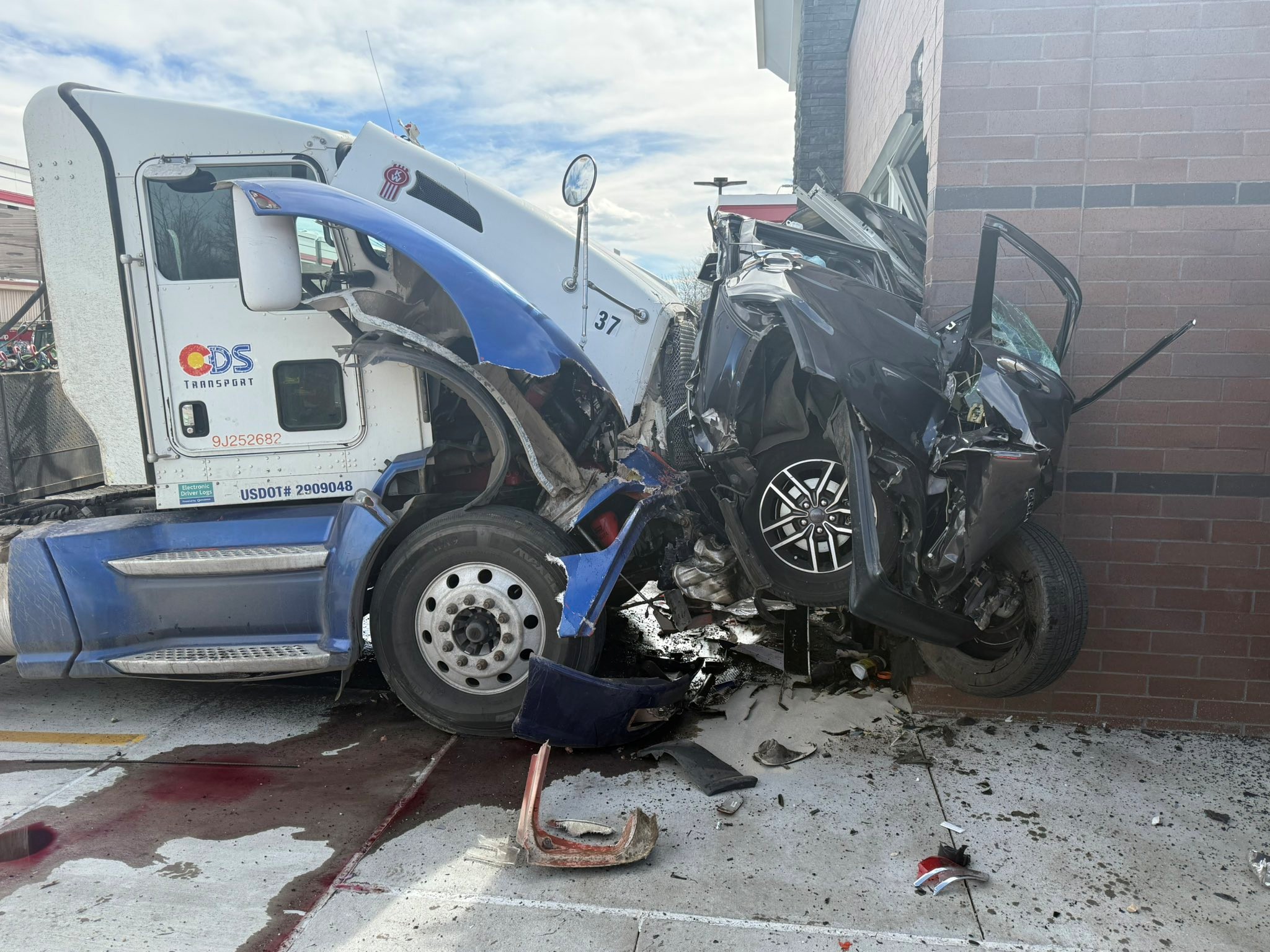
A semi-truck hauling a heavy trailer reportedly lost its brakes traveling south on Santa Fe Drive in Littleton this week. The semi-truck driver exited Santa Fe onto Belleview Avenue, crossed the median before crashing into a parked Jeep at a QuikTrip gas station. The semi-trailer smashed the Jeep into the side of the building, crushing it beyond recognition.
Crews extracted the Jeep’s occupant and rushed them to the hospital. Miraculously, the occupant survived and the hospital released them the next day. The driver of the semi-truck refused medical services at the scene
What can cause such a horrific crash? Was it distraction or fatigued driving? It is possible that those were factors. And while the cause of the QuikTrip crash is still under investigation, the driver of the semi-truck reported his brakes failed immediately prior to the crash.
Brake Failure: The Leading Mechanical Cause of Commercial Truck Crashes
Denver semi-truck crash lawyers know brake problems are the single most common vehicle-related cause of serious commercial motor vehicle (CMV) crashes in the United States. The Federal Motor Carrier Safety Administration’s (FMCSA) Large Truck Crash Causation Study found that crashes involving brake issues accounted for 29% of all semi-truck crashes examined.
In fact, in August 2025, 2,296 commercial motor vehicles were placed out of service (OOS) during the Commercial Vehicle Safety Alliance’s annual Brake Safety Week. Brake issues accounted for 15% of all the CMVs placed out of service in that seven-day period. This means more than one out of every seven commercial trucks randomly inspected had brake problems serious enough to take it out of service.
The best truck crash lawyers know that CMV braking systems are complex. Semi-trucks and CMVs almost universally have air brake systems that depend on a network of compressors, lines, chambers, slack adjusters, and drums or disc assemblies working in perfect coordination. Given the size and weight of loaded semi-trucks, upwards of 80,000 lbs., these systems are under constant stress and forces that can quickly wear them down.
Any damage to an air brake system can reduce the semi-truck’s stopping ability or, as appears to have been the case with the Littleton truck crash, cause the brakes to fail completely.
And unlike a passenger car, where a soft pedal or a shimmy signals brake trouble, CMV brake issues can often be subtle or invisible to an untrained eye. For this reason, state and federal rules and regulations mandate the trucking industry inspect their CMVs daily.
Colorado and Federal Motor Carrier Regulations Require Routine Inspections and Maintenance
Federal regulations and the Commercial Driver’s License (CDL) manual require drivers to test brake pedal feel, check air pressure gauges, inspect visible brake components, and verify that the system is functioning properly.
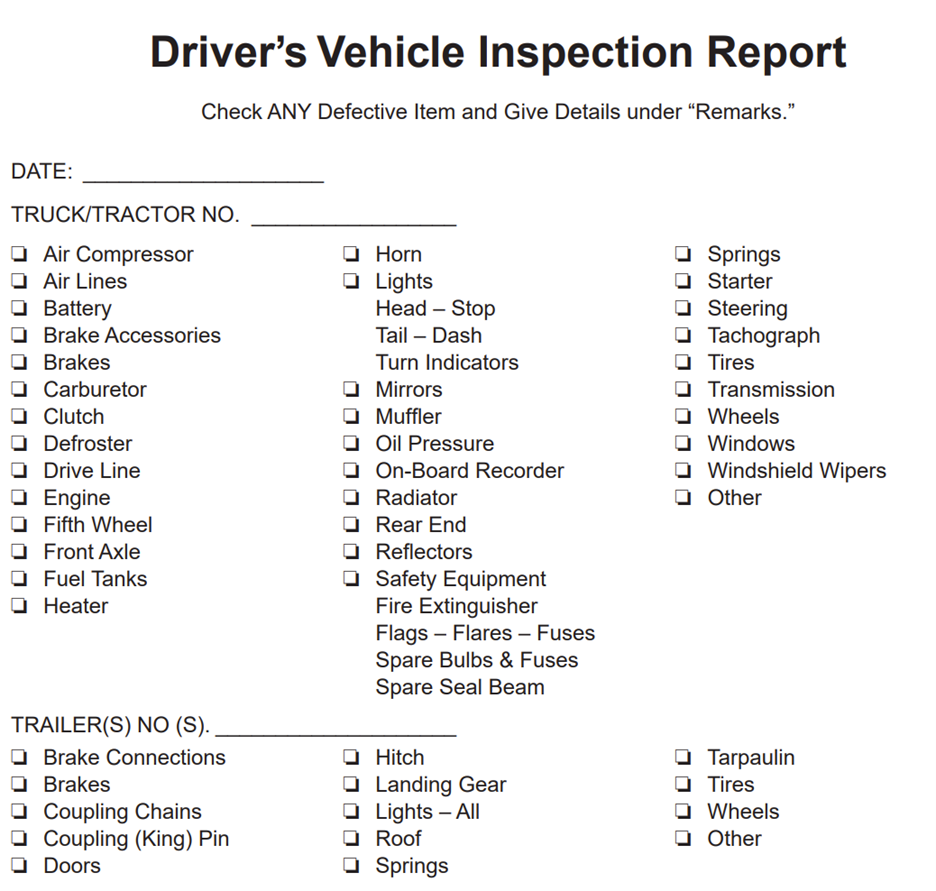
Drivers also have to inspect their CMV at the end of each day, and document their inspection in a Driver Vehicle Inspection Report (DVIR) under 49 C.F.R. § 396.11. If the driver identifies any defects or deficiencies affecting the safe operation of the vehicle, such as out-of-adjustment or damaged brakes, the driver must document those defects in writing on the DVIR.
The responsibility to inspect and maintain the CMVs is not the driver’s alone. The motor carrier has a duty to ensure that all drivers operating their CMVs have the training, knowledge, and experience to conduct these inspections. A driver that lacks the proper training and education should not be on the road.
Motor Carriers Have a Duty to Maintain Their Semi-Trucks
Trucking companies and motor carriers have a duty to inspect, maintain, and repair all the commercial motor vehicles that they operate. Experienced Colorado truck crash attorneys will know that a quick search of the DOT would reveal that the motor carrier responsible for tractor involved in the Littleton QuikTrip crash has an OOS rate of over 50%! That means state or federal regulators have found mechanical issues serious enough to take that carrier’s CMVs off the road in more than half of all inspections.
Under 49 C.F.R. § 396.3, every motor carrier has an affirmative and ongoing obligation to systematically inspect, repair, and maintain all commercial motor vehicles subject to its control.
What does that duty look like in practice? The motor carrier must have a documented maintenance program, must keep records of all inspections and repairs, and must remove any vehicle with identified defects from service until repaired.
Under 49 C.F.R. § 396.9, if a CMV is found to have defects that render it unsafe for operation, like bad brakes, the motor carrier must immediately take it out of service. A trucking company must repair any identified defect before anyone can drive the CMV again. Federal regulations prohibit a motor carrier or trucking company from forcing or coercing a driver to drive a vehicle that is not safe.
What a Colorado Semi-Truck Accident Lawyer Can Do for You
Semi-truck crashes like the Littleton QuikTrip crash can have a number of underlying causes. Whether or not poor maintenance, distracted driving, brake failure, or driver fatigue contributed to a semi-truck crash will not always be obvious. Truck accident injuries are often more severe and require extensive medical treatment given the nature of the vehicles involved.
Defense lawyers and insurance companies also do their best to shield the liable parties from consequences. That is why it is important that you have experienced truck accident lawyers on your side. Experienced truck crash attorneys know what to look for in truck accident claims, whether it is scoring on the roadway or deficient or falsified inspection logs.
Motor carriers and insurance companies often have teams of investigators and experts ready to deploy to a crash scene within hours. Driving a semi-truck from the scene after a crash can overwrite or destroy critical evidence. An experienced truck crash attorney will know what steps to take to ensure the trucking company preserves the semi-truck’s electronic control module (ECM), and all the important driving data after a crash.
Attorneys cannot treat truck accidents the same as car accidents.The best truck crash lawyers will know that a case barely has started when they obtain a semi-truck’s complete maintenance records, DVIRs going back months, and the driver’s daily hours-of-service logs. They will know to review the carrier’s FMCSA safety profile and inspection history, looking for prior brake violations, out-of-service orders, and patterns of non-compliance.
An experienced truck crash attorney also knows when and which experts to retain to ensure the parties properly preserve and document all evidence. Whether it is a crash reconstructionist, trucking standards expert, or even a truck driver with millions of crash-free miles, assembling the right team is necessary to take on insurance companies and defense lawyers.
If you or a loved one has been injured due to someone else’s negligence, do not face the challenges alone. You need experienced Colorado semi-truck crash lawyers on your side.
Contact a Colorado Trucking Accident Attorney
The Trucking Accidents Attorneys at Bowman Law offer a steady and thoughtful approach to cases like these. We take the time to listen, gather all the facts, investigate your case, and strategize a plan to guide your case forward. Contact Bowman Law at 720-863-6904 or schedule a free consultation today.
Carlo Bonavita
Carlo is a trial attorney who focuses heavily on trucking and transportation litigation. With more than seventeen years of experience handling complex civil cases, he has represented clients in matters involving trucking liability, product liability, insurance coverage disputes, and other high-stakes litigation. Carlo earned his J.D. from Seton Hall University School of Law in 2004 after completing his undergraduate studies at Fordham University in 2001.
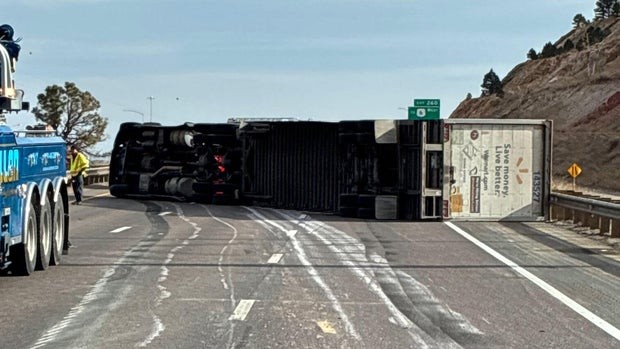
Image Source: Jefferson County Sheriff’s Office On March 12, 2026, powerful windstorms ripped across the Colorado Front Range and Eastern Plains, with gusts topping 90 mph in some areas. Unsurprisingly, ...
Not necessarily. Research consistently shows that age alone is not the best predictor of crash risk for commercial truck drivers. Instead, health, fatigue, training, workload, and regulatory compliance play a ...
Yes. A contributing factor that frequently emerges in trucking crashes is driver inexperience. Although trucking companies are required to screen, train, and supervise commercial truck drivers, those safeguards do not ...


 Return to All News & Resources