Denver Police have made an arrest in connection with the August 9 crash. Nathan Eastman, 40, was taken into custody Sunday and faces charges of vehicular homicide and leaving the scene of an accident involving death. According to a probable cause statement, a fellow rider who was in front of the victim had a rear-facing camera on her bike that captured footage of Eastman’s red Audi with a bike rack making contact with the motorcycle. Investigators used the footage to identify the vehicle, which was registered to Eastman. Officers went to his address and found the vehicle in a carport with a tire mark on the front bumper consistent with contact from a motorcycle wheel. Eastman has a prior criminal history that includes a two-year deferred sentence for felony assault with a deadly weapon and two years of probation for misdemeanor menacing. The district attorney’s office will make the final charging determination. (9NEWS, August 10, 2026; CBS Colorado, August 10, 2026)
The arrest and the camera footage change the evidentiary picture significantly for the civil case. The footage documented on a fellow rider’s camera constitutes independent, contemporaneous evidence of the contact — not just witness recollection. Combined with Eastman’s prior felony assault history, the pattern of conduct that supports an exemplary damages claim under C.R.S. Section 13-21-102 becomes substantially stronger. The family’s civil wrongful death claim can now be pursued with a named defendant, documented evidence, and a prior record that speaks directly to willful and wanton conduct.
The original blog published August 9, 2026 continues below.
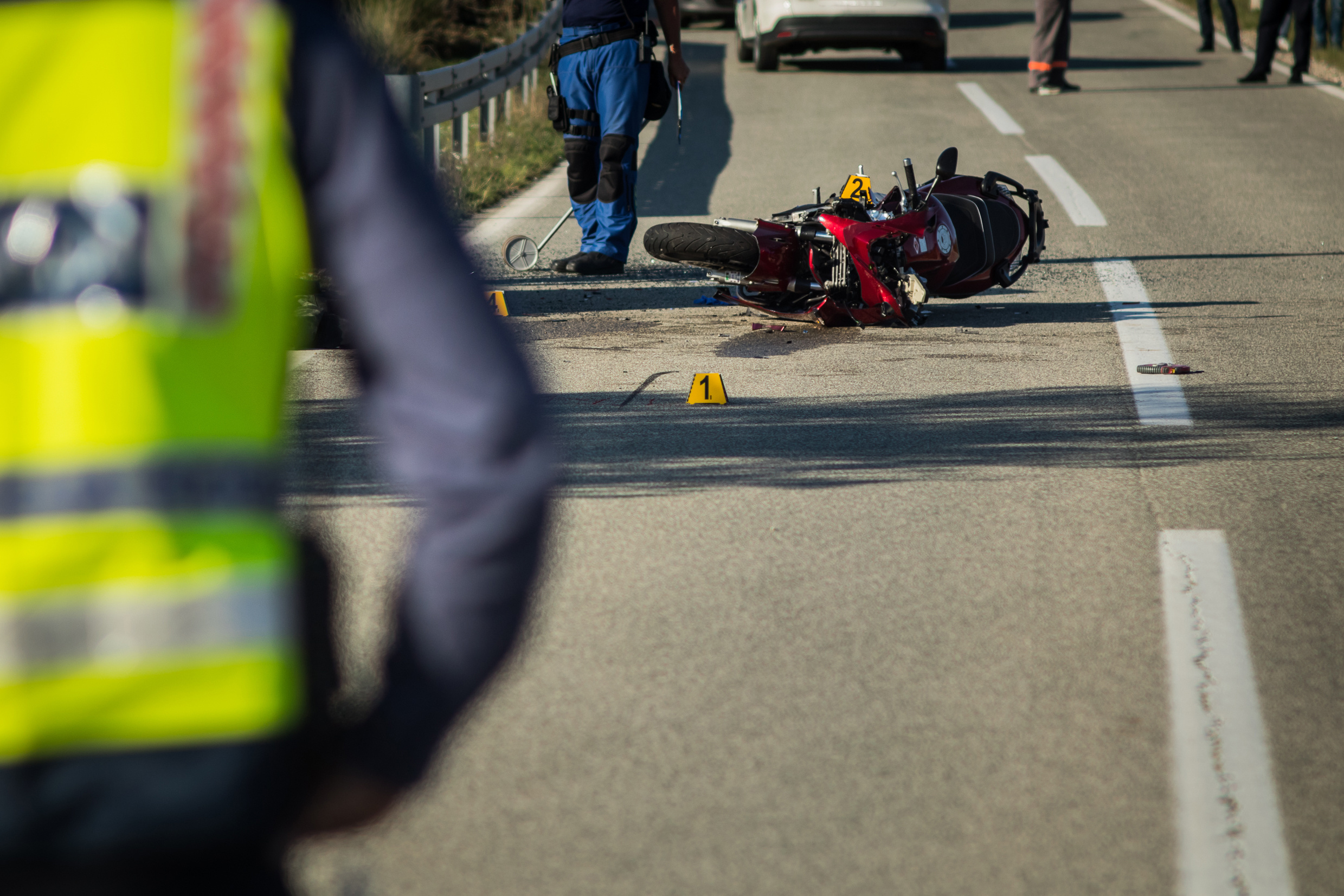
Around 11 p.m. on Saturday, August 9, 2026, a woman riding a motorcycle was killed near the US 285 and Sheridan Boulevard interchange in southwest Denver. Denver Police investigators believe a driver intentionally struck her motorcycle, causing the crash. The driver fled the scene.
Denver Police are treating this case as a homicide. That classification changes almost everything about what follows — both in the criminal justice system and in the civil legal system.
Anyone with information about this crash is asked to contact Metro Denver Crime Stoppers at 720-913-7867.
When a Crash Is Also a Crime: Two Separate Legal Systems
Most motor vehicle crashes are civil matters. A driver is negligent. Someone is hurt. Insurance gets involved. Fault is assigned. Compensation is negotiated or litigated.
This case is different. When investigators conclude that a driver intentionally struck a victim, the legal framework shifts. The criminal justice system pursues charges — potentially including first or second degree murder, vehicular homicide, or assault depending on what the evidence supports and what prosecutors determine about intent. The civil system runs in parallel and operates entirely independently.
A criminal conviction is not required before a family can pursue a civil wrongful death claim. The civil standard of proof — a preponderance of the evidence, meaning more likely than not — is different from the criminal standard of beyond a reasonable doubt. Families do not have to wait for a criminal verdict. And the outcome of the criminal case, whatever it is, does not control what a family can recover in a civil court.
Intentional Acts and Civil Liability in Colorado
Colorado civil law recognizes intentional torts — wrongful acts committed on purpose rather than through negligence. Battery, for example, is the intentional harmful or offensive contact with another person. When a driver deliberately uses a vehicle as a weapon and strikes a motorcyclist, that act can constitute battery under civil law regardless of what criminal charges are filed.
Intentional tort claims have distinct advantages over negligence claims in certain respects. They are not subject to the same comparative fault analysis that applies in negligence cases. A victim who was intentionally targeted is not going to have fault assigned to them for being on the road. The question of shared responsibility, which can complicate negligence cases, largely disappears when the act was deliberate.
Exemplary Damages: When Intentional Conduct Opens the Door
In most negligence cases, damages are limited to compensating the injured party for what they actually lost. But when a defendant’s conduct is intentional, malicious, or demonstrates willful and wanton disregard for others, Colorado law allows courts to award exemplary damages on top of actual damages.
Under C.R.S. Section 13-21-102, exemplary damages can be awarded when the injury is attended by circumstances of fraud, malice, or willful and wanton conduct. The statute defines willful and wanton conduct as behavior purposefully committed which the actor must have realized as dangerous, done heedlessly and recklessly, without regard to the rights and safety of others.
Intentionally using a vehicle to strike a motorcyclist is about as clear an example of willful and wanton conduct as exists. If the evidence supports the investigators’ conclusion that the strike was deliberate, a civil claim arising from this crash is not just a compensatory damages case — it is a case where exemplary damages may be awarded up to the full amount of the actual damages proven.
Exemplary damages cannot be included in an initial claim under Colorado procedure — they must be added by amendment after initial disclosures and upon showing prima facie proof of a triable issue. But in a case with this fact pattern, establishing that threshold is a real possibility.
The Hit-and-Run: What Fleeing the Scene Means Legally
The driver did not just strike the victim. The driver fled. Under C.R.S. Section 42-4-1601, a driver involved in a crash resulting in death or serious injury has a legal duty to immediately stop, remain at the scene, provide their information, and render reasonable assistance. Fleeing that scene is a class 3 felony when a death results.
The hit-and-run also has specific civil significance. Colorado’s statute of limitations for most wrongful death claims is two years from the date of death. But there is an important exception.
Under C.R.S. Section 13-80-102, when a defendant committed vehicular homicide and, as part of the same criminal episode, left the scene of the crash that resulted in the death, the statute of limitations for the civil wrongful death claim extends to four years rather than two. If the facts here support vehicular homicide charges alongside the hit-and-run, the family may have additional time to pursue their civil claim — though acting early is always the right approach given the evidence that disappears in the days after a crash.
Wrongful Death Rights for the Family
For the family of the woman who was killed Saturday night, Colorado’s wrongful death statute, C.R.S. Section 13-21-202, provides the right to pursue compensation for the full scope of losses caused by her death. Those losses include medical and emergency response costs, funeral and burial expenses, the income and financial support she would have provided, and the grief, loss of companionship, pain and suffering, and emotional stress her family now carries.
Unlike negligence-based wrongful death claims, where Colorado’s noneconomic damages cap of $250,000 under C.R.S. Section 13-21-203 typically applies, cases involving a felonious killing carry no such cap. Colorado law removes the noneconomic damages limitation when the wrongful act constitutes a felony. An intentional vehicular homicide — if that is what investigators and prosecutors conclude occurred — is a felony. The cap is not in play.
Insurance Coverage When the Act Is Intentional
One complicating factor in cases involving intentional acts is insurance. Most automobile insurance policies contain exclusions for intentional acts — a driver who deliberately uses their vehicle as a weapon may find that their insurer denies coverage for the resulting claims on the grounds that the damage was intended rather than accidental.
That does not mean recovery is impossible. It means the analysis of available sources has to go deeper. Uninsured motorist coverage — carried on the victim’s own policy or a resident relative’s policy — may cover the gap if the at-fault driver’s insurance is excluded. The victim’s own policy, if she carried UM/UIM coverage, is the first place to look.
Additionally, if any other party contributed to the circumstances of this crash — a bar or establishment that served the driver before the crash, or a third party with some connection to the vehicle or the events — those avenues deserve examination.
The Evidence That Exists Right Now
Denver Police have located the suspect vehicle. That vehicle is now in law enforcement custody, which means critical evidence — paint transfer, impact data, dashcam footage if installed, and GPS or electronic data — is being preserved as part of the criminal investigation. That is significant.
Other evidence that matters to the civil case includes:
• Any surveillance footage from the Sheridan Boulevard and US 285 interchange area, including from businesses, traffic cameras, and the interchange infrastructure itself
• Witness accounts from anyone who observed the crash or the vehicle’s behavior before or after the impact
• Cell phone records and location data from the suspect, which may help establish motive and movements
• The victim’s own dashcam or helmet camera, if she carried either
• The full investigation records from DPD, which will become available over time through legal process
Because law enforcement has the vehicle, the risk of evidence being destroyed by the suspect is reduced. But the civil investigation has its own evidence needs, and the family’s attorney needs to be in position to access relevant materials as they become available.
A Note on This Active Investigation
No arrests have been made. No motive has been identified. No charges have been filed. This blog does not speculate about the identity of the suspect, the nature of any relationship between the parties, or the specific facts that led investigators to conclude the strike was intentional.
What Denver Police have stated publicly is that investigators believe the strike was deliberate and have classified the case as a homicide. Those are the documented facts. Everything that follows in this blog is grounded in what Colorado law provides when those facts are proven — not an assumption that they already have been.
If Your Family Was Affected by This Crash
Bowman Law handles serious motorcycle accident cases and wrongful death claims throughout Denver and across Colorado, including cases involving intentional acts and homicide investigations. When a crash is also a crime, the civil case runs alongside the criminal investigation — and the family deserves legal representation that understands both tracks.
If you lost someone in the August 9 crash near Sheridan Boulevard and US 285, we are available for a confidential conversation. There is no charge and no obligation.
Jerry Bowman, J.D., M.A., Owner and managing attorney of Bowman Law LLC, takes his responsibility to the legal profession seriously and dedicates his time and effort to providing quality and competent legal representation to clients in Denver and throughout all of Colorado. He holds an MA in Political Science from Wayne State University and earned his law degree in two and a half years from Michigan State University College of Law.
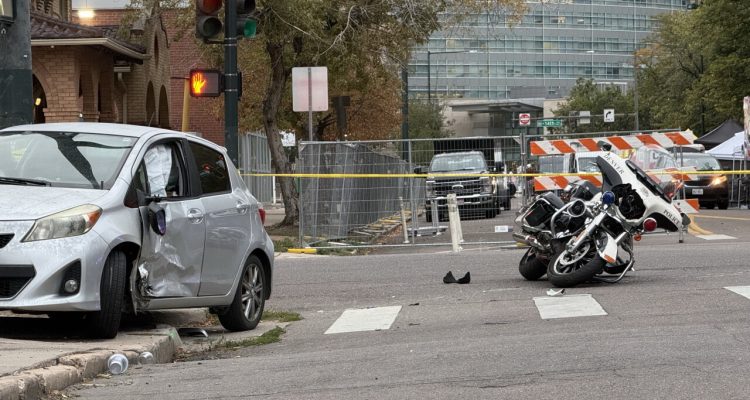
Source: KMGH Thursday evening, September 25, 2026, a Denver Police Department motorcycle officer was responding to a call with lights and sirens activated when another vehicle collided with the officer ...
Just before 10:30 p.m. on Friday, August 22, 2026, a motorcyclist was killed in a single-vehicle crash on the eastbound Highway 58 flyover to Interstate 70 in Wheat Ridge. Officers ...
In 2025, 149 motorcyclists died on Colorado roads. Of those riders, 66, nearly half, were not wearing a helmet at the time of the crash. Motorcycle fatalities accounted for more ...


 Return to All News & Resources