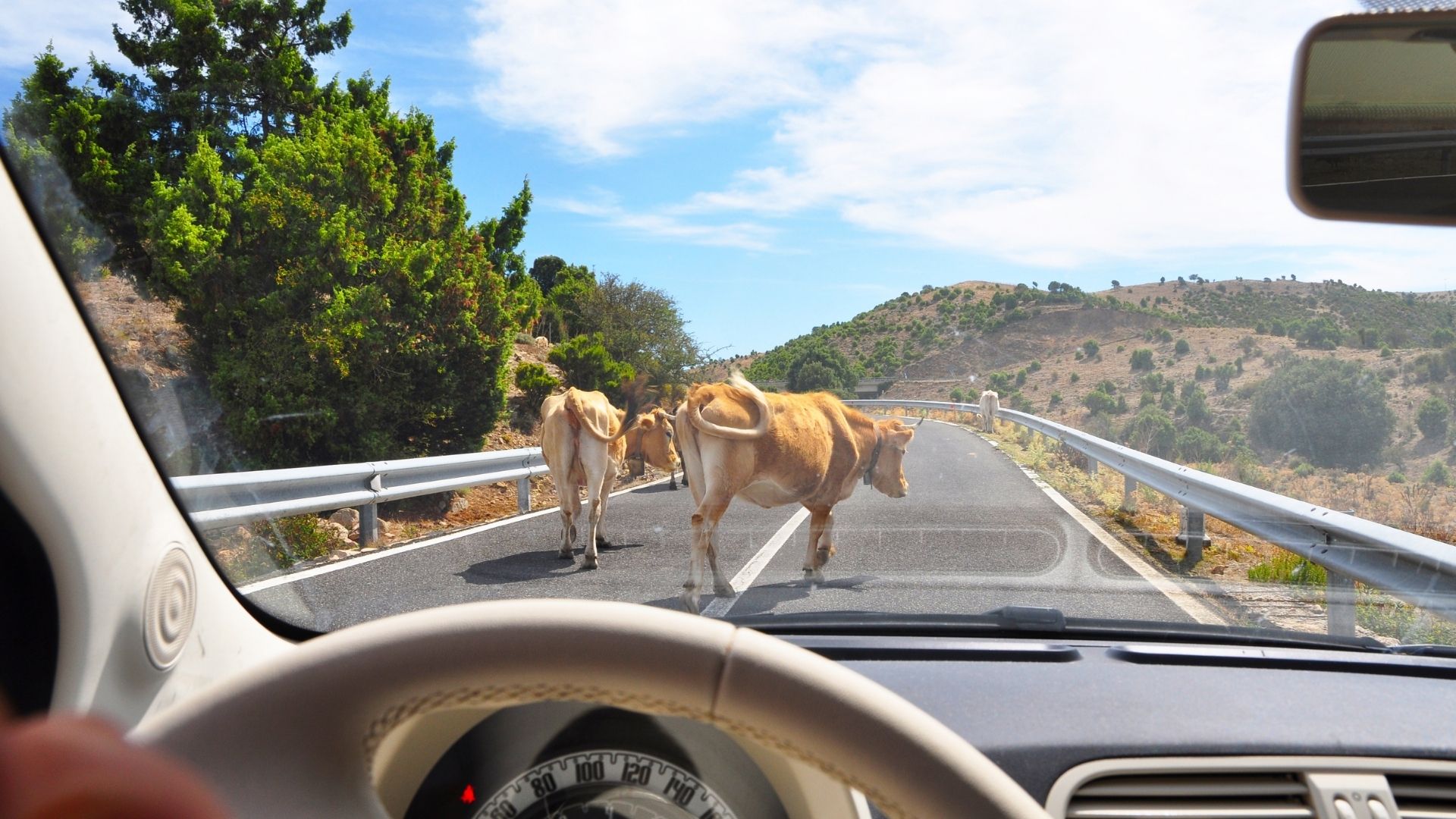
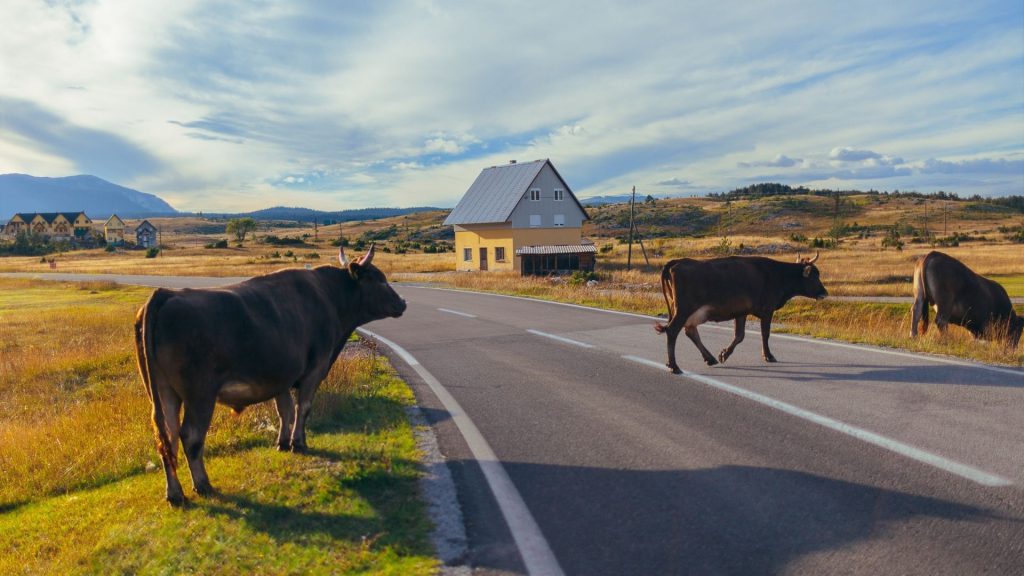
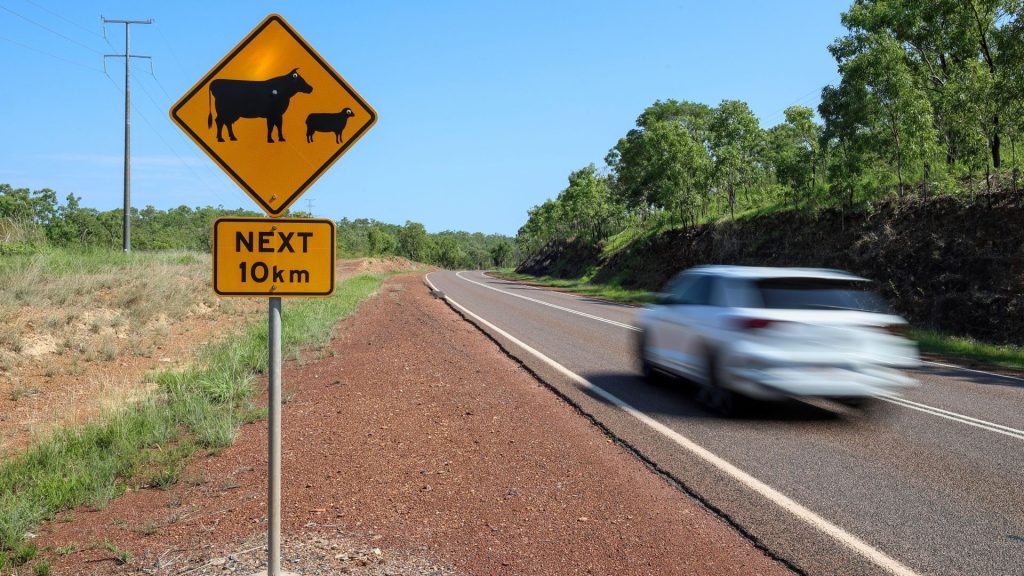
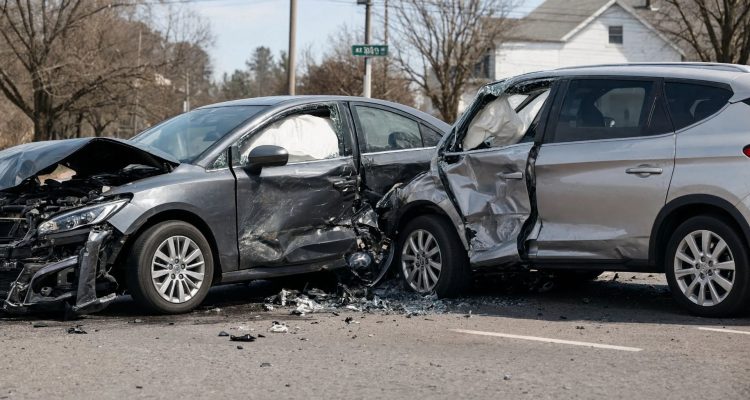
Anyone who has driven through rural Colorado at night may have experienced this moment of panic: headlights catch a pair of eyes at the edge of the asphalt, and suddenly there’s a thousand-pound animal standing in your lane. Collisions with cattle, horses, and other livestock happen every year on Colorado’s rural highways and mountain roads, and they can cause catastrophic damage, totaled vehicles, serious injuries, and sometimes fatalities.
The hard truth for accident victims is that Colorado’s “open range” tradition makes these cases more complicated than a typical car accident claim. Unlike many states, Colorado does not require livestock owners to fence their animals in. Instead, the legal burden generally runs the other way: landowners who want livestock kept off their property are the ones responsible for fencing them out. That single feature of Colorado law shapes almost everything about who pays when a cow, horse, or other animal wanders into traffic.
This post breaks down the relevant Colorado statutes and case law so you understand how liability actually works after a livestock-related crash and why proving fault is harder than simply pointing to the animal in the road.
Colorado’s “Open Range” Concept Isn’t Really a Law
A lot of people assume “open range” is itself a statute that protects ranchers from liability. According to the Colorado Department of Agriculture, that’s not quite right. Open range describes a pattern of land use, not a specific law. The actual legal obligation comes from what’s commonly called the “fence law” or “fence statute,” found in the Colorado Revised Statutes governing agriculture. Because Colorado livestock owners are not legally required to keep their animals fenced in, a rancher whose cattle wander off unfenced land and onto a road isn’t automatically breaking the law just because the animals got loose.
That said, the fence statute does give property owners, not injured drivers, a way to recover money damages if livestock break through a fence and damage crops, gardens, or other property. To use this remedy, the property owner generally has to be maintaining what the law calls a “lawful fence”: essentially a well-built, properly spaced three-strand barbed wire fence (or an equivalent barrier) capable of turning back ordinary horses and cattle, with gates built to the same standard. If there’s no lawful fence, or the fence is in disrepair, or a gate was left open, this remedy doesn’t apply.
It’s important to understand what this statute does not cover: it’s a civil remedy for property damage and trespass, not a tool for people who are injured. If you were hurt in a collision with livestock, the fence-trespass statute itself won’t be your basis for a claim — but it does help establish the broader legal framework for how fencing, fault, and “open range” interact in Colorado.
What the Fence Statute (C.R.S. § 35-46-102) Actually Says
Colorado’s fence-trespass law allows a person who keeps a lawful fence in good repair to recover damages when someone else’s livestock breaks through that fence and cause trespass or crop/property damage. The statute also addresses the flip side: a livestock owner who overstocks unenclosed land they have a right to graze, or who turns livestock loose on land they have no right to use, can be held liable as a trespasser, with damages, court costs, and even exemplary (punitive) damages available in cases of willful or reckless conduct.
Again, this section is squarely about property and trespass damages between landowners and livestock owners. But it matters to injury victims because it illustrates the underlying legal principle Colorado courts apply broadly in livestock cases: someone is only liable if they were at fault — through a broken fence they should have repaired, intentional or reckless conduct, or unlawful grazing — not simply because they own the animal that caused the harm.
Livestock on the Road: C.R.S. § 35-46-105
This is the statute that speaks most directly to vehicle collisions. Colorado law makes it unlawful for a livestock owner (or whoever is in charge of the animals) to knowingly let livestock graze or run loose in a town, on a lane, road, or public highway if that area is separated from the owner’s land or range by a fence or other barrier that should have kept the animals out.
But here’s the critical liability rule embedded in that same section: if loose livestock is killed or injured by a vehicle, the driver isn’t liable unless the collision was malicious, willful, or wanton. And the reverse protection exists for livestock owners too. The statute carves out situations where range livestock break through a properly maintained drift fence or cattle guard and end up somewhere the owner didn’t know about, or where someone is actively and lawfully driving livestock through an area. In those situations, the owner isn’t automatically on the hook either.
In short, this statute reinforces that simple presence of livestock on a road by itself doesn’t create automatic liability for either side. Violating the section is treated as a civil infraction, with provisions allowing law enforcement to take custody of loose livestock, care for it, and even have it sold if costs and fines go unpaid.
Horses and Mules Near Cities: C.R.S. § 35-47-101
A related statute specifically addresses horses and mules. It’s unlawful for an owner (or their agent or employee) to knowingly let horses or mules run at large within set distances of cities and towns ranging from ten miles for the largest cities down to one mile for smaller towns and unincorporated communities. There are practical exceptions: driving animals to market, moving them between pastures, or using them for riding or to pull a vehicle or equipment doesn’t violate the statute. This law illustrates that the “open range” presumption weakens the closer you get to populated areas. Proximity to a city or town is one factor that can affect whether an owner has a legal duty to keep animals contained.
Why You Still Have to Prove Negligence: Barnes v. Frank
Perhaps the most important legal lesson for crash victims comes from a Colorado Court of Appeals case, Barnes v. Frank, 472 P.2d 745 (Colo. App. 1970). In that case, a driver collided with cattle that had escaped from a field enclosed by an electric fence and ended up on the highway. The injured plaintiff couldn’t point to any specific negligent act by the rancher. She argued that the mere fact the cattle escaped should be enough to shift the burden onto the defendant under the doctrine of res ipsa loquitur (essentially, “the thing speaks for itself”).
The Colorado Court of Appeals rejected that argument. The court explained that res ipsa loquitur only applies when an accident is the kind that ordinarily doesn’t happen without someone’s negligence. Cattle ending up on a highway, the court reasoned, can happen for all sorts of reasons, including the actions of third parties, so the mere fact that the animals got loose doesn’t itself prove the rancher was negligent. Because the plaintiff admitted she had no evidence of any specific negligent act and chose to rely solely on that doctrine, her case was properly dismissed.
The takeaway for anyone hurt in a Colorado livestock collision: you have to prove the owner was actually at fault. For example, that the fence was in disrepair, that a gate was negligently left open, that the owner knew animals were getting loose and did nothing, or that the animals were unlawfully on a road or in town near a barrier that should have kept them out. The mere fact that you hit a cow or horse is not, by itself, enough.
Moreover, it is important to identify whether another party may be responsible for maintaining fencing or if the livestock were grazing on another landowner’s property. Perhaps another landowner authorized a stock owner to graze on their property. In these scenarios, it may be pivotal to investigate and consider whether the livestock owner had any formal contracts, licenses, or leases. Identifying all potential parties at fault adds another layer of complexity to these claims.
What This Means If You’ve Been in a Livestock Collision
Putting these statutes and case law together, here’s the practical picture for someone injured after hitting livestock on a Colorado road:
There’s no automatic liability. Colorado’s open-range tradition means livestock owners generally aren’t required to fence animals in, and drivers generally aren’t liable for hitting loose livestock unless their conduct was malicious, willful, or wanton.
Negligence is the key. Following Barnes v. Frank, you’ll need actual evidence of fault — a broken or poorly maintained fence, a gate left open, livestock knowingly allowed onto a highway or into town limits, overstocking of unenclosed land, or similarly careless conduct — not just the fact that an accident happened.
Location matters. Whether livestock were on true open range, near a fenced highway, within city-distance limits (as in the horses-and-mules statute), or inside an area protected by drift fences and cattle guards can all affect who bears responsibility.
Evidence collection is critical. Brand inspectors, law enforcement reports, fence condition, witness accounts, and how the animals got loose can all become central to a claim. Acting quickly to document the scene, fence lines, gates, brands, and road conditions, can make or break a case.
Talk to a Colorado Personal Injury Attorney
Livestock collision cases sit at the intersection of agricultural law and personal injury law, and Colorado’s open-range framework makes them more nuanced than the average car accident claim. If you or a loved one has been injured in a crash involving cattle, horses, or other livestock on a Colorado road, it’s worth having an experienced personal injury attorney evaluate the fencing, location, and conduct issues that could determine whether the animal’s owner can be held liable.
Contact Bowman Law for a free consultation and find out what options may be available to you.
Julia Clark
Julia earned her Juris Doctor in 2017 from Suffolk University School of Law in Boston. Prior to law school, she completed her undergraduate studies at the University of Colorado Boulder.
In addition to representing victims of personal injury, Julia has experience on the insurance defense side, giving her a strategic advantage and firsthand insight into how insurance companies evaluate, defend, and value claims.
On Wednesday, September 30, 2026, an 81-year-old man driving a Ford Escape westbound on Highway 34 in Greeley was struck broadside by a GMC 2500 driven by 32-year-old Santos Garcia-Juarez. ...
Around 11 p.m. on Saturday, September 26, 2026, a Weld County Sheriff’s deputy attempted to pull over a suspected drunk driver at 18th Street and Highway 85 in Greeley. The ...
Just before 12:30 p.m. on Saturday, September 12, 2026, Colorado State Patrol responded to a head-on crash on Weld County Road 100, east of Wellington. A 37-year-old woman from Fort ...


 Return to All News & Resources