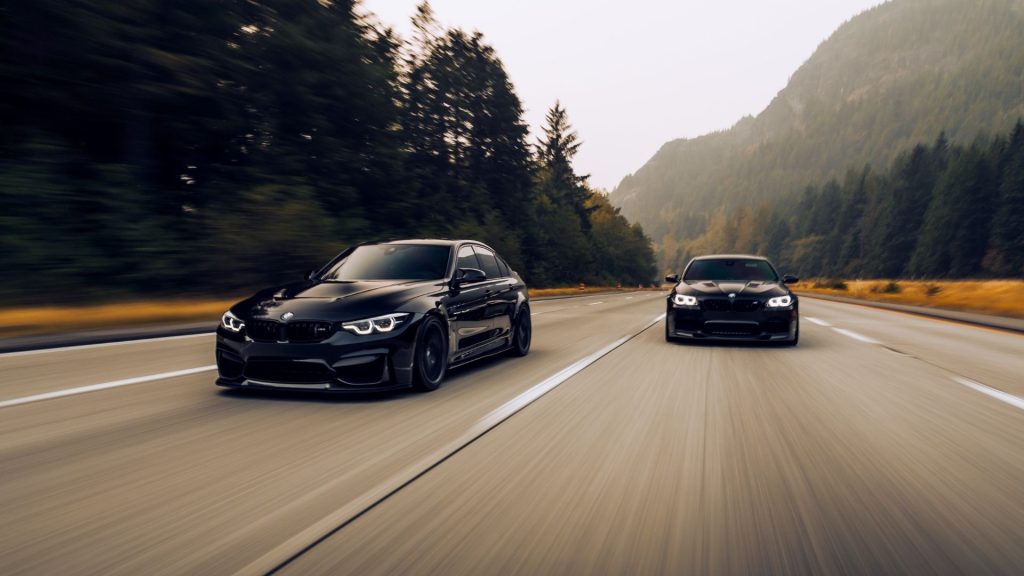
On Thursday, August 14, 2026, deputies with the Clear Creek County Sheriff’s Office and officers from Idaho Springs Police clocked seven supercars traveling 85 miles per hour in a 45-mile-per-hour zone on westbound Highway 103 near Idaho Springs. Someone had tipped off authorities in advance, allowing deputies to position an unmarked patrol vehicle behind the group at Echo Lake while additional units waited near mile marker 2. The drivers were stopped, cited, and fined a combined $1,680. The driver in front faced a court summons for exhibition of speed, driving 40 over the posted limit, and reckless driving. (CBS Colorado, August 14, 2026; FOX31/KDVR, August 14, 2026)
The Clear Creek County Sheriff’s Office did not mince words in their statement: “Supercars have a bad habit of misusing Hwy 103 as a racetrack. Today, they got the red flag.”
No crash occurred Thursday. No one was hurt. But Highway 103 is a two-lane mountain road with curves, drop-offs, cyclists, motorcyclists, and other drivers who had no idea a group of supercars was approaching at nearly twice the speed limit. The outcome this time was citations. On another day, on the same road, the outcome could be very different.
Colorado law treats excessive speed and reckless driving as serious offenses — and the legal consequences extend well beyond traffic fines. For anyone who has been injured by a speeding or reckless driver on a Colorado road, understanding how those violations translate into civil liability is essential.
What Colorado Law Says About Excessive Speed
Colorado’s basic speed law is codified at C.R.S. Section 42-4-1101, which requires all drivers to operate at a speed that is reasonable and prudent given the conditions. On a mountain road like Highway 103, with curves, grades, and the possibility of cyclists and pedestrians, 85 miles per hour in a 45-mile-per-hour zone is not reasonable or prudent by any measure.
Speeding violations in Colorado are tiered by how far over the limit the driver is traveling. Driving 1 to 24 mph over the limit is a Class A traffic infraction. Driving 25 to 39 mph over is a Class A traffic infraction with higher penalties. Driving 40 or more mph over the posted limit elevates the offense and carries significantly increased fines, license points, and potential license suspension.
The driver in front of Thursday’s convoy was cited for driving 40 over the limit. Under C.R.S. Section 42-2-127, which governs the Colorado driver’s license point system, excessive speeding carries substantial license points that accumulate toward suspension. A single incident of driving 40 or more miles per hour over the limit can trigger a mandatory license review.
Exhibition of Speed: A Separate and Serious Offense
The lead driver in the convoy also faces a summons for exhibition of speed — a separate offense from speeding itself. Under C.R.S. Section 42-4-1105, it is unlawful to knowingly engage in a speed exhibition on a highway. A speed exhibition means operating a motor vehicle to show off its speed or acceleration, which describes exactly what a convoy of supercars using Highway 103 as a racetrack is doing.
Exhibition of speed carries its own criminal and civil consequences. It is not a mere traffic infraction — it reflects a deliberate decision to use a public road in a way that endangers everyone on it. That deliberate choice matters both in criminal court and in a civil claim if someone is injured as a result.
Reckless Driving and What It Means Civilly
Reckless driving is defined under C.R.S. Section 42-4-1401 as operating a vehicle in willful or wanton disregard for the safety of persons or property. The lead supercar driver faces this charge. It is not a traffic infraction — it is a criminal misdemeanor.
The reckless driving charge carries significant weight in a civil context. When a driver is cited for or convicted of reckless driving in connection with a crash that injures someone, that citation is admissible evidence of negligence in a civil personal injury or wrongful death case. The injured party does not have to prove negligence from scratch when the driver has already been cited by law enforcement for willful and wanton disregard of others’ safety.
In fact, reckless driving opens the door to something beyond ordinary compensatory damages.
Exemplary Damages: When Recklessness Meets Civil Court
Colorado law allows courts to award exemplary damages, sometimes called punitive damages, in cases where a defendant’s conduct demonstrates willful and wanton disregard for the rights and safety of others. Under C.R.S. Section 13-21-102, exemplary damages can be awarded up to the amount of actual damages proven when the evidence shows that kind of conduct.
A driver traveling 85 in a 45 on a mountain road, as part of a convoy treating that road as a racetrack, is engaging in willful and wanton conduct. If that driver had struck another vehicle, a cyclist, or a pedestrian, the injured party’s attorney would have a strong basis for an exemplary damages claim alongside the standard compensatory damages for medical bills, lost wages, pain and suffering, and long-term consequences.
Exemplary damages are not automatic. They require meeting a specific legal standard and must be supported by clear and convincing evidence. But in cases involving the kind of conduct on display on Highway 103 on August 14, they are a real and meaningful part of the legal picture.
Why Traffic Citations Matter After a Crash
When a driver who caused a crash has also been cited for reckless driving, excessive speed, or exhibition of speed, those citations become powerful tools in a civil case. Under C.R.S. Section 13-21-111, Colorado’s comparative negligence framework, fault is apportioned among the parties based on the evidence. A driver with a citation for driving 40 over the limit or for reckless driving starts that apportionment in a very unfavorable position.
Traffic citations are not conclusive proof of fault in a civil case — but they are highly probative evidence. They reflect a law enforcement officer’s contemporaneous judgment that the driver violated the law. Combined with physical evidence, witness statements, and event data recorder information from the vehicle, a reckless driving or excessive speeding citation can anchor a negligence case firmly.
Conversely, if the cited driver claims the injured party was partially at fault, the citation record makes that argument harder to sustain. A driver going 40 over the limit on a mountain road has a steep climb ahead of them when trying to argue that someone else contributed to a crash.
Highway 103: A Road with Real Consequences
Highway 103 connects Idaho Springs to Echo Lake and Mount Evans. It is a scenic mountain road used by cyclists, motorcyclists, hikers accessing trailheads, and drivers heading to one of Colorado’s most popular fourteeners. It is a two-lane road with curves, variable surfaces, and drop-offs. It is not designed for 85 miles per hour.
The Clear Creek County Sheriff’s Office has noted that supercars misusing Highway 103 as a racetrack is not a new problem. Thursday’s enforcement action was possible because someone tipped off authorities in advance. Most days, there is no tip. Most days, the enforcement does not happen. And most days, other people on that road have no idea that vehicles are approaching at speeds far beyond what the road is designed to handle.
When those speeds eventually produce a crash — and the odds heavily favor that they will — the legal and human consequences will be severe. For the person who is hit, understanding what the law provides and acting quickly to preserve evidence and protect their rights is what stands between a devastating experience and some measure of accountability and justice.
If You Were Injured by a Reckless or Excessively Speeding Driver in Colorado
Bowman Law handles serious motor vehicle accident cases, motorcycle accident cases, and wrongful death claims throughout Denver and across Colorado. When a driver’s conduct rises to the level of reckless driving or exhibition of speed, that conduct matters — both in establishing liability and in pursuing the full range of damages available under Colorado law.
If a reckless or excessively speeding driver injured you or killed someone in your family on a Colorado road, we are available for a confidential consultation at no charge and no obligation.
Jerry Bowman, J.D., M.A., Owner and managing attorney of Bowman Law LLC, takes his responsibility to the legal profession seriously and dedicates his time and effort to providing quality and competent legal representation to clients in Denver and throughout all of Colorado. He holds an MA in Political Science from Wayne State University and earned his law degree in two and a half years from Michigan State University College of Law.
On Wednesday, September 30, 2026, an 81-year-old man driving a Ford Escape westbound on Highway 34 in Greeley was struck broadside by a GMC 2500 driven by 32-year-old Santos Garcia-Juarez. ...
Around 11 p.m. on Saturday, September 26, 2026, a Weld County Sheriff’s deputy attempted to pull over a suspected drunk driver at 18th Street and Highway 85 in Greeley. The ...
Just before 12:30 p.m. on Saturday, September 12, 2026, Colorado State Patrol responded to a head-on crash on Weld County Road 100, east of Wellington. A 37-year-old woman from Fort ...


 Return to All News & Resources