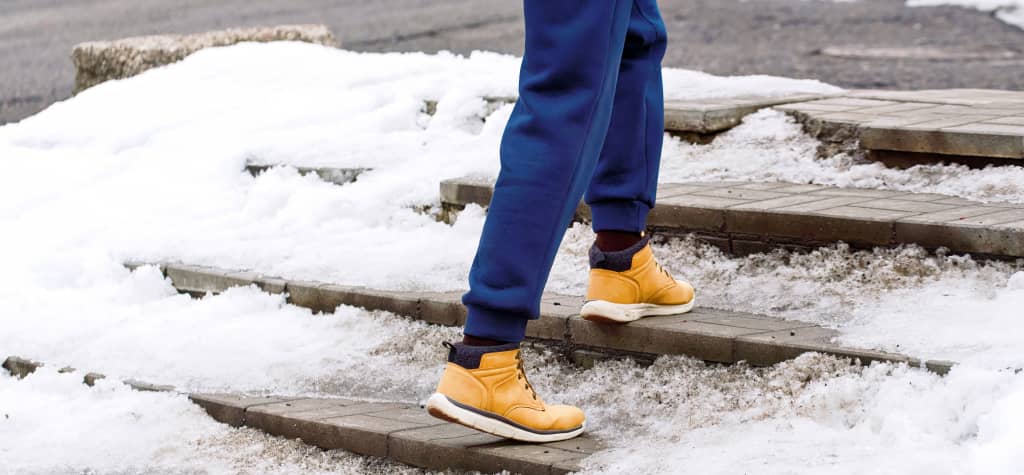
Winter in Colorado brings stunning snowfall and world-class skiing, but it also brings icy sidewalks, slippery parking lots, and an increased risk of slip-and-fall accidents. When temperatures fluctuate between sunny days and freezing nights, black ice forms on walkways, and property owners must take action to keep their premises safe. If you’ve been injured in a winter slip-and-fall accident, understanding your legal rights under Colorado law is essential to securing the compensation you deserve.
At Bowman Law, our personal injury attorneys have decades of experience helping individuals navigate the complexities of personal injury cases related to premises liability claims. We know that a slip-and-fall accident can result in serious injuries — from broken bones and traumatic brain injuries to emotional distress — and we’re here to provide the expert guidance and compassionate support you need during your recovery.
Who Is Liable for Slip-and-Fall Accidents on Snow and Ice in Colorado?
When you slip and fall on someone else’s property due to snow or ice, determining liability depends on several factors. Colorado’s premises liability law is statutory, with the Colorado Premises Liability Act (Colo. Rev. Stat. § 13-21-115) providing the legal framework for slip-and-fall claims. This act makes property owners, property managers, and vendors liable for any injuries caused by “known dangers” on their property if they fail to take reasonable care to mitigate those dangers.
The circumstances of the accident and your legal status play a role in determining your compensation. If you’re lawfully on a property as a customer, tenant, or invited guest and you’re injured after falling on ice or snow, you may be able to hold the property owner accountable for their negligence.
Multiple parties may be responsible for your winter slip-and-fall accident:
Commercial property owners: Stores, restaurants, shopping centers, and office buildings must keep walkways, parking lots, and entrances clear of snow and ice
Residential property owners: Homeowners have a duty to clear sidewalks adjacent to their property
Landlords and property management companies: Apartment complexes and rental properties must maintain common areas, stairwells, and parking lots
Business tenants: In some cases, tenants who control specific areas may share responsibility
Snow removal contractors: If a contractor was hired to clear snow and failed to do so properly, they may be liable
Government entities: Cities, counties, and state agencies can be held responsible for slip-and-fall accidents on public property, though special rules apply
What Do Colorado Property Owners Owe Visitors?
Property owners are expected to uphold certain conditions to keep visitors safe. Colorado law considers the injured person’s reason for being on the premises when determining fault, placing visitors into three categories: trespassers, licensees, and invitees.
Invitees (such as customers in stores or hotel guests) receive the highest level of protection. An invitee enters a property to do business with the landowner. Property owners must take reasonable steps to protect invitees against known dangers.
Licensees (such as social guests) receive a moderate level of protection. Property owners must warn licensees of known dangers but aren’t required to inspect for hidden hazards.
Trespassers receive the least protection. Colorado landowners are legally responsible only for injuries willfully or deliberately caused to a trespasser, so simple negligence, by itself, won’t result in liability.
How Long Do Property Owners Have to Remove Snow and Ice in Colorado?
Many Colorado municipalities have specific ordinances requiring property owners to remove snow and ice within a designated timeframe. While these requirements vary by city, most impose a deadline after snowfall ends for clearing sidewalks, walkways, and other pedestrian areas.
Here are the snow removal requirements for major Colorado cities:
Denver and Boulder: Residential and commercial property owners must remove snow and ice from sidewalks within 24 hours after snowfall stops in both Denver and Boulder, and businesses have just four hours to do so.
Aurora: Property owners must clear snow within 24 hours, with administrative fees of $25 for single-family homes and $50 for other properties imposed after 24 hours if snow isn’t removed. The city may contract for removal and bill the property owner.
Colorado Springs and Fort Collins: Similar 24-hour timeframes apply in these cities.
Even in municipalities without specific snow removal ordinances, the Colorado Premises Liability Act still requires property owners to address known dangers within a reasonable timeframe. Failure to remove snow and ice, or to warn visitors of hazardous conditions, can create liability under state law.
What Do I Need to Prove in a Colorado Slip-and-Fall Case?
Winning a personal injury claim for a slip and fall requires proving that the property owner was negligent. Under Colorado’s Premises Liability Act, you must establish that:
You were lawfully on the property as an invitee or licensee (not trespassing)
A dangerous condition existed (such as accumulated snow, black ice, or refrozen slush)
The property owner knew or should have known about the dangerous condition
The property owner failed to take reasonable steps to remedy the hazard or warn you about it
The dangerous condition caused your fall and resulting injuries
You suffered actual damages (medical expenses, lost wages, pain and suffering, or more.)
Property owners aren’t expected to remove snow and ice the moment it accumulates, but they must act within a reasonable timeframe. Additionally, they must make sure that melting water drains properly and doesn’t refreeze into dangerous black ice. For example, poor drainage from defective gutters can create pools or streams of water on walkways, which then freeze during Colorado’s daily thaw-and-freeze cycle.
If you’ve suffered a slip and fall on an icy sidewalk in Colorado, don’t assume it’s your fault. Instead, seek legal guidance to determine if you have grounds for a personal injury case.
What Damages Can I Recover in a Winter Slip-and-Fall Case?
If you’ve been injured in a slip-and-fall accident caused by another party’s negligence, we know that dealing with the aftermath can be emotional and challenging. Colorado law allows you to seek compensation for both economic and non-economic damages, and our compassionate attorneys are prepared to guide you through the legal process so you recover the damages you’re owed.
Economic damages compensate you for measurable financial losses, including:
Past, present, and future medical expenses
Hospital visits, emergency room care, and ambulance services
X-rays, MRIs, CT scans, and other diagnostic tests
Physical therapy and ongoing treatment
Lost wages from time missed at work
Lost earning capacity if your injuries prevent you from returning to your job
Property damage (such as damaged clothing or personal items)
Non-economic damages compensate you for intangible losses, including:
Pain and suffering
Emotional distress and mental anguish
Permanent disability or disfigurement
Loss of consortium (for spouses)
In cases where the defendant’s conduct involved fraud, malice, or willful and wanton behavior, Colorado law allows for punitive damages to punish the wrongdoer and deter similar conduct in the future.
How Long Do I Have to File a Slip-and-Fall Lawsuit in Colorado?
Colorado’s statute of limitations for filing a slip and fall claim is generally two years from the date of your injury. If you don’t file your lawsuit within this timeframe, you’ll likely lose your right to seek compensation.
However, if your slip-and-fall accident occurred on government property — such as a city sidewalk, public parking lot, or government building — you face much shorter deadlines. The Colorado Governmental Immunity Act requires you to provide notice to the government entity within 180 days (six months) of your accident. Be sure to stay on top of this timeframe, as missing this deadline can permanently bar your claim.
Because of these strict deadlines, it’s essential to contact a personal injury attorney as soon as possible after your accident. At Bowman Law, we offer free consultations to discuss your case and ensure you meet all legal requirements within the allotted time.
Common Winter Slip-and-Fall Injuries in Colorado
Personal injury claims can involve physical, emotional, and property damages, but the physical impacts are most common. Understanding what injuries often occur with slip-and-fall accidents might give you the encouragement you need to finally reach out to a personal injury lawyer.
Winter slip-and-fall accidents can result in a wide range of injuries, from minor to severe:
Fractures and broken bones, especially those involving the hip or wrist, are common when people instinctively reach out to break their fall or land hard on ice.
Head injuries and traumatic brain injuries (TBIs) from hitting your head on ice or pavement can cause concussions, skull fractures, or severe brain trauma with long-lasting cognitive and physical effects.
Falling on your back or landing awkwardly can damage the spinal cord, potentially resulting in partial or complete paralysis.
Soft tissue injuries can occur from slipping and falling. Sprains, strains, torn ligaments, and muscle damage may seem minor initially but can cause chronic pain and limited mobility.
Rotator cuff tears and dislocated shoulders frequently occur when people extend their arms during a fall.
Torn ACLs, MCLs, and meniscus tears in the knee are not uncommon and can require surgery and extensive rehabilitation.
Herniated discs, slipped discs, and whiplash can cause chronic pain in the neck and back and may require long-term treatment.
Some injuries can leave you with permanent disabilities, chronic pain, or limitations that affect your ability to work and enjoy life. Understanding the full extent of your damages is essential before accepting any settlement offer.
Why Do I Need a Bowman Law Attorney for My Colorado Slip-and-Fall Case?
While not every slip-and-fall accident requires legal representation, serious injuries that result in significant medical bills, lost wages, or long-term impacts on your life absolutely benefit from having an attorney on your side. An experienced personal injury lawyer is essential in supporting your throughout your slip-and-fall claim, for reasons like the following:
Insurance companies work against you: Property owners’ insurance companies have extensive networks of adjusters, medical experts, and attorneys whose job is to minimize or deny your claim. They may try to blame you for the accident, downplay your injuries, or pressure you into accepting a low settlement before you understand the full extent of your damages.
Proving liability is complex: Establishing that a property owner knew or should have known about a dangerous condition, failed to take reasonable steps to remedy it, and that their negligence directly caused your injuries requires thorough investigation, evidence gathering, and legal expertise.
You need someone fighting for your full compensation: Studies show that injury victims who hire attorneys recover significantly more compensation than those who handle claims on their own, even after accounting for attorney fees.
We handle everything while you recover: From investigating your claim and gathering evidence to negotiating with insurance companies and, if necessary, taking your case to trial, we manage every aspect of your case so you can focus on healing.
At Bowman Law, we work on a contingency fee basis, meaning you pay nothing up front for legal representation. We don’t collect any fees unless we win your case and recover compensation for you. This allows you to access experienced legal representation without financial risk.
While property owners have a legal duty to maintain safe premises, you can also take steps to reduce your risk of winter slip-and-fall accidents:
Wear appropriate footwear: Choose boots or shoes with good traction and non-slip soles
Walk slowly and deliberately: Take your time on icy or snowy surfaces and avoid rushing
Watch where you’re walking: Pay attention to the ground ahead of you and avoid distractions like texting
Use handrails: When available, hold onto railings on stairs and ramps
Test uncertain surfaces: Step carefully on areas that might be icy, especially in shaded spots or near building entrances where melting and refreezing occur
Avoid shortcuts: Stick to cleared, well-maintained walkways rather than taking shortcuts through snow
Report hazards: If you notice dangerous conditions, report them to the property owner or manager
However, even when you take precautions, dangerous conditions created by a property owner’s negligence can still cause serious injuries.
Get the Compensation You Deserve
When you’ve been injured in a winter slip-and-fall accident due to someone else’s negligence, you shouldn’t have to pay for their mistake. Colorado law protects your right to seek compensation for medical expenses, lost wages, pain and suffering, and other damages.
At Bowman Law, we understand the diverse challenges slip-and-fall victims face. From mounting medical bills and overwhelming physical distress to dealing with insurance companies that don’t have your best interests at heart, navigating a personal injury claim can feel impossible when you’re trying to recover.
That’s why we’re here. Our experienced Colorado personal injury attorneys will fight for your justice and fair compensation while you focus on the most important thing: rest and recuperation. We provide expert representation for victims throughout all of Colorado, and we’re ready to be your passionate ally dedicated to securing the compensation you deserve.
Don’t let a winter slip-and-fall accident derail your life. Trust Bowman Law to provide the dedicated support, transparent communication, and unwavering advocacy you deserve as you pursue justice and fair compensation. Call us at (720) 863-6904.
Jerry Bowman, J.D., M.A., Owner and managing attorney of Bowman Law LLC, takes his responsibility to the legal profession seriously and dedicates his time and effort to providing quality and competent legal representation to clients in Denver and throughout all of Colorado. He holds an MA in Political Science from Wayne State University and earned his law degree in two and a half years from Michigan State University College of Law.
Yes. You may still have a slip-and-fall case in Colorado even if a “Wet Floor” sign was present. A warning sign is only one part of determining liability, and it does not automatically answer whether ...
Boulder attorneys Bowman Law represent those who suffered injuries due to a landowner’s failure to safely maintain or warn of hazards on their property. The Boulder slip and fall attorneys ...


 Return to All News & Resources