When is internal fixation surgery recommended after a car accident? Internal fixation surgery after a car accident becomes necessary when a fracture is severe enough that bones cannot heal without stabilization using rods, plates or screws. This type of surgery plays a major role in personal injury cases because it represents a clear and objective injury, high medical cost, extensive recovery time and a long-term impact on physical function and quality of life. For car accident attorneys, internal fixation surgery is powerful evidence of the seriousness of trauma and significantly increases settlement value.
According to Integrity Spine and Orthopedics, car accidents are one of the leading causes of broken bones and orthopedic trauma. The violent forces involved in car accidents can snap bones, drive fractures through skin, shatter joints and cause multiple simultaneous breaks. Some fractures heal with casts or slings, but others are unstable, displaced or comminuted (broken into multiple fragments). In these cases, surgery is required to realign and secure the bones so they can heal properly. Internal fixation surgery prevents long-term deformity, chronic pain, arthritis, nerve damage and disability.
When a client undergoes this level of surgical intervention, the legal significance is substantial. Insurance companies recognize that surgical fracture cases present strong damages because they involve structural injury, long-term limitations and undeniable physical and emotional suffering. Internal fixation surgeries are never minor, and they dramatically strengthen the value and credibility of a personal injury claim.
Why Internal Fixation Surgery Is Required After Trauma
Internal fixation surgery is performed when a fracture cannot be treated with traditional casting or immobilization. Certain types of fractures require surgical stabilization to prevent bones from healing in the wrong position or failing to unite at all.
Reasons internal fixation may be necessary include:
- Fractures with significant displacement or separation of bone fragments
- Comminuted fractures involving multiple fragments
- Open fractures where bone pierces through the skin
- Fractures involving joints or weight-bearing bones such as the femur, tibia or pelvis
- Spinal fractures requiring stabilization
- Fractures that cannot be aligned manually or maintain alignment in a cast
- Nerve or blood vessel compromise
These injuries frequently occur in head-on collisions, T-bone crashes, rollovers, motorcycle accidents and pedestrian strikes, where impact forces transfer directly into bone.
Surgical realignment restores anatomy and protects nerves, muscle and joint function. Without surgery, these injuries often result in permanent disability.
Common Internal Fixation Procedures After a Car Accident
Three primary fixation methods are used depending on the location and severity of the fracture:
Rods (Intramedullary Nails)
A metal rod is inserted into the center of the bone to stabilize long-bone fractures such as the femur or tibia. Screws secure the rod at each end, enabling weight-bearing earlier in recovery.
Plates
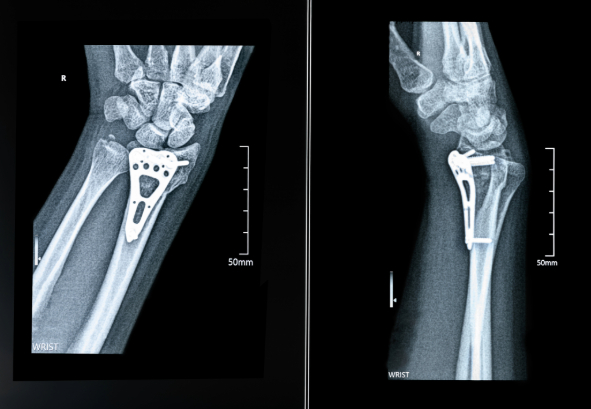
Metal plates are attached to the surface of the bone with screws to stabilize fractures, particularly in the arm, wrist, clavicle, hip or facial bones. Plates provide rigid support where alignment is essential.
Screws
Used alone or with plates, screws stabilize bone fragments and secure joints or soft tissue. They provide compression and control rotational forces that interfere with healing.
These materials remain permanently unless removed later due to irritation, infection or mechanical failure. Patients often feel hardware in cold weather or during heavy activity, supporting long-term damages.
How Internal Fixation Supports a Personal Injury Claim
Internal fixation cases create compelling medical evidence that demonstrates the severity of the injury and the need for extensive treatment. They help eliminate doubt, undermine defense claims of exaggeration and provide a strong basis for settlement.
Surgical fracture cases support claims because they document:
- Objective structural injury visible on imaging
- Invasive surgical repair and implantation of metal hardware
- High medical costs
- Long-term or permanent impairment
- Pain, suffering and emotional trauma
- Inability to work or function independently for extended periods
Photographs of surgical incisions or hardware radiographs can be persuasive exhibits before a jury. They demonstrate in plain view what the client experienced.
Recovery and Long-Term Effects After Internal Fixation Surgery
Recovery is long and physically demanding. Patients often spend weeks or months in rehabilitation regaining strength, mobility and function. Full healing may take a year or more.
Common recovery limitations include:
- Non-weight bearing requirements
- Use of wheelchairs, walkers, crutches or braces
- Muscle atrophy and weakness
- Persistent pain or stiffness
- Post-traumatic arthritis
- Restricted range of motion
- Difficulty returning to work, especially labor-intensive jobs
Internal fixation surgeries disrupt every aspect of daily life. The recovery burden becomes visible proof of damage and loss.
Complications and Risks of Internal Fixation Surgery
Surgical repair carries significant risk. Patients may experience:
- Infection requiring removal of hardware
- Bone healing failure (non-union or malunion)
- Nerve or vessel damage
- Need for revision surgery
- Hardware loosening or breakage
- Blood clots
- Chronic pain or limited mobility
The existence of risk reinforces that surgery was not optional or taken lightly. Patients assume risk only when necessary.
Cost of Internal Fixation Surgery
These procedures are expensive, contributing substantially to economic damages.
Typical price ranges:
- Simple fracture repair: $20,000–$40,000+
- Complex or multi-site open reduction internal fixation: $50,000–$150,000+
- Spinal fixation or pelvic reconstruction: $100,000–$250,000+
These figures exclude lost income, caregivers, transportation and future medical needs. Cases involving internal fixation surgery frequently settle in the six- and seven-figure range because of these burdens.
Why Internal Fixation Surgery Significantly Increases Settlement Value
Surgical fracture cases represent some of the highest non-catastrophic settlement values because they combine high medical costs, objective injury proof and significant life disruption. Juries empathize with fracture victims because their pain and limitations are tangible and relatable.
Surgery after a car accident involving fixation hardware affects:
- Pain and suffering damages
- Loss of enjoyment of life
- Loss of future earning capacity
- Future medical care needs
- Permanent impairment ratings
Hardware is permanent evidence. Scars, joint deformity and restricted movement remind jurors that the injury changed a life.
Will Expert Testimony Be Needed?
Yes. Orthopedic surgeons, physiatrists, life-care planners and vocational experts provide testimony on:
- Necessity of surgical intervention
- Link between trauma and fracture pattern
- Permanent impairment and long-term effects
- Future medical treatment and costs
- Work limitations and disability
Experts strengthen causation and damages arguments.
Why Internal Fixation Matters in Personal Injury Litigation
Internal fixation surgery is irrefutable proof of serious trauma requiring invasive medical care. It establishes permanent consequences, documents extensive suffering and supports maximum compensation. Surgery after a car accident involving rods, plates or screws is one of the most compelling forms of physical injury evidence.
If you required surgery after a car accident that involved rods, plates or screws, you deserve full compensation for your pain, medical bills, lost wages and long-term impairment. Our law firm understands fracture surgery cases and knows how to present powerful medical evidence that maximizes settlement value. Contact us today to discuss your rights and learn how we can protect your future.


 Return to All News & Resources