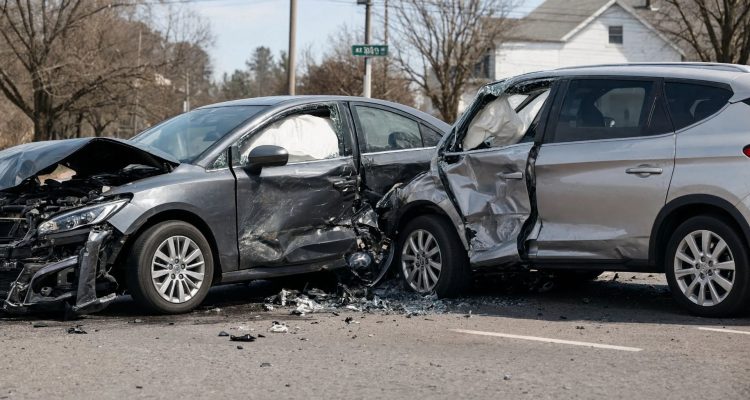
After a serious car accident in Colorado, a personal injury victim typically follows a predictable insurance path. First, the victim pursues the at-fault driver’s bodily injury (“BI”) liability coverage. That approach makes sense. The negligent driver should pay. If the victim’s damages exceed the at-fault driver’s limits, the claim moves to the victim’s first-party coverage, most commonly Uninsured or Underinsured Motorist coverage (“UM/UIM”). Only after the victim exhausts those options does the coverage investigation expand to additional first-party policies, including resident relative coverage through a family member’s auto policy. This step-by-step process often determines whether the victim receives a limited, policy-driven payout or meaningful compensation that matches the severity of the injuries.
Unfortunately, Colorado law only requires drivers carry $25,000.00 in BI coverage. That low minimum creates a predictable coverage trap. Even a seriously injured personal injury victim can face an artificially low recovery simply because the at-fault driver bought only the minimum. Catastrophic injuries do not wait for higher limits. Medical bills accumulate immediately. Emergency care, imaging, surgery, specialist treatment, and rehabilitation often exceed $25,000.00 within days or weeks. When that happens, the inquiry must shift from a liability claim into a structured coverage investigation to identify every available layer of protection.
Resident relative insurance coverage can change the outcome when the victim does not carry enough UM/UIM coverage in their own name, or when the victim does not carry an auto policy at all. In those cases, personal injury victims should retain legal representation to locate a qualifying household policy and prove the victim meets Colorado’s resident relative definition under the statute and the policy language. Insurance companies fight these claims aggressively, and the outcome turns on evidence.
Our Colorado personal injury law firm handles severe injury cases where insurance coverage requires real investigation. Attorney Dustin Gaston recently proved that point with a $500,000.00 settlement on a resident relative UIM claim. He turned a case that initially appeared capped at $100,000.00 into a $500,000.00 recovery by locating and proving first-party coverage through the client’s parents.
Quick Takeaway
Resident relative coverage lets an injured person use a family member’s UM/UIM coverage when the injured person resides in the household, even when the policy does not list the injured person as a named insured. Insurance companies fight these claims. Strong proof of residency wins them.
Resident relative claims require two different wins. First, you must identify the policy and confirm it includes UM/UIM bodily injury coverage at meaningful limits. Second, you must prove resident relative status under Colorado law and the policy terms. Many people assume one document will solve it. These claims rarely work that way. They succeed when the evidence tells a consistent story across records, photos, statements, and timeline.
What is UM/UIM Coverage in Colorado
UM/UIM coverage protects you when the at-fault driver carries no insurance or not enough insurance. UM/UIM coverage fills the gap between the at-fault driver’s available liability limits and the injured person’s full damages. UM coverage applies when the at-fault driver carries no bodily injury coverage at all or when coverage does not exist for the crash. UIM coverage applies when the at-fault driver carries bodily injury coverage, but those limits do not cover the injured person’s damages. Most catastrophic injury cases trigger UIM, not UM, because many negligent drivers carry only minimum limits.
Example: A driver carries only $25,000 in bodily injury coverage and causes $300,000 in damages. UIM coverage can cover the shortfall after the liability carrier tenders its limits, subject to the UIM policy limits and terms.
UIM claims typically follow a sequence. The liability carrier pays first. The injured person then presents the UIM claim to the first-party carrier. The first-party carrier evaluates damages, causation, and coverage, and it often demands extensive documentation. This process feels backward to many people because the injured person now fights with an insurance company that collects premiums from the family. Colorado law allows this process, and a strong attorney builds the UIM claim like a complete case, not an afterthought.
Why Coverage Problems Happen So Often
Colorado only requires minimum liability coverage of:
$25,000 for bodily injury or death to any one person
$50,000 for bodily injury or death to all persons in one accident
$15,000 for property damage
Those minimums do not match real life. One emergency room visit, one surgery, or one long rehab plan can exceed the minimums. Pedestrian and crosswalk cases often involve even higher damages because the body absorbs the impact.
Pedestrian collisions also trigger extensive “downstream” damages that insurers try to minimize. The victim often suffers fractures, head injuries, soft tissue trauma, and nerve injuries. The victim often needs imaging, specialist care, physical therapy, injections, and sometimes surgery. Time away from work accumulates quickly. Pain and suffering becomes permanent. When an attorney evaluates coverage, the attorney must match likely damages to available limits and then hunt for additional policies. Resident relative coverage often provides the most meaningful path to full compensation when the injured person does not carry an auto policy in their own name.
What Resident Relative Coverage Means
Colorado defines “resident relative” by statute. C.R.S. § 10-4-601(13) states: “Resident relative means a person who, at the time of the accident, is related by blood, marriage, or adoption to the named insured or resident spouse and who resides in the named insured’s household, even if temporarily living elsewhere.”
That definition drives everything in a resident relative claim. Two ideas matter most:
Relation: You must show the family relationship by blood, marriage, or adoption.
Residence: You must show that you “reside” in the household, even if you temporarily live elsewhere.
This statute matters because it gives Colorado a clear, public definition that insurance companies must follow. The carrier cannot invent a new definition that excludes legitimate household members. The carrier still investigates facts, but the carrier must analyze those facts through the statute’s language.
The phrase “even if temporarily living elsewhere” carries real power. A person can qualify even when life circumstances place them outside the home for periods of time. Work travel, a temporary lease, a short-term relationship move, caring for another family member, and school-related housing can all fit the statute when the evidence shows continued household residency and intent to return.
“Resides” Matters More Than “Primarily Lives”
Colorado law focuses on whether you reside in the household. Colorado law does not require you to “primarily reside” there. A person can maintain more than one residence and still qualify, but proof becomes harder. This distinction drives many resident relative disputes. Insurance companies often try to convert “resides” into “primarily lives.” Colorado law does not require “primary residence” language in the resident relative statute. The real question focuses on whether the person maintains meaningful household ties that show residence, not occasional visitation. The evidence must show more than a mailing address. It must show the person actually lives as part of that household in a real way.
Common real-world examples:
A college student lives near campus during the semester and returns home on breaks. The student still qualifies when the student keeps ties to the household and intends to return.
An adult child stays with parents while saving money and also spends time with a partner elsewhere. The adult child can still qualify when the facts show real household residency.
A family member splits time between two homes. The family member can still qualify with strong proof.
In each example, the winning evidence usually shows continuity. The person keeps clothing and personal belongings at the home. The person maintains a bedroom or sleeping space. The person receives important mail there. The person keeps household access and returns regularly. The person treats the home like a base, not a museum.
Insurance carriers do not treat resident relative claims like routine claims. Carriers often treat these cases like coverage litigation because resident relative claims can unlock high UM/UIM limits that the carrier never expected to pay for the claimant.
The carrier also worries about precedent. If the carrier pays a resident relative claim easily, the carrier expects more claims to follow. Carriers therefore push for strict proof and attempt to create doubt about residency. They often demand high volumes of documentation and then cherry-pick inconsistencies to justify denial or delay.
Insurance carriers often push back with arguments like:
The claimant moved out.
The claimant only visited.
The claimant lived somewhere else.
The claimant kept no real ties to the household.
The claimant lacked intent to return.
The carrier also runs deep investigations. The carrier pulls records, reviews public databases, interviews people, and scrutinizes mail and addresses. The carrier often requests recorded statements from the claimant and the named insured.
Carriers also look for “conflicting addresses.” A lease in the claimant’s name, a driver’s license address, voter registration, tax documents, employer records, or even social media check-ins can create disputes. The carrier may treat any mismatch as proof the claimant did not reside in the household. Strong attorneys respond by building a timeline, explaining why certain addresses appear in certain records, and proving household residence with multiple independent sources of evidence.
$500,000.00 Settlement on a Resident Relative UIM Claim
Dustin Gaston represented a pedestrian who suffered injuries after being struck in a marked crosswalk. From the outset, the case appeared limited to a $100,000.00 policy-limits recovery. The at-fault driver carried only $100,000.00 in BI coverage, and the client did not maintain an auto insurance policy in his own name. On paper, that meant the available insurance fell dramatically short of what the injuries required. Catastrophic trauma, long-term medical care, and permanent limitations cannot be meaningfully addressed with minimum-level coverage.
This situation reflects a common and dangerous problem in pedestrian and young-adult injury cases. Many pedestrians do not purchase auto insurance because they do not own a vehicle. They reasonably assume auto insurance only follows cars. In reality, UM/UIM coverage often follows people, not just vehicles. Resident relative coverage expands protection further by extending coverage through qualifying household family members. Unfortunately, most injured people do not know this coverage exists, and many cases end prematurely because no one investigates beyond the obvious policy.
Dustin refused to accept the artificial $100,000.00 ceiling. He began a detailed investigation into the client’s living arrangements and household relationships. Through that process, he identified a qualifying resident relative policy through the client’s parents. The parents carried $500,000.00 in underinsured motorist coverage, creating a potential path to meaningful compensation.
This discovery required intentional and methodical coverage analysis. Dustin did not rely on assumptions. He asked targeted questions about residency, household routines, and family relationships. He obtained the policy documents. He confirmed the presence and limits of UM/UIM bodily injury coverage. He analyzed the policy language alongside Colorado’s resident relative statute. He built the coverage theory from the ground up, based on facts and law.
The client did not appear as a named insured on the parents’ policy. Many attorneys and claimants stop at that point. They assume the declarations page controls everything. It does not. Colorado law allows resident relatives to access certain first-party benefits even when they never signed the policy and never paid premiums. Dustin understood that distinction and pursued the claim accordingly.
The insurance company aggressively resisted. The carrier challenged whether the client truly resided in his parents’ household. The carrier launched an extensive investigation. It reviewed public records, scrutinized mailing addresses, examined financial documents, and analyzed any evidence suggesting the client spent time elsewhere. The carrier attempted to characterize temporary living arrangements and normal adult independence as permanent separation from the household.
This phase became a documentation battle. The insurer requested records spanning months and years. It searched for inconsistencies. It isolated statements taken out of context. It attempted to convert ordinary life circumstances into grounds for denial.
Dustin responded with disciplined, comprehensive proof. He organized the evidence chronologically. He tied each document to the relevant time period surrounding the accident. He demonstrated consistent household ties through independent records. He addressed the carrier’s negative evidence directly rather than ignoring it. He explained why certain addresses appeared in specific records and how they fit within the broader residency picture. He eliminated ambiguity.
That strategy worked. The evidence established the client resided in his parents’ household within the meaning of Colorado law and the insurance policy. The carrier could not justify a denial under the statute. Faced with clear proof and legal exposure, the insurer paid the full $500,000.00 in available UIM benefits.
This result demonstrates what high-level coverage work accomplishes. It transforms a case limited by minimum insurance into a recovery that reflects the true scope of harm. It ensures access to medical care. It protects financial stability. It provides resources for long-term recovery.
It also explains why Bowman Law treats insurance analysis as a core part of injury representation. Coverage determines recovery. Recovery determines whether an injured person can obtain proper treatment, replace lost income, and rebuild life after a serious accident. Dustin Gaston’s work in this case shows how thorough investigation, legal precision, and persistence can change the entire trajectory of a personal injury claim.
What Proof Wins a Resident Relative Claim in Colorado
You win a resident relative claim with evidence. You do not win it with assumptions. You also win with consistency. A resident relative claim collapses when the claimant tells one story, documents tell a different story, and the named insured tells a third story. Preparation prevents that problem.
Strong proof often includes:
Mail addressed to the claimant at the household near the time of the accident
Utility bills, bank statements, credit card statements, pay stubs, medical bills, or other account records tied to the household address
First-class mail from a government agency
USPS change of address documentation (CNL107), when applicable
Driver’s license records listing the household address
Vehicle registration and title records listing the household address
Lease agreements or mortgage records that show household ties
Insurance declarations pages and policy documents
School records or transcripts that show the household address
Photos that show the claimant’s possessions at the home
Photos that show a bed and bedroom setup for the claimant
Texts between the claimant and family members that reflect household residency
Proof of access, such as a key and the ability to come and go freely
Proof of personal belongings stored at the home
Affidavits of residence can help. A written affidavit does not replace objective records, but it can strengthen the narrative when it matches the documentation.
Additional high-value proof often includes employment records showing the household address, medical intake forms listing the household address, pharmacy records, insurance EOBs, package delivery histories, and device location history when available and appropriate.
Physical “life evidence” often proves residency better than paperwork alone. Photos of the bedroom, closet contents, toiletries, laundry routines, storage bins, and family living arrangements can show a real household connection. The goal is simple: show the claimant lived there in a way that looks normal and permanent, not convenient and temporary.
Recorded Statements: What Insurers Ask
Most insurance companies demand recorded statements from the claimant and the named insured. The adjuster often focuses on residency details, not injuries. The adjuster uses the recorded statement to lock in facts that the carrier later uses to deny coverage. Small mistakes become big problems. A claimant who says “I stayed with my girlfriend” without clarifying “I also lived at my parents’ house” can create a denial argument. Preparation matters.
Expect questions like:
Where did you sleep most nights in the months before the crash
What address appears on your license, registration, and tax records
Where do you receive mail
Where do you keep your clothes and personal items
Do you have a bedroom at the home
Do you keep a key
Who else lives there
How often do you stay elsewhere
Why do you stay elsewhere
Do you intend to return
A Colorado personal injury law firm that handles resident relative claims can prepare the client for these questions and keep the answers consistent with the evidence.
Preparation does not mean coaching false answers. Preparation means telling the truth clearly, with context, and in a way that matches the records. A good attorney also identifies “trap questions,” such as questions that force a yes-or-no answer when the real truth requires explanation.
What Resident Relative Coverage Can Pay
UM/UIM bodily injury coverage typically pays for damages that include:
Past and future medical expenses
Rehabilitation and therapy costs
Lost wages and lost earning capacity
Pain and suffering
Permanent impairment and disability impacts
Loss of enjoyment of life
Wrongful death damages in fatal cases, when coverage and facts support the claim
Policy language controls the details, so an attorney should review the declarations page and the UM/UIM endorsement early.
UM/UIM damages often mirror what an injured person would seek from the negligent driver in a lawsuit. The UIM carrier often argues about causation and the reasonableness of treatment, just like a liability carrier. The UIM carrier also evaluates future damages and permanency. A strong claim package includes medical narratives, prognosis support, wage documentation, and a clear damages story that ties injuries to the crash.
Resident Relative Claims Do Not Automatically Raise Premiums in Colorado
Colorado law protects families who use UM/UIM coverage after a not-at-fault crash. C.R.S. § 10-4-628 prohibits an insurer from increasing premiums based solely on an accident that did not involve fault by the insured or the resident relative.
This rule matters because families often hesitate to pursue resident relative coverage out of fear that a parent’s premiums will skyrocket. Colorado law limits that risk when the crash did not involve fault by the insured or resident relative. This legal protection encourages families to use the coverage they already paid for.
Families often worry about premium increases and policy cancellations. Colorado law limits that risk in the non-fault context described by the statute.
Step-by-Step: How Bowman Law Evaluates a Resident Relative Claim
Bowman Law approaches resident relative coverage with a systematic process. Bowman Law treats coverage like evidence. We do not wait for an insurer to tell us what exists. We identify every potential policy early, request declarations pages, and build a residency file before the carrier shapes the narrative.
Step 1: Confirm the at-fault driver’s bodily injury limits and collect the declarations page.
Step 2: Confirm whether the injured person carries any UM/UIM coverage in the injured person’s own name.
Step 3: Identify relatives in the household and request declarations pages for their auto policies.
Step 4: Confirm UM/UIM bodily injury coverage on those policies.
Step 5: Analyze the resident relative definition in the policy and compare it to C.R.S. § 10-4-601(13).
Step 6: Build the residency evidence file with documents, photos, and records.
Step 7: Prepare the claimant and named insured for recorded statements.
Step 8: Present the claim package with organized proof, timelines, and clear explanations.
Step 9: Push back on improper denials and coverage games.
This process helped Dustin Gaston secure the $500,000.00 settlement described above. A strong presentation often uses a simple structure that carriers cannot ignore: a residency timeline, a document index, copies of key records near the accident date, and a narrative that explains any address inconsistencies before the carrier weaponizes them.
Why This $500,000 Settlement Matters
Dustin Gaston’s work shows what thorough coverage analysis can accomplish.
He identified coverage that others miss.
He built the residency proof in a way the carrier could not ignore.
He overcame an insurer’s investigation and denial posture.
He delivered a $500,000 settlement that better matched catastrophic injuries.
This outcome matters for every Colorado family, because many households carry UM/UIM coverage that can protect resident relatives after a serious crash.
This case also delivers a simple message: the declarations page does not tell the full story. Household coverage often exists even when the injured person’s name does not appear on the policy. Many injured people leave money on the table because nobody investigates resident relative coverage. Bowman Law’s attorneys build injury claims and coverage claims together. That approach maximizes recovery and protects the client from early, artificial ceilings.
Learn More From Bowman Law
If you want more information about Colorado car accident claims, UM/UIM coverage, and first-party insurance strategies, explore Bowman Law’s educational resources on our website. You can also review our car accident and insurance coverage content, including articles that explain UM/UIM claims and ways to prove residency for resident relative coverage. These pages explain how UM/UIM claims work, how resident relative coverage applies in Colorado, and what evidence insurers demand.
Visit Bowman Law’s contact page to request a free consultation. If you suspect a resident relative policy may apply, tell our team who lives in the household, who carries auto insurance, and whether any family member carries UM/UIM coverage. That information helps Bowman Law start the coverage investigation immediately.
Dustin Gaston
Dustin Gaston has practiced personal injury law in Colorado since 2020, and is passionate about ensuring that his clients receive what they deserve for their injuries. Dustin received his BA from the University of Arkansas - Fort Smith and completed is JD at the University of Arkansas School of Law.
On Wednesday, September 30, 2026, an 81-year-old man driving a Ford Escape westbound on Highway 34 in Greeley was struck broadside by a GMC 2500 driven by 32-year-old Santos Garcia-Juarez. ...
Around 11 p.m. on Saturday, September 26, 2026, a Weld County Sheriff’s deputy attempted to pull over a suspected drunk driver at 18th Street and Highway 85 in Greeley. The ...
Just before 12:30 p.m. on Saturday, September 12, 2026, Colorado State Patrol responded to a head-on crash on Weld County Road 100, east of Wellington. A 37-year-old woman from Fort ...


 Return to All News & Resources