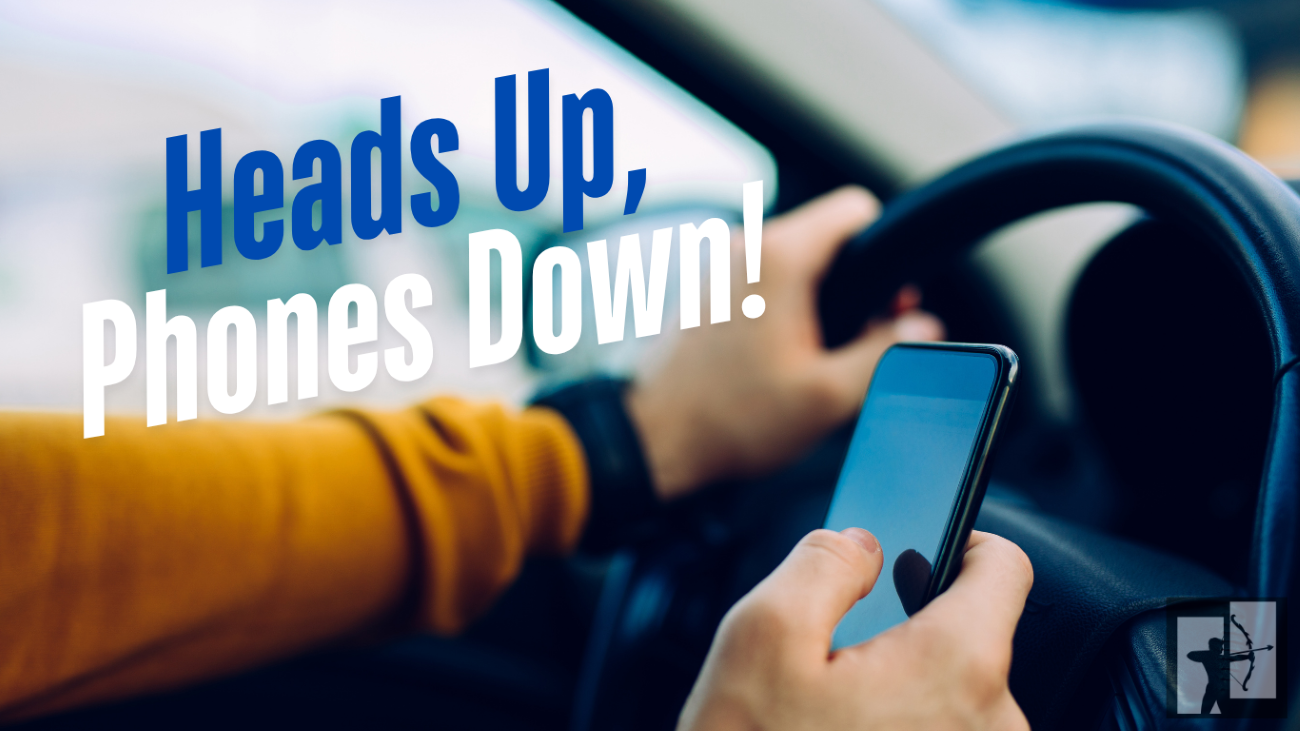
Distracted driving has unfortunately become all too common in Colorado. With the proliferation of smart phones and other technological features in modern vehicles today, it seems anywhere you look on the road a driver has their hands on a phone or is not paying attention.
Recent studies indicate that using a mobile device while driving increases the risk of a crash by two to six times. More troubling, according to the Colorado Department of Transportation’s (CDOT) 2025 Driver Behavior Report, 71% of drivers statewide admitted to using their phones while driving. With statistics like these, it is not surprising that distracted driving is the third highest cause of traffic-related crashes in Colorado—with 698 Coloradans sadly losing their lives to distracted driving from 2013-2023.
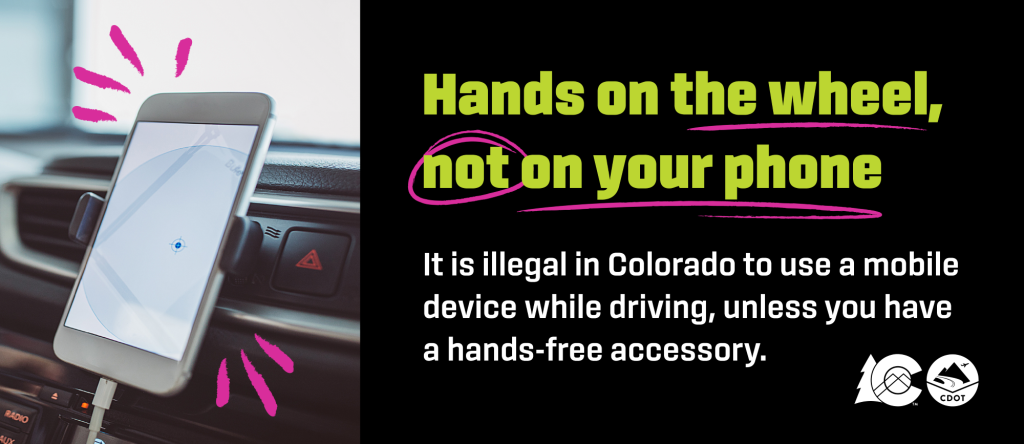
Last year, Colorado implemented a law that prohibits drivers from using a mobile device while driving unless a hand-free accessory is used. Penalties for violating the law begin with a $75 fine and two license suspension points for the first offense. Repeat offenders are subject to increased fines and license points.
Thanks to the new legislation, distracted driving appears to be diminishing slightly. Cambridge Mobile Telematics (CMT) conducted a one-year analysis using data collected from smartphone apps and cellphone censors across millions of driving trips in Colorado. CMT found that distracted driving declined 4.7% between 2024 to 2025 and dropped 8.3% in the first month of the new law taking effect. Colorado State Patrol’s review of the data suggests the decline prevented upwards of 600 crashes, 400 injuries, and 6 fatalities.
Source: Colorado Department of Transportation
What is Distracted Driving?
Distracted driving is simply any activity that diverts a person’s attention from driving and the road. This can include texting, talking on the phone or with a passenger, eating, looking after children or pets, reading, watching videos, or changing the radio or other settings while operating a vehicle.
There are three main types of distracted driving that contribute to accidents:
Visual Distractions: when a driver takes their eyes of the road.
Manual Distractions: when a driver takes their hands off of the steering wheel.
Cognitive Distractions: when drivers are thinking about something other than driving.
While a person’s attention may be able to multitask quickly, in reality their optimal focus cannot be applied simultaneously. In fact, it is more likely that a person will move from one kind of distraction into another. A driver is distracted visually, manually, and cognitively when they recall details of a conversation from earlier in the day and proceed to pick up their phone to send a text. This behavior ultimately diverts attention from the road, slows reaction time, and limits the ability to recognize hazards that can result in a crash.
Further, it can take only seconds of diverted attention to encounter a hazard or cause a devastating crash. In a recent campaign, CDOT partnered with Dr. Molly Thiessen and the survivor of a distracted driving accident, Triny Willerton, to demonstrate how a driver opening a food wrapper for 3 seconds is long enough to miss 20 cyclists.
Drivers should avoid multitasking and focus on their primary responsibility and duty while operating a motor vehicle: Driving.
How to Prevent Distracted Driving
Depending on your route and length of trip, driving can often be a demanding task both physically and mentally. While many drivers may have good intentions to avoid distracted driving, it is easier said than done, and there are countless visual, manual, and cognitive distractions one can encounter.
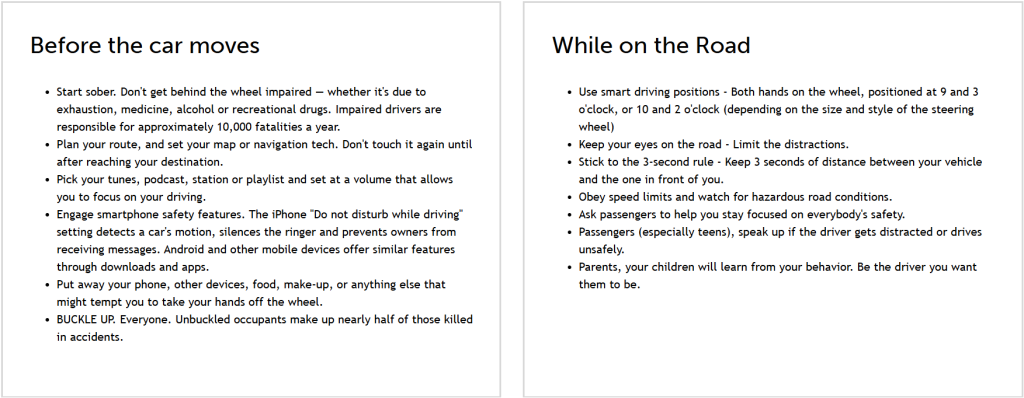
Below are a number of principles you can follow to ensure you drive safely:
Unfortunately, no matter how closely you follow these guidelines and choose to operate your motor vehicle in a safe and reasonable manner, you cannot control the negligent actions of others. The Colorado Personal Injury Attorneys at Bowman Lawhave fought for countless victims of distracted driving. We have outlined essential steps to take after an accident, should you find yourself in the unfortunate position.
6 Steps to Take After a Car Accident
Although it is impossible to anticipate when or where an accident may occur, if possible, understanding how to react in the moment and the ensuing days is essential. Whether the accident is a minor fender-bender or results in catastrophic injuries, the aftermath can be confusing and stressful. Taking the appropriate measures right away can safeguard victims and make the insurance claims process more manageable.
If your accident already occurred and these steps were not followed, it is still important to collect any relevant details and speak with a personal injury attorney about the next steps. Doing so can clarify available options and determine the best path forward.
Pull Over: Parties involved in an accident should never drive away from the scene, even if it seems minor. Do not move vehicles involved unless they interfere with traffic. Turn on hazard lights and set up emergency cones or triangles to alert other drivers. Only exit vehicles if able to do so when it’s safe.
Call the Police: It is against the law to not report an accident that results in injuries. Even in minor accidents, calling the police is advisable for documentation purposes. The responding office will create an incident or accident report, documenting essential details like property damage for insurance and legal purposes. When the police arrive, the parties should tell the officer exactly what happened to the best of their ability. Drivers should never speculate about the causes of the accident or misstate the facts. If asked about injuries, it is okay for the parties to inform the police officer they are not sure. Often, injuries become apparent hours, even days, after a collision.
Take Photographs: Photograph the accident scene and any visible injuries without interfering with the police investigation. If taking pictures at the scene is not feasible, capture them as soon as possible afterward to preserve crucial evidence for insurance and legal purposes. Capture video footage in addition to photographs to provide a comprehensive visual record of the accident scene and any visible injuries. Both types of visual documentation can serve as valuable evidence for insurance claims and legal proceedings, so capture as much as possible.
Exchange Contact Information & Report Accident to Insurance: Regardless of police involvement, it is crucial to exchange contact details with all involved parties, including names, addresses, and phone numbers. If there are witnesses, gather their information as well. Should the case require litigation, witness information will be vital for both parties. The parties should also exchange insurance information, including company name and policy number and inquire about coverage details like Medical Payments and Uninsured/Underinsured Motorist Coverage. Promptly report the accident to your insurance provider, ensuring compliance with policy requirements, as many policies require immediate reporting & full cooperation to even consider a claim.
Seek Prompt Medical Attention: Injuries from accidents may not be immediately evident, sometimes becoming apparent hours or even days later. Unless you are absolutely, 100% certain that you are not injured, seek medical attention promptly, either at the emergency room or immediately with your primary care physician. Even seemingly minor accidents can lead to significant or lasting injuries.
Contact Our Colorado Personal Injury Lawyers: After a motor vehicle accident, contacting experienced personal injury lawyers is critical. Insurance adjusters often seek statements right away, so it is wise to seek legal counsel before speaking with them to avoid potential pitfalls. During a free consultation, Bowman Law’s team of personal injury lawyers can review your accident from an expert legal perspective to safeguard your rights and ensure vital evidence is preserved. Additionally, they can advise you on issues ranging from compensation to treatment and property damage, to help answer any questions you may have. Our lawyers work on a contingency fee basis, which means there will be no legal fee unless you receive compensation for your injuries.
Bowman Law Supports Colorado “Hands-Free”
We urge all Coloradans to adopt safer driving practices and adopt hands-free accessories such as dashboard mounts and car speakerphone systems to comply with the new law. Help spread this important message by sharing this blog with your friends, family, and colleagues. Your commitment keeps Colorado roads and communities safer.
Bowman Law will continue to fight for injury victims and secure the rightful compensation they deserve. If you or a loved-one has been injured as a result of distracted driving, please contact Bowman Law today at 720-863-6904 or send a message for a free consultation.
Bowman Law handles distracted driving accident claims throughout Colorado and has three convenient office locations in Denver, Wheat Ridge, and Greeley.
Cameron Sramek
Cameron joined Bowman Law in October of 2013 and has gained invaluable work experience as a paralegal for over a decade. Since this time, he has thoroughly enjoyed the challenging work that personal injury law presents. Although he now works as the firm’s COO, Cameron recognizes the many issues and troubles clients are faced after a personal injury.
After a serious car accident in Colorado, a personal injury victim typically follows a predictable insurance path. First, the victim pursues the at-fault driver’s bodily injury (“BI”) liability coverage. That ...
When is internal fixation surgery recommended after a car accident? Internal fixation surgery after a car accident becomes necessary when a fracture is severe enough that bones cannot heal without ...
When is cognitive rehabilitation recommended in personal injury cases? Cognitive rehabilitation is a structured therapeutic process designed to help individuals recover thinking skills, memory, concentration, problem-solving, and daily functioning after ...


 Return to All News & Resources