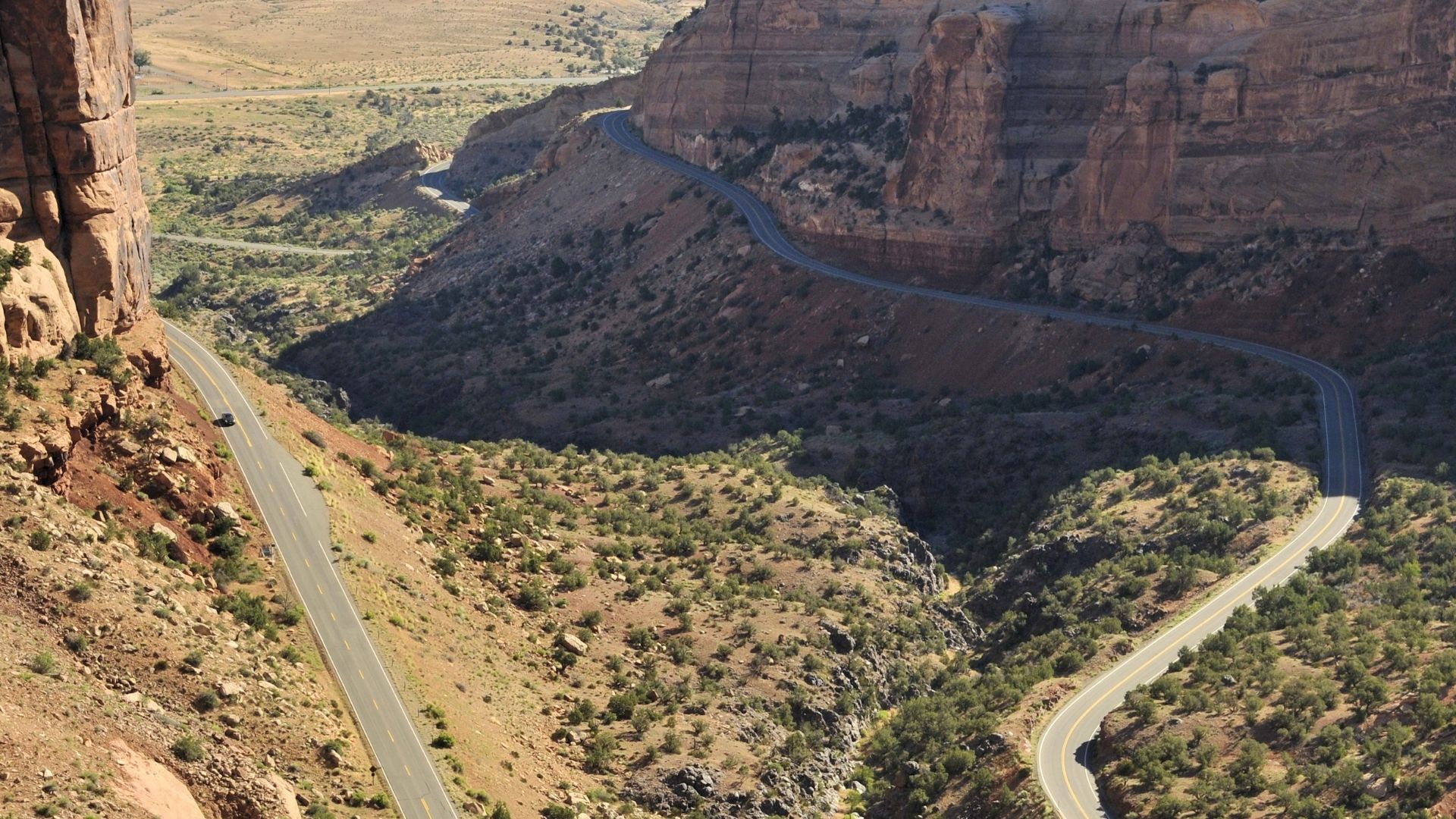
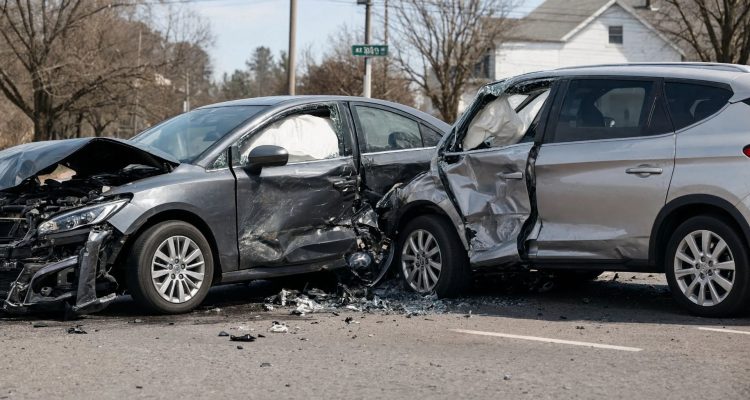
The National Transportation Safety Board has released its preliminary investigation into the August 9 crash on Lookout Lane in Orchard Mesa. NTSB investigators determined that the vehicle — a 2003 Cadillac CTS — failed to negotiate a leftward curve in the road, departed the roadway, rolled over, descended a steep embankment, and went over a cliff face before crashing onto a rocky surface below. The crash occurred at 11:57 p.m. The bodies of all five victims were found the next morning. Three of the five occupants had seat belts on. Two did not. (CBS Colorado, September 6, 2026)
The NTSB’s involvement in this investigation carries significant legal weight. The NTSB investigates crashes where factors beyond driver conduct — including road design, signage, and infrastructure — may have contributed to the outcome. The preliminary report’s description of a leftward curve that the vehicle failed to negotiate is directly relevant to the road design question raised in the original blog below: whether the absence of guardrails at that curve on Lookout Lane, combined with the steep drop-off beyond it, represents a design or maintenance failure by the responsible government entity. If NTSB’s full report identifies a road design deficiency as a contributing factor, that finding becomes powerful evidence in a civil claim against the City of Grand Junction or Mesa County. The 182-day notice deadline for government entity claims runs from August 9, 2026 and closes in approximately February 2027.
The original blog published August 12, 2026 continues below.
Late Saturday night, August 9, 2026, a vehicle carrying five 17-year-old boys was traveling southbound on Lookout Lane in Orchard Mesa, just south of Grand Junction. The vehicle veered off the roadway and plunged down a steep hillside. All five were pronounced dead at the scene.
First responders from the Grand Junction Police Department, Mesa County Search and Rescue, the Grand Junction Fire Department, and the Mesa County Coroner’s Office used ropes to descend the cliff and recover the victims. Autopsies confirmed all five died from injuries sustained in the crash. Speed is being examined as a factor. The investigation is ongoing. (ABC News, August 11, 2026; Denver7, August 11, 2026; CBS Colorado, August 11, 2026; FOX31/KDVR, August 11, 2026)
The Mesa County Coroner’s Office confirmed that three of the five occupants, including the driver and the front-seat passenger, were wearing seat belts. The two who were not were ejected from the vehicle. Per the coroner’s policy on minors, none of the victims have been publicly identified. Grand Junction police noted that none of the bodies were discovered until Sunday morning, when a passerby spotted the wreckage below the roadway and called 911.
Five families are now facing the unimaginable. And in the weeks and months ahead, they will face legal questions they are not prepared to answer alone. Understanding those questions early — before insurance companies begin shaping the narrative and before evidence disappears — is one of the most meaningful things families can do right now.
What Investigators Are Examining
Speed is the factor police have identified publicly. On a road like Lookout Lane, which runs along a residential area above a steep hillside, excessive speed would reduce reaction time to a curve and increase the likelihood of a vehicle leaving the roadway.
Investigators will also examine:
• The speed of the vehicle in the moments before it left the roadway, which event data recorder information may capture
• Whether alcohol or drugs were a contributing factor for the driver
• The condition of the roadway, including its surface, any curve geometry, posted speed limits, and the presence or absence of guardrails at the point of departure
• Whether any warning signage existed along Lookout Lane before the point where the vehicle left the road — Denver7 reported that a 2023 Google Street View image shows no guardrails along the stretch where the crash occurred
• The condition of the tires and any mechanical factors that may have affected vehicle handling
• Whether the driver had any prior traffic violations or incidents that bear on the circumstances of the crash
Each of these items informs both the police investigation and any civil claims. Some are also relevant to the seat belt question, which carries its own legal weight.
The Seat Belt Factor: What Colorado Law Says
Colorado law requires all vehicle occupants to wear seat belts under C.R.S. Section 42-4-237. The two occupants who were not wearing seat belts were ejected — a fact that will factor into the liability analysis for their families’ claims.
Under Colorado’s comparative negligence framework, a failure to wear a seat belt can reduce a victim’s recovery. It does not eliminate it. The question is how much of the injuries or death can be attributed to the failure to buckle up versus how much would have occurred regardless.
Under C.R.S. Section 13-21-111, a party who bears more than 50 percent of the fault for their own injuries cannot recover. But in most cases, the failure to wear a seat belt is not found to contribute 50 percent or more of the harm — particularly when the underlying crash was caused by someone else’s negligence. The analysis is fact-specific, and it is not a reason for families of the ejected victims to assume they have no claim.
The three occupants who were wearing seat belts — including the driver — are in a different legal position with respect to this factor. Their families’ claims are not subject to a seat belt reduction argument.
Passenger Wrongful Death Claims Against the Driver’s Estate
Four of the five occupants were passengers. They did not control the vehicle. They did not cause it to leave the road. Whatever the investigation reveals about speed, impairment, or driver error, the passengers bear no responsibility for those decisions.
Under Colorado’s wrongful death statute, C.R.S. Section 13-21-202, the families of those killed have the right to pursue compensation when a death results from the wrongful act or neglect of another. For the four passenger families, the driver’s estate is a potential defendant. The driver’s own family also has rights — but the driver’s conduct will be examined in a way that the passengers’ conduct will not.
Recoverable damages under C.R.S. Section 13-21-203 include economic losses such as the income and financial support the deceased would have provided, and noneconomic damages including grief, loss of companionship, pain and suffering, and emotional stress. Because these victims were 17 years old, the economic loss calculation will differ from that of an adult — but noneconomic damages are significant and fully compensable.
The Road Itself: Was Lookout Lane Safe?
One of the most important and underexamined questions in this crash is the road. Lookout Lane runs along a steep hillside in a residential area of Orchard Mesa. Denver7 reported that a 2023 Google Street View image shows no guardrails along the stretch of road where the vehicle departed.
Guardrails on roads adjacent to steep drop-offs are a standard safety feature. Their presence — or absence — is a function of road design decisions made by the entity responsible for maintaining that roadway. If the City of Grand Junction or Mesa County is responsible for Lookout Lane, and if the road’s design failed to include basic hazard mitigation at a known drop-off point, that government entity may bear partial liability for what happened Saturday night.
This is not a simple claim to bring. Colorado’s Governmental Immunity Act provides significant protection to government entities, and pursuing a claim against a city or county requires navigating specific procedural requirements.
Under C.R.S. Section 24-10-106, government entities in Colorado have immunity from suit in most circumstances, but that immunity is waived for certain categories of negligence — including dangerous conditions on public roadways. If a guardrail failure on Lookout Lane contributed to this crash, that waiver may apply.
Critically, C.R.S. Section 24-10-109 requires anyone pursuing a claim against a Colorado government entity to file a formal written notice of claim within 182 days of the injury or death. For a crash that occurred August 9, 2026, that window closes in approximately February 2027. It is a hard deadline. Missing it bars the claim entirely, regardless of its merits.
Whether the road design contributed to this crash will depend on the investigation — but the 182-day clock is already running. Families who believe a government entity may share responsibility need to act before that window closes.
What the Driver’s Family Faces
The driver is also among the five who died. His family is grieving the same loss. But the driver’s estate faces a legally distinct situation from the passenger families.
If the investigation concludes that speed or impairment caused the vehicle to leave the road, the driver’s estate may face wrongful death claims from four families. The driver’s own family may also have a wrongful death claim — but the fault analysis that applies to the driver’s conduct is a significant complicating factor in that claim.
If the driver’s conduct rises to the level of recklessness under C.R.S. Section 42-4-1401 — operating a vehicle in willful or wanton disregard for the safety of others — that finding also opens the door to exemplary damages under C.R.S. Section 13-21-102. Exemplary damages can be awarded when a defendant’s conduct demonstrates willful and wanton disregard for the rights and safety of others. A driver who operates a vehicle at excessive speed on a road above a steep cliff, with four passengers inside, may present exactly that pattern.
Insurance and Coverage: What Families Should Know
Five families. Four of whom are passengers with strong legal positions. The driver’s auto insurance policy — assuming one exists — is the starting point. But standard policy limits may be far below the collective damages across five wrongful death claims.
When the driver’s insurance is insufficient, each family should examine their own coverage. Uninsured and underinsured motorist coverage on any policy held by a victim or a resident relative in their household can provide an additional layer of recovery. This is one of the most important — and most overlooked — sources of compensation in crashes involving multiple victims.
The vehicle owner’s policy, if the vehicle was not owned by the driver, is another potential source. Identifying and pursuing every available coverage source is one of the first things a civil attorney does in a case like this.
A Note on These Families and This Ongoing Investigation
Five 17-year-old boys from Grand Junction died Saturday night. Their families are identifying their sons and planning funerals. Their communities are grieving. This blog is not written to rush anyone into a legal decision.
It is written because the legal questions that follow a crash like this do not wait for grief to pass. Insurance companies begin their own work immediately. Government entities have procedural deadlines that run without regard to how families are doing. And the evidence that matters most — the vehicle’s event data, the roadway’s condition at the point of departure, any available camera footage — is most available right now.
Knowing your rights costs nothing. Understanding your options carries no obligation. The decisions about whether and how to pursue a claim belong entirely to each family, on their own timeline.
If Your Family Was Affected by This Crash
Bowman Law handles serious motor vehicle accident cases and wrongful death claims for families throughout Colorado, including cases involving government entity liability and multi-victim crashes. We understand the full legal landscape of crashes like this one — the driver’s liability, the road design questions, the insurance coverage picture, and the 182-day government notice deadline.
If your family lost someone in the August 9 crash on Lookout Lane in Grand Junction, we are available for a confidential conversation at no charge and no obligation.
Jerry Bowman, J.D., M.A., Owner and managing attorney of Bowman Law LLC, takes his responsibility to the legal profession seriously and dedicates his time and effort to providing quality and competent legal representation to clients in Denver and throughout all of Colorado. He holds an MA in Political Science from Wayne State University and earned his law degree in two and a half years from Michigan State University College of Law.
On Wednesday, September 30, 2026, an 81-year-old man driving a Ford Escape westbound on Highway 34 in Greeley was struck broadside by a GMC 2500 driven by 32-year-old Santos Garcia-Juarez. ...
Around 11 p.m. on Saturday, September 26, 2026, a Weld County Sheriff’s deputy attempted to pull over a suspected drunk driver at 18th Street and Highway 85 in Greeley. The ...
Just before 12:30 p.m. on Saturday, September 12, 2026, Colorado State Patrol responded to a head-on crash on Weld County Road 100, east of Wellington. A 37-year-old woman from Fort ...


 Return to All News & Resources