Return to All News & Resources

Permanent Impairment in Personal Injury
What is permanent impairment in a personal injury case, and why does it matter? Permanent impairment refers to a lasting loss of physical or cognitive function that remains after a ...
Keep Reading


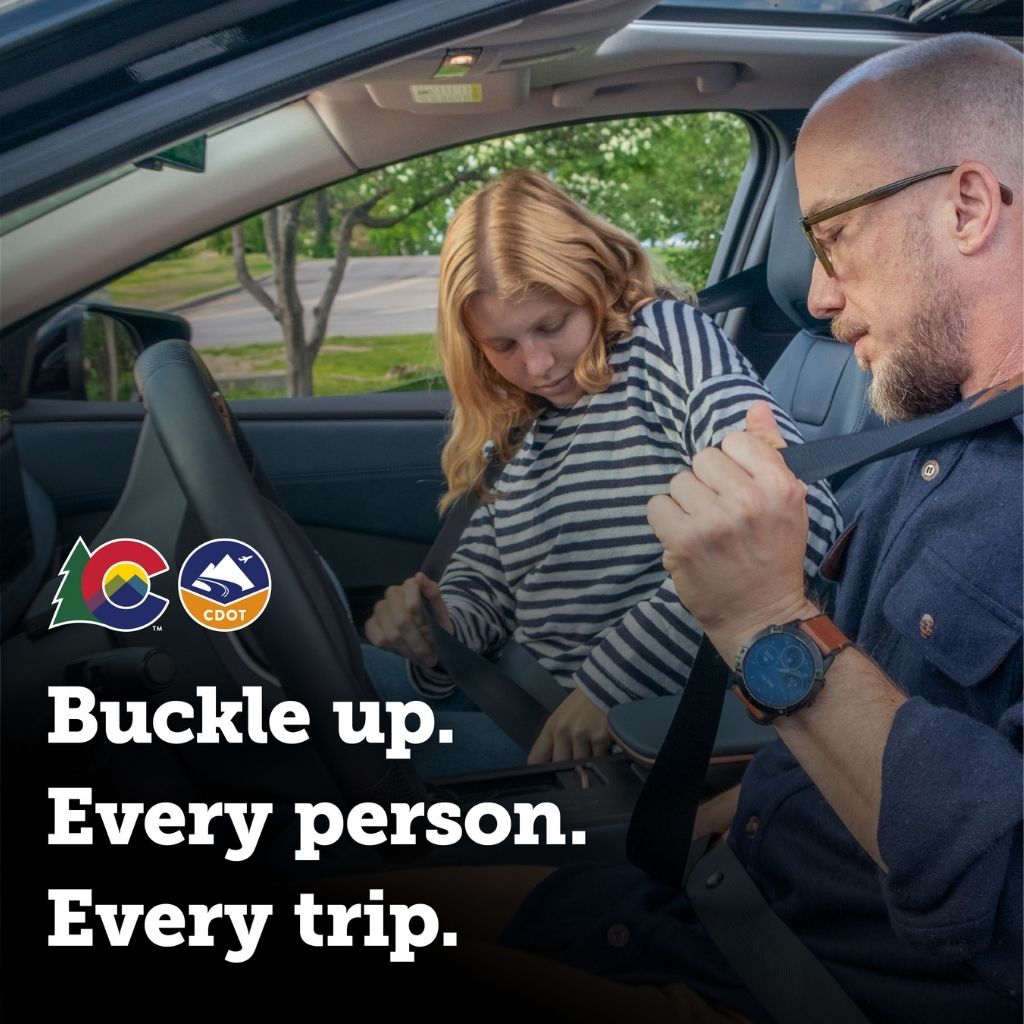
Source: CDOT
Colorado just set a new record for seat belt use. That sounds like good news, and in many ways, it is. But behind the headline sits a number that is harder to ignore: 191 people died in 2025 because they were not wearing a seat belt.
That is not a statistic. That is 191 preventable deaths.
Every May, law enforcement across Colorado steps up seat belt enforcement as part of the national Click It or Ticket campaign. Officers are out in force, patrols are increased, and citations are being issued for unbuckled drivers. Understanding what the latest data shows and what Colorado law actually requires is worth a few minutes of your time.
For the first time in state history, Colorado’s seat belt use rate crossed the 90% threshold, reaching 90.69% in 2025, according to data from the National Highway Traffic Safety Administration (NHTSA). That is the highest rate ever recorded in this state, and it reflects real progress.
The problem is that Colorado still falls below the national average of 91.2%, and a gap at this scale means thousands of drivers and passengers are still riding unrestrained every single day.
Not all parts of the state perform equally. Some counties lead the way: Grand County came in at 97.12%, Douglas County at 95.74%, and Garfield County at 94.3%. But four counties, Pueblo (71.58%), Jefferson (75.3%), Morgan (79.03%), and Weld (79.84%), still have seat belt use rates below 80%.
Vehicle type also plays a role. SUVs had the highest usage rate at 93.35%, followed by vans at 92.88% and cars at 89.83%. Trucks came in last at just 85.68%, meaning roughly one in seven truck occupants was not buckled.
Source: CDOT Click It or Ticket Partner Toolkit, 2025 seat belt data via NHTSA
NHTSA estimates that wearing a seat belt reduces the risk of severe injury or death by up to 65%. That is not a minor improvement. That is the difference between walking away from a crash and not walking away at all.
In 2023, nearly half of all passenger vehicle occupants killed in crashes nationwide were unrestrained. What makes that even harder to absorb is that unrestrained occupants represented only about 8.8% of the driving population. They were dying at a wildly disproportionate rate. The data also shows that unbuckled deaths are significantly more common at night, with 56% of nighttime crash fatalities involving unrestrained occupants.
Source: NHTSA Seat Belt Safety Data
Since Click It or Ticket was introduced in Colorado in 2002, statewide seat belt use has climbed from 72% to 90.7%. The campaign works. The enforcement matters. Learn more at SeatBeltsColorado.com.
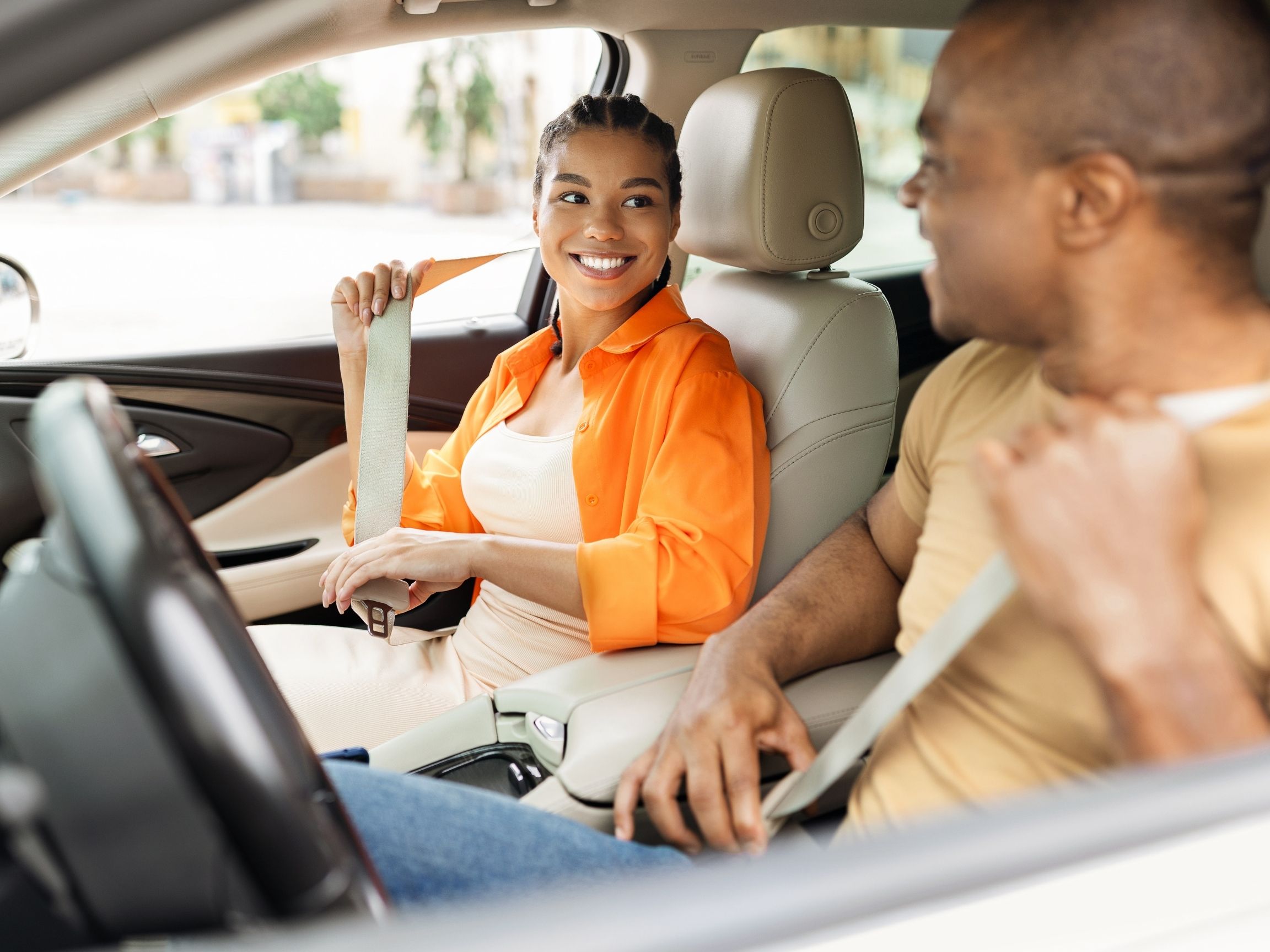
Colorado’s seat belt laws apply to everyone in the vehicle, though the enforcement mechanisms differ depending on who is driving.
For adult drivers and front-seat passengers, Colorado operates under a secondary enforcement law. That means an officer cannot pull you over solely for being unbuckled, but if you are stopped for another traffic violation and found without a seat belt, you will face an additional citation.
The rules are stricter for younger drivers. Under Colorado’s Graduated Drivers Licensing (GDL) law, all drivers under 18 and every passenger in their vehicle must wear a seat belt, regardless of age. This is a primary enforcement law, meaning officers can pull a teen driver over based on the seat belt violation alone.
Children follow a different framework entirely. Colorado’s Child Passenger Safety law is also primary enforcement. A driver can be stopped and ticketed if an officer observes an unrestrained or improperly secured child under 18 in the vehicle.
You can find more detail on enforcement and specific requirements at codot.gov/safety/seatbelts.
From a legal perspective, not wearing a seat belt creates complications that people often do not anticipate until after the fact.
Colorado follows a modified comparative negligence rule. If an injured person is found to bear some degree of fault for their own injuries, their compensation can be reduced accordingly, or eliminated entirely if their share of fault exceeds 50%. In a crash where the injured party was unrestrained, the defense will almost certainly raise the seat belt issue as evidence of comparative fault.
Whether that argument succeeds depends on the specific facts, the nature of the injuries, and how well the case is documented. But it is a real exposure that complicates claims and affects outcomes. Wearing a seat belt does not just protect your body. It protects your legal position.
Whether or not a seat belt was involved, the moments after a serious crash are critical. Evidence disappears quickly. Surveillance footage gets overwritten. Witness memories fade. Insurance companies begin their own investigations almost immediately, and their interests are not aligned with yours.
If you or someone you care about has been seriously injured in a car accident in Colorado, Bowman Law is here to help. Our team understands the full picture, from evidence preservation and injury documentation to insurance tactics and legal strategy.
Contact Bowman Law at 720-863-6904 or reach out for a free consultation. We handle personal injury claims throughout Colorado with offices in Denver, Wheat Ridge, and Greeley.
Buckle up. Every time.

Cameron joined Bowman Law in October of 2013 and has gained invaluable work experience as a paralegal for over a decade. Since this time, he has thoroughly enjoyed the challenging work that personal injury law presents. Although he now works as the firm’s COO, Cameron recognizes the many issues and troubles clients are faced after a personal injury.
What is permanent impairment in a personal injury case, and why does it matter? Permanent impairment refers to a lasting loss of physical or cognitive function that remains after a ...
Keep Reading
Rideshare apps like Uber and Lyft have changed the way we travel. But what happens if you’re injured in a crash while taking a rideshare? The reality is that when ...
Keep Reading
A car accident can change your life in an instant — physically, emotionally, and psychologically. While many people focus on visible injuries, the emotional aftermath, such as post-traumatic stress disorder ...
Keep Reading