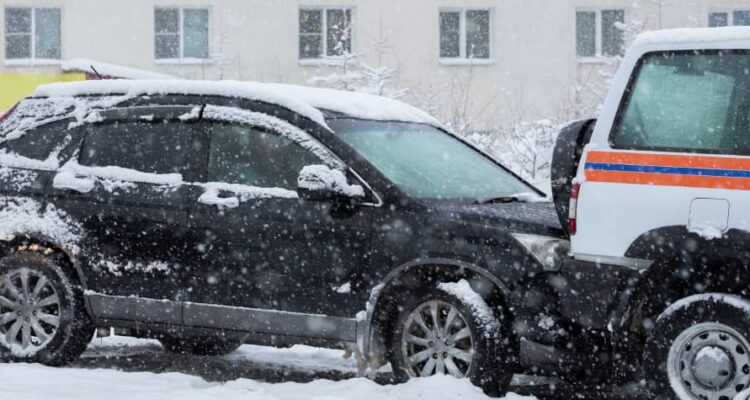
Yes. A Colorado truck accident involves larger vehicles, stricter federal and state regulations, multiple potential defendants, and evidence that can disappear quickly, making both the injuries and the legal analysis far more complex than an ordinary passenger-vehicle crash. The Colorado truck accident lawyers at Bowman Law prepared this article to help educate the public regarding trucking accidents.
When people think about traffic collisions, they usually picture standard car accidents. A Colorado truck accident, however, operates in an entirely different category. These crashes frequently result in catastrophic injuries, fatalities, and long-term financial consequences due to the size and weight of commercial trucks and the regulatory framework governing the trucking industry.
Understanding how a Colorado truck accident differs from a car accident is critical for anyone injured in a collision involving a semi-truck or other commercial vehicle. From the mechanics of the crash to the legal standards that apply, truck accidents require a much deeper investigation and analysis.
The Severity of a Colorado Truck Accident
One of the most significant distinctions between a car crash and a Colorado truck accident is the sheer force involved. Commercial trucks are dramatically larger and heavier than passenger vehicles, which directly affects the severity of injuries.
A fully loaded tractor-trailer can legally weigh up to 80,000 pounds, while the average passenger vehicle weighs only a few thousand pounds. In a Colorado truck accident, this weight disparity often results in devastating injuries to occupants of smaller vehicles, even at relatively low speeds. Traumatic brain injuries, spinal cord damage, amputations, and fatalities are far more common in truck collisions than in typical car accidents.
Property damage and roadway disruption are also significantly greater in a Colorado truck accident, particularly on Colorado highways, mountain passes, and in construction zones.
Fatality Risks in Colorado Truck Accidents
According to the Federal Motor Carrier Safety Administration (“FMCSA”), collisions involving large trucks carry a higher risk of fatal outcomes than most passenger-vehicle crashes. In a Colorado truck accident, stopping distance, limited maneuverability, and reduced visibility all increase the likelihood of severe harm.
Large trucks require substantially more time and distance to slow or stop, especially on steep grades or during winter weather conditions common throughout Colorado. When a collision occurs, the force transferred to a passenger vehicle often leaves little margin for survival.
Why Colorado Truck Accidents are More Complicated
A Colorado truck accident rarely involves only one responsible party. Unlike most car accidents, trucking collisions often implicate multiple layers of responsibility beyond the driver.
Truck drivers are subject to strict rules governing hours of service, rest periods, and drug and alcohol testing. When those rules are violated, fatigue, impaired judgment, or slowed reaction time can contribute to a crash. Even when a driver makes an error, liability may extend to the trucking company for unsafe scheduling practices, inadequate training, or failure to enforce safety policies.
Trucking companies also have duties related to vehicle maintenance, cargo loading, and regulatory compliance. Improperly secured cargo, worn tires, brake failures, or neglected inspections frequently play a role in a Colorado truck accident and may point to systemic safety failures rather than a single moment of driver error.
Common Types of Colorado Truck Accidents
A Colorado truck accident can occur in many forms, each presenting unique challenges for investigation and liability analysis.
Jackknife accidents happen when a trailer swings out of alignment with the cab, often blocking multiple lanes of traffic and causing chain-reaction crashes.
Truck Backing Accidents
Truck backing accidents result from a combination of factors that obstruct the ability of a truck driver to perform a safe maneuver. Large trucks have sizeable blind spots, especially behind the truck, making it difficult for drivers to see obstacles. Environmental, such as poor lighting, adverse weather, or narrow spaces, can also contribute to truck backing accidents.
Truck backing accidents can take place in loading docks as trucks align with loading bays. They also occur in distribution centers due to the tight spaces between buildings. At construction sites, truck backing accidents occur when drivers reverse to deliver materials in areas with limited visibility and busy activity.
In Colorado trucking accidents, driver fatigue, inattention, or distraction plays a crucial role, as tired or distracted drivers are more likely to miscalculate distances or miss obstacles while backing. Similarly, improper backing techniques due to a lack of proper training can lead to unsafe situations. In addition, failing to use a spotter can also contribute to the collision risks.
Wide-Turn Accidents
Wide-turn accidents happen because large commercial trucks have an expansive turning radius, often approaching 55 feet, requiring drivers to swing wide into adjacent lanes, shoulders, or crosswalks to complete a turn. These maneuvers are especially hazardous at urban intersections, narrow roadways, and construction zones common throughout Colorado. Contributing factors frequently include driver inexperience, fatigue, distraction, speeding, failure to signal, and impairment, as well as extensive blind spots inherent to large trucks. Environmental conditions such as heavy traffic, poor road design, limited turning space, and the presence of pedestrians or cyclists further increase the risk. Mechanical issues, improper loading, and inadequate vehicle maintenance can also destabilize a truck during a wide turn, increasing the likelihood of a collision.
Liability for Colorado wide-turn truck accidents is often complex and may involve multiple responsible parties. The truck driver may be liable for unsafe maneuvering or failure to account for blind spots, while the trucking company may bear responsibility for inadequate training, improper scheduling, hours-of-service violations, or poor vehicle maintenance. Other potentially liable parties include cargo loading companies, maintenance providers, manufacturers, other motorists whose actions contributed to the crash, and even government entities when roadway design or maintenance plays a role. Wide-turn accidents commonly result in sideswipe collisions, off-tracking trailer impacts, right-turn hook crashes, pedestrian and bicycle strikes, fixed-object collisions, rollovers, jackknife events, and cargo spills, all of which reflect the unique dangers posed by large trucks operating in confined spaces.
Construction Zone Accidents
Colorado construction zone truck crashes are common because construction zones drastically limit the margin for error for large commercial vehicles. Trucks require more space to maneuver and significantly longer distances to stop, both of which are restricted in work zones with reduced lane widths, uneven pavement, and abrupt traffic pattern changes. Driver fatigue, distraction, speeding, and pressure to meet delivery deadlines further increase the risk, especially when visibility is reduced by dust, debris, weather, or poor lighting. Inadequate or unclear signage, blind spots created by barriers or construction equipment, and sudden actions by other motorists attempting to merge or exit construction zones also contribute to serious collisions involving trucks.
The types of accidents that result from Colorado construction zone truck crashes are often severe and wide-ranging. Sudden stops commonly lead to rear-end collisions, while narrow lanes and shifting traffic patterns increase the likelihood of sideswipe crashes and jackknifing events. Uneven road surfaces and sharp transitions can cause rollovers or run-off-road crashes, and misjudged lane changes or detours can result in head-on or T-bone collisions. Construction zones also see an increased risk of underride crashes, multi-vehicle pileups, and collisions involving construction workers, equipment, barriers, or fixed objects. These crashes frequently cause catastrophic injuries and complex liability issues, reflecting the heightened dangers of operating large trucks in constrained and constantly changing work zone environments.
Mechanical Issues
Research shows a strong connection between mechanical defects and serious truck crashes. Studies have found that more than half of trucks involved in accidents had at least one mechanical issue at the time of the collision, and a significant percentage had defects severe enough that the vehicle should have been taken out of service before the crash occurred. Mechanical failures such as brake defects, tire blowouts, steering problems, transmission issues, and electrical system malfunctions can prevent a driver from safely controlling or stopping a truck, increasing the risk of catastrophic outcomes for everyone on the road.
Preventing Colorado trucking accidents caused by mechanical failures depends on consistent inspection, maintenance, and compliance with safety regulations. Brake systems must be properly maintained to ensure adequate stopping power, tires must be correctly inflated and free from damage, steering and suspension components must function reliably, and transmissions and electrical systems must be monitored for warning signs of failure. When trucking companies, maintenance providers, or drivers neglect these responsibilities, dangerous trucks may remain in operation, putting motorists, pedestrians, and workers at risk. Mechanical failures are not unavoidable events, but often the result of preventable lapses in maintenance and safety oversight.
Trucking Under-Ride Accidents
Colorado underride truck accidents typically fall into three categories: rear underride, side underride, and front underride collisions. Rear underride accidents are the most common and often occur when a truck stops suddenly, travels at low speeds on highways, or lacks adequate rear visibility in low-light or adverse weather conditions. Side underride accidents frequently happen at intersections, during lane changes, or when trucks make wide turns, particularly when smaller vehicles enter a truck’s blind spots. Front underride accidents are less common but can occur when a truck strikes the rear of a passenger vehicle. Factors such as speeding, fatigue, distraction, impairment, and failure to yield commonly contribute to these crashes.
Injuries resulting from Colorado underride truck accidents are often catastrophic due to the crushing or shearing of the passenger vehicle. Victims frequently suffer traumatic brain injuries, spinal cord damage, severe facial and skull fractures, chest and abdominal injuries, amputations, burns, and profound psychological trauma. Fatalities are common, particularly for occupants seated in the front of the smaller vehicle. Survivors may face long-term medical care, permanent disability, loss of earning capacity, and significant emotional distress, reflecting the extreme danger posed by underride collisions involving large commercial trucks.
Trucking Regulations in Colorado Truck Accidents
The trucking industry is heavily regulated at both the federal and state level. These regulations govern driver qualifications, hours of service, vehicle inspections, maintenance schedules, and cargo securement.
Violations of these rules are common contributing factors in a Colorado truck accident. Proving those violations requires access to records such as driver logs, electronic logging device data, maintenance files, and internal company communications. These materials are rarely available in ordinary car accident cases.
Because trucking regulations evolve and differ from general traffic laws, truck accident cases demand a more sophisticated legal and factual analysis.
Consequences of a Colorado Truck Accident
Injuries from a Colorado truck accident are often life-altering. Survivors may face permanent disability, chronic pain, cognitive impairment, or loss of earning capacity.
Even when a crash is not fatal, the recovery process can involve years of medical treatment, rehabilitation, and financial strain. These long-term consequences are a major reason why truck accident claims require careful documentation and comprehensive damage assessment.
Fault in a Colorado Truck Accident
Determining fault in a Colorado truck accident requires examining far more than a police report. Liability may involve the truck driver, the trucking company, maintenance contractors, cargo loaders, or even vehicle manufacturers. This is why it is so important to conduct an early investigation into the truck accident, before the insurance company sends out
Trucking companies typically carry large insurance policies, but insurers aggressively defend these cases due to the high financial exposure involved. Without a thorough investigation and preservation of evidence, injured victims are often placed at a significant disadvantage.
Reducing the number of Colorado truck accidents requires strong enforcement of safety regulations, improved driver training, and responsible scheduling practices. Advances in technology such as automatic emergency braking and collision-avoidance systems can also reduce crash risk when properly implemented.
Safe road sharing between commercial trucks and passenger vehicles depends on awareness, patience, and adherence to traffic laws by all drivers. Our client-first approach ensures your needs are at the forefront of everything we do. We pride ourselves on transparency, integrity, and clear communication, guiding you through each step of the legal process. From initial consultation to the resolution of your case, we will guide you through the process. Our goal is to alleviate the stress of legal proceedings so you can focus on your recovery. Bowman Law has a proven record of success.
If you or a loved one has been injured due to someone else’s negligence, do not face the challenges alone. Please send us a message or call us at 720-740-3423 to schedule a free case evaluation. Remember, you have one chance at attaining full and complete justice, and we are here to ensure you seize it.
Let Colorado’s top-rated Colorado truck accident attorneys fight for your rights, protect your interests, and deliver the justice you deserve. We serve clients across Colorado’s Front Range and beyond, including Denver, Colorado Springs, Boulder, Fort Collins, Westminster, Lakewood, and Aurora. Call us now and take the first step toward reclaiming your life.


 Return to All News & Resources