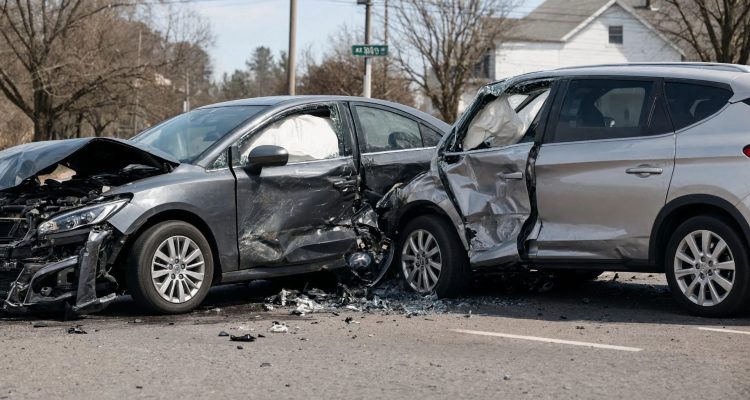
You are lying in a hospital bed. The crash happened six hours ago. The other driver ran a red light. You know it. The witnesses at the scene knew it. And somewhere nearby, a camera recorded the whole thing.
By the time most people think to ask about that footage, it is already gone.
Surveillance footage is one of the most powerful forms of evidence in a personal injury case. It is also one of the most fragile. Understanding why it disappears so quickly, and what has to happen to save it, is something every Colorado driver should know before they ever need it.
How Surveillance Systems Actually Work
Most people imagine surveillance cameras passively recording everything and storing it indefinitely. The reality is almost exactly the opposite. Surveillance systems are designed for operational efficiency, not litigation. They record continuously onto a fixed amount of storage, and when that storage fills up, the oldest footage is automatically overwritten. The camera does not pause. It does not archive. It simply records over what came before.
How quickly that happens depends on the system. Residential doorbell cameras and home security systems may overwrite footage within 24 to 72 hours unless the owner pays for a cloud storage subscription. Commercial systems at businesses, gas stations, and parking lots often retain footage for a week or less before the drive cycles. Apartment complexes frequently run older DVR systems with limited storage that overwrite on an even shorter schedule. Government traffic and intersection cameras in Denver and along Colorado’s state highway system typically retain footage for only a matter of days absent a formal preservation request.
By the time many crash victims have been treated, received a diagnosis, and started thinking about a claim, the footage from the crash is already overwritten.
What a Camera Canvass Looks Like
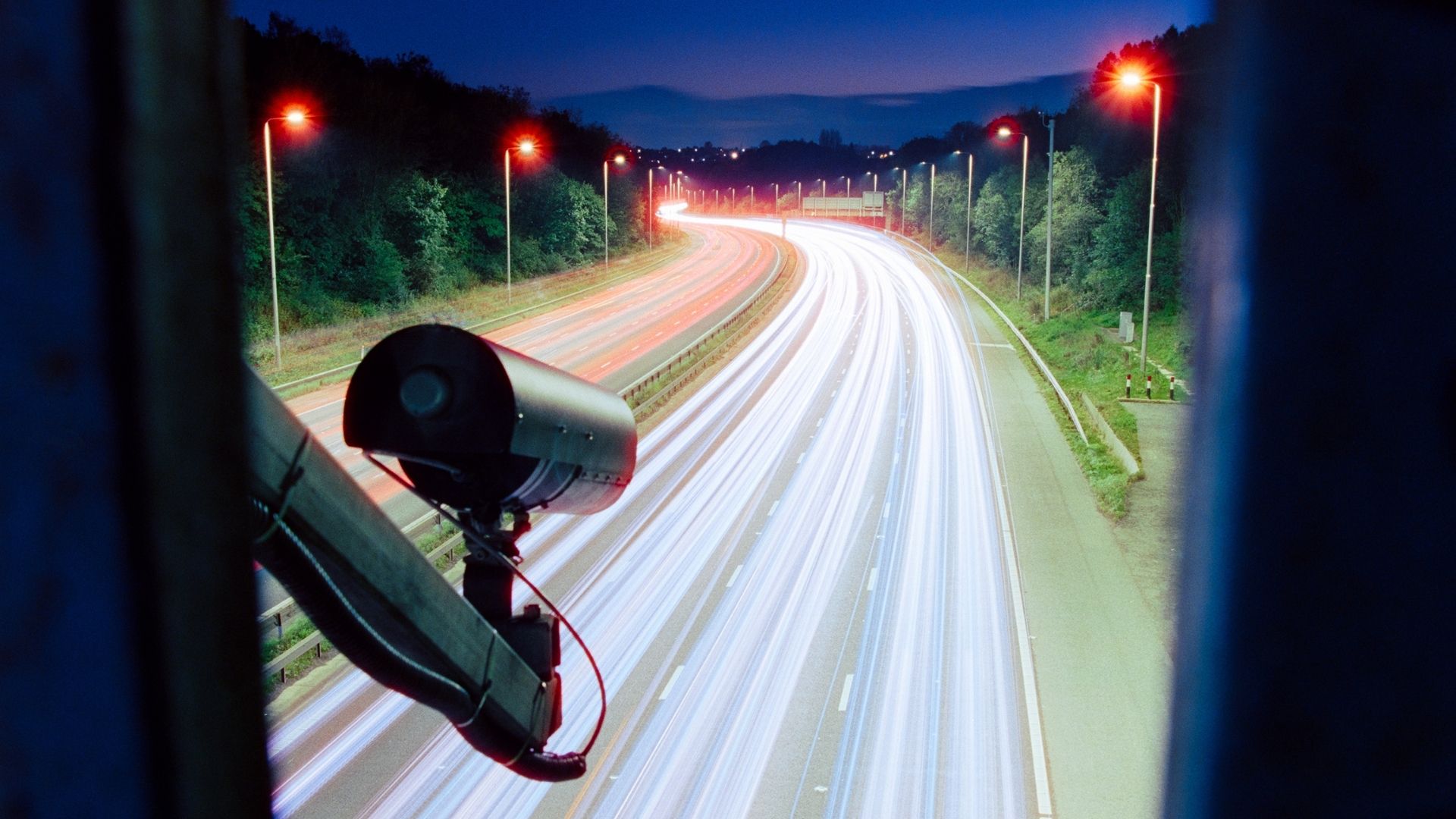
In the first 24 to 72 hours after a serious crash, an experienced personal injury investigator conducts what is called a camera canvass of the crash area. This means physically visiting the scene and identifying every camera within a meaningful radius of the impact point, not just cameras pointed directly at the intersection, but cameras on adjacent businesses, parking structures, traffic signals, ATMs, fast food drive-throughs, ring doorbells on nearby homes, and cameras mounted on passing delivery or rideshare vehicles.
Some of the most valuable footage in crash cases comes from cameras that were not pointed at the collision itself. A camera facing a parking lot across the street may have captured the angle of approach. A business camera down the block may show a vehicle running a prior red light seconds before impact. A dashcam on a passing truck may have recorded everything.
Once cameras are identified, preservation letters must go out immediately, by certified mail and email, demanding that the footage be preserved and not overwritten, exported to external storage, and held for legal proceedings. Those letters need to arrive before the automated deletion cycle runs. Not before trial. Not before a lawsuit is filed. Before the next overwrite cycle. At Bowman Law, seeking out available camera footage is one of the first actions we take.
Why This Cannot Wait
Insurance companies for the at-fault driver begin their own investigation immediately. Their adjusters and investigators are often at the scene within hours, sending their own preservation demands, documenting the roadway, and gathering information while it is still available. At-fault drivers also commonly do not share the whole truth with their insurance. The investigation that works against your claim starts the day the crash happens.
When an injured person waits days or weeks to contact an attorney, that window often closes. Footage that would have proven fault clearly is gone. Witnesses who were willing to give statements have moved on and their memories have faded. Physical evidence at the scene, skid marks, debris patterns, road conditions, has been cleaned up or changed by traffic and weather.
In my experience, camera footage has proved tremendously valuable. Claims that are initially denied due to inconsistent stories suddenly turn in our favor when camera footage confirms our clients’ account of the accident.
Footage can also greatly increase case value, even when liability is not in dispute. Reading the words on a police report is not nearly as powerful as showing the insurance companies actual footage of the accident. Videos and photos capture the full extent of the severity of the accident that a police report cannot.
The best time to preserve evidence is within the first 24 hours. The second best time is right now.
Beyond Surveillance: Other Evidence That Disappears Quickly
Surveillance footage is the most time-sensitive category of crash evidence, but it is not the only one. Event data recorder information from the vehicles involved, commonly called black box data, can record speed, braking, steering input, and seatbelt status in the seconds before impact. If the vehicles are repaired or totaled before that data is downloaded, it may be lost permanently.
911 audio recordings capture what witnesses and involved parties said in real time, before anyone had a chance to develop a narrative or consult with an insurance company. In many Colorado jurisdictions, these recordings are purged on a rolling basis within 30 to 180 days unless a formal preservation request is made.
Cell phone records can establish whether a driver was texting, calling, or using an app in the moments before a crash. Carriers maintain those records, but they are subject to their own retention schedules, and a preservation demand must be made quickly to ensure they are not deleted in the ordinary course of business.
What This Means for Your Claim
If you or someone you love has been seriously injured in a Colorado crash, the single most important thing you can do in the days immediately following is contact an attorney who will start the investigation right away, not when it is convenient, and not after you have finished dealing with insurance paperwork.
While he enjoyed the rigors, and occasional madness, of day-to-day politics, Paul knew early in college that he was destined for a career in law. The lawmaking process was intriguing, but what really interested Paul in the law was the ability to help individuals in so many ways. Paul set out to pursue his legal career, enrolling in Seton Hall University School of Law immediately upon completing undergraduate in 2013. In law school, Paul earned the Samuel J. Heyman fellowship in public service, working in the Office of the Attorney General and in the legal department of the United States Postal Service. Paul also worked in private practice while in law school, including significant time at a plaintiff’s personal injury firm in northern New Jersey.
On Wednesday, September 30, 2026, an 81-year-old man driving a Ford Escape westbound on Highway 34 in Greeley was struck broadside by a GMC 2500 driven by 32-year-old Santos Garcia-Juarez. ...
Around 11 p.m. on Saturday, September 26, 2026, a Weld County Sheriff’s deputy attempted to pull over a suspected drunk driver at 18th Street and Highway 85 in Greeley. The ...
Just before 12:30 p.m. on Saturday, September 12, 2026, Colorado State Patrol responded to a head-on crash on Weld County Road 100, east of Wellington. A 37-year-old woman from Fort ...


 Return to All News & Resources