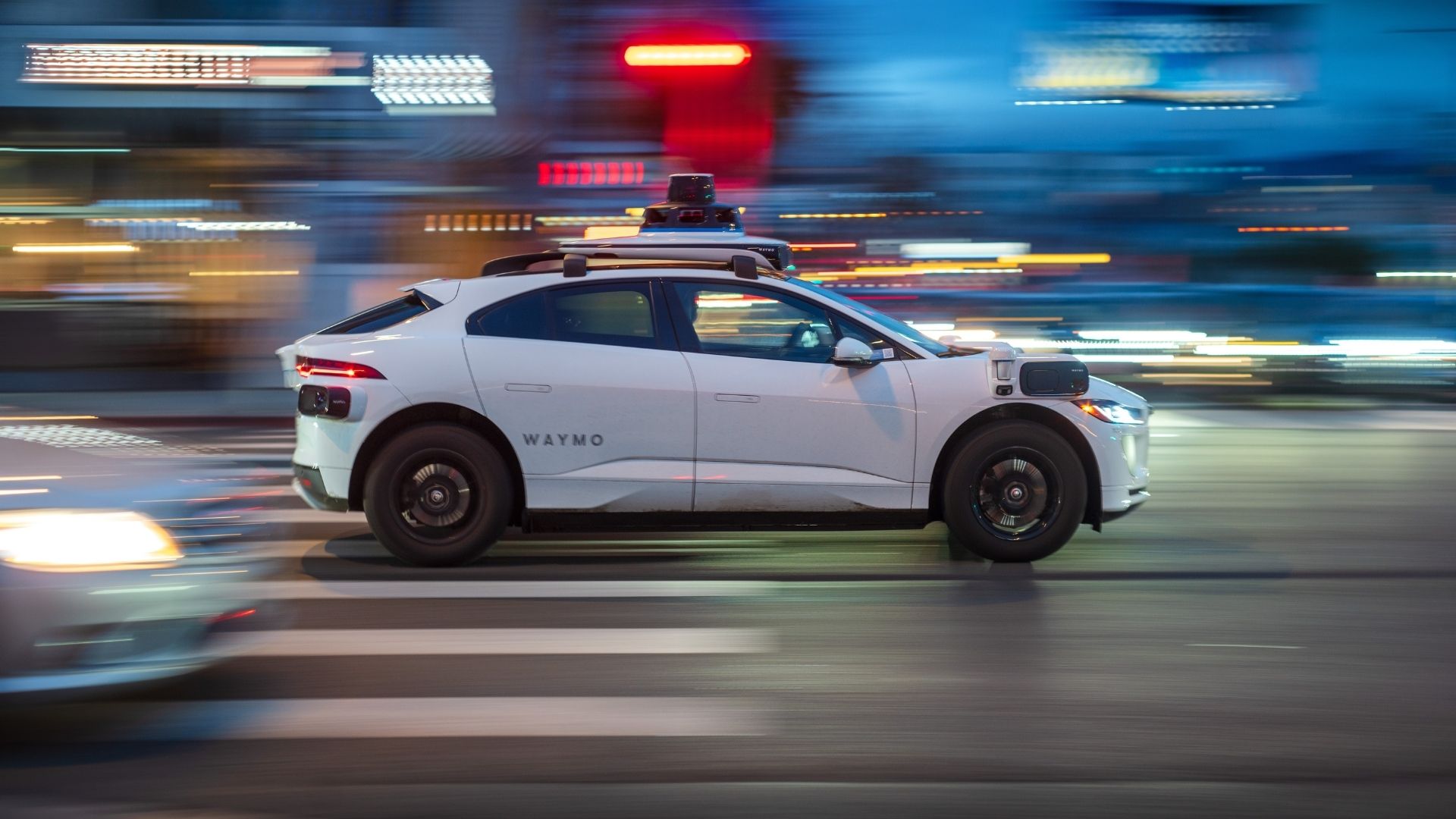
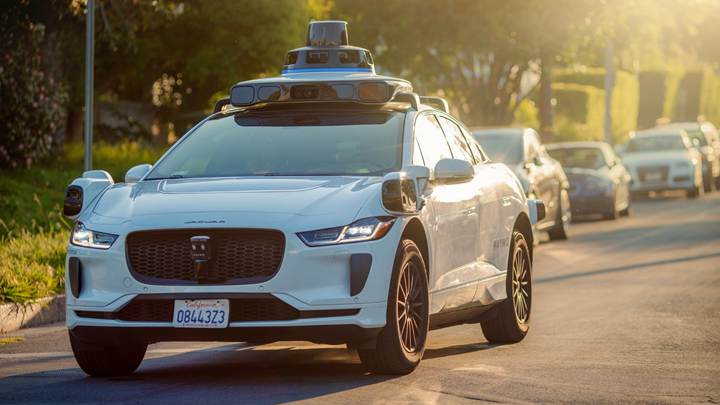
The Waymo cars are already out there. You may have seen one: a white minivan with a sensor tower on the roof, no hands on the wheel, moving through Denver’s streets on its own.
In July 2026, Waymo launched fully driverless vehicles in Denver, making it one of the first cities outside the company’s existing markets to reach this milestone. Right now, Waymo is offering rides to its own employees in neighborhoods like RiNo, Baker, and Cherry Creek. A full public launch is expected later this year.
For most riders, this will be an easy, safe way to get around — but crashes happen. When no human driver is involved, figuring out who is responsible and how to get compensated looks very different from a typical accident.
The question almost no one is asking yet: what happens if one of these cars hits you?
How Waymo Got to Denver
Waymo announced its Denver expansion in September 2025 and began street mapping and data-gathering operations shortly after. The rollout followed a phased approach: first, vehicles with a human safety driver present but not controlling the vehicle. Then, in July 2026, fully driverless employee-only service across select Denver neighborhoods.
Waymo, an autonomous vehicle company owned by Alphabet, will be one of the first driverless ride-hailing services to launch in Colorado, according to the Colorado Sun. Fully autonomous public rides are expected later this year, though the rollout came later than originally anticipated. Westword reported that the company initially said it planned to open to Denver riders early in 2026.
The vehicles operating in Denver are the new Waymo Ojai, a minivan-style robotaxi built by Chinese automaker Geely. According to the Denver Gazette, the Ojai’s sensors are self-cleaning, using heat and engineering to stay clear in bad weather. Waymo cited Colorado’s winters as one reason Denver was selected as a cold-weather test market.
How the Waymo Driver Works
Waymo’s self-driving system runs on three layers: detailed street mapping, a sensor suite of 360-degree cameras, radar, and lidar that builds a real-time picture of the vehicle’s surroundings, and software that uses that data to plan routes, anticipate other road users, and respond to hazards.
Waymo publishes safety data suggesting its vehicles are involved in meaningfully fewer injury-causing crashes than human drivers. That said, no software system is flawless, and the vehicles’ safety record has not been perfect.
Recalls and Known Software Issues
Because software governs Waymo’s vehicles rather than a human driver, a single defect can affect the entire fleet at once. That has happened several times, through voluntary recalls filed with the National Highway Traffic Safety Administration (NHTSA):
• February 2024: A software recall after two vehicles collided with the same towed pickup truck in Phoenix.
• June 2024: A recall of roughly 670 vehicles after an unoccupied Waymo struck a telephone pole in Phoenix.
• May 2025: A recall of 1,212 vehicles after the system repeatedly failed to detect thin or semi-stationary roadway barriers, leading to at least seven low-speed collisions.
• December 2025: A recall of more than 3,000 vehicles after NHTSA opened an investigation into Waymo vehicles passing stopped school buses with stop arms deployed, including at least 19 documented incidents in Austin, Texas.
Each of these was a voluntary recall, meaning Waymo identified the issue and pushed a software fix to its fleet. The pattern matters. It shows that software defects in Waymo’s perception and decision-making systems are a documented, recurring risk, and it creates a paper trail attorneys can point to when a defect is suspected in a specific crash. Westword and Denver7 have both covered these recall patterns in their Denver reporting.
Colorado’s Legal Framework for Autonomous Vehicles
Colorado has been unusually permissive in its approach to autonomous vehicle regulation. Under SB17-213, passed in 2017, the regulation of automated driving systems is a matter of statewide concern, and local authorities are prohibited from setting different standards for these systems than for human drivers. Autonomous driving systems are authorized to operate in Colorado as long as they can conform to every applicable state and federal law.
In plain terms: if a Waymo can follow the rules of the road, it can operate in Colorado. Cities and counties cannot impose their own restrictions on top of state law.
According to CDOT’s autonomous vehicle program, highly autonomous driving systems at SAE Levels 4 and 5 are authorized to operate in Colorado if they meet all applicable state and federal laws. Waymo’s vehicles operate at Level 4, meaning the system handles all driving tasks within a defined operational area without requiring human intervention.
The Colorado legislature considered a bill in 2025 that would have required a human to be present in any commercial vehicle operated by an automated driving system. According to Colorado Newsline, Governor Polis vetoed the measure, stating that allowing it to become law “may undermine innovation of future technologies that could increase road safety.”
Who Can Be Liable When a Waymo Is Involved in a Crash
Liability in a Waymo collision depends heavily on why the crash happened, and it can involve more than one theory at the same time.
Ordinary negligence still applies. If another driver ran a red light, followed too closely, or drove distracted and hit a Waymo, standard Colorado negligence principles apply to that driver, just as they would in any other crash.
Waymo may be liable as the vehicle’s operator. Because there is no human driver inside the car, Waymo effectively stands in the position a driver would normally occupy. Denver7 confirmed that any moving violations in Denver will be handled by the Denver Police Department, and Colorado State Patrol Captain Shane Scovel confirmed Waymo vehicles specifically respond to lights and sirens and will pull over and stop. The company is treated under Colorado law as the responsible operator of the vehicle.
A defect in the hardware or software can support a product liability claim. This is where these cases diverge most sharply from a standard car accident, and where the legal landscape becomes significantly more complex.
Products Liability: The Legal Landscape Most People Don’t Know About
When a crash occurs because the Waymo Driver made a flawed decision, a sensor failed to detect an obstacle, or a software defect caused unexpected behavior, the claim is not really about driver negligence. It is about a defective product. That distinction opens a different body of law with a different set of defendants and a different theory of recovery.
Colorado’s product liability statutes, codified at C.R.S. 13-21-401 et seq., allow an injured person to bring a claim against a manufacturer or seller when a product is defective and that defect causes injury. A defect can take three forms: a manufacturing defect in how a specific unit was built, a design defect in the product’s fundamental architecture, or a failure to warn about known risks. All three can apply to an autonomous vehicle system.
In a Waymo crash involving a suspected software or sensor defect, the defendants in a products liability action could include Waymo as the developer and operator of the driving system, Geely as the manufacturer of the Ojai vehicle platform, the developer of any specific sensor or software component integrated into the system, and a maintenance contractor responsible for the vehicle’s physical upkeep. Each represents a separate source of potential recovery with its own insurance coverage.
These cases are technically demanding. They require access to the vehicle’s sensor logs, lidar data, software version history, and the driving system’s decision record to show what the car saw, what it decided, and why. That evidence exists, but getting it requires moving quickly and knowing how to ask for it.
The precedent for this kind of claim against an autonomous vehicle manufacturer is already being established in the courts. In February 2026, a federal judge upheld a $243 million verdict against Tesla over a fatal 2019 crash involving its Autopilot system. The jury found Tesla 33% liable for the crash, determining that the design and rollout of Autopilot enabled driver inattention.
According to US News, U.S. District Judge Beth Bloom wrote that the evidence at trial “more than supports the jury verdict.” The case is the first U.S. jury verdict holding a vehicle manufacturer liable for a fatal automated driving system crash, and it directly establishes that liability can shift from an individual driver to the company that built and deployed the technology.
Colorado’s modified comparative negligence rule under C.R.S. 13-21-111 means that fault can be apportioned among multiple parties simultaneously. A Waymo crash could involve the company’s liability as operator, its products liability exposure as the system developer, a third-party hardware manufacturer’s exposure, and potentially another driver’s negligence, all at once. Identifying every liable party and pursuing every available theory is the difference between partial and full recovery.
Evidence Preservation Is Especially Difficult in These Cases
In a standard car accident, the scene and the vehicles tell the story. In a Waymo crash, the most critical evidence is electronic: sensor logs, lidar data, camera footage, GPS records, and the software’s second-by-second decision history.
That data exists, and would be definitive. Getting access to it is another matter.
Waymo does not make it easy to obtain this data. The company has demonstrated a consistent pattern of treating its operational data as proprietary.
In 2022, Waymo sued the California DMV specifically to limit what safety-related information falls under public disclosure requirements, arguing that crash data, emergency response protocols, and operational limitations constitute trade secrets. The question at the heart of that case was whether public safety-related data can be shielded from disclosure under trade secret law. Waymo’s position was that it can.
What that means for an injured person in Colorado is that the data from a crash involving a Waymo vehicle is almost certainly held exclusively by Waymo, and the company has both the legal resources and a demonstrated willingness to resist disclosure of that data. Obtaining it through litigation requires formal discovery, preservation demands sent immediately after a crash, and potentially motion practice to compel production.
This is not an impossible obstacle, but it is a significant one. It makes working with an attorney in these cases more critical than in a standard car accident claim, not just to navigate the legal framework, but specifically because of the evidence problem. An attorney who understands autonomous vehicle litigation can send preservation letters to Waymo within hours of a crash, demand that specific data sets be retained before automated deletion cycles run, and file the legal process necessary to compel access before the evidence becomes unavailable.
The window is not forgiving. Waymo’s internal data retention policies govern how long specific logs are kept absent a legal hold. Once that window closes, the most probative evidence of what the vehicle saw and decided in the moments before impact may be gone permanently.
What Colorado’s Existing Law Does and Does Not Cover
Colorado has no statute that specifically addresses autonomous vehicle liability in an injury claim. The 2017 framework authorized the technology and blocked local restrictions, but it did not create a new liability scheme.
That gap means attorneys will litigate these cases under existing negligence and products liability law. The legal theory determines how attorneys build the case and who they target. That depends on whether the crash came from operator negligence, a software defect, a sensor failure, or some combination.
When a government entity plays a role in a crash, Colorado’s Governmental Immunity Act requires the injured person to file written notice within 182 days. That deadline is much shorter than the standard limitations period. Examples include a poorly maintained road, missing signage, or a malfunctioning traffic signal.
What to Do If a Waymo Hits You
After a crash with an autonomous vehicle, most steps are the same as any other crash. A few are unique to this situation.
Document everything independently. Photograph the Waymo vehicle, its sensor array, the license plate, road conditions, and your injuries. Note the exact time. Waymo logs data continuously, and attorneys can match timestamped photos against the vehicle’s own records.
Get medical attention immediately. Do not accept that you are fine because the impact seemed minor. The injury patterns from autonomous vehicle crashes are not categorically different from those in human-caused crashes.
Report the crash to Waymo, but be careful. You can report a collision directly to Waymo by calling 1-844-263-9885, through the Waymo app, or at waymo.com/contact. However, do not give a recorded statement before speaking with an attorney. Waymo will use the details you provide to allocate fault.
Contact an attorney before further communication with Waymo’s insurer. Autonomous vehicle operators like Waymo carry substantial commercial insurance coverage. The company’s legal and insurance teams are sophisticated and will begin building their file immediately.
Demand preservation of the vehicle’s data in writing, as soon as possible. Sensor logs, lidar data, camera footage, and the software’s decision history are the core evidence in these cases. Given Waymo’s resistance to sharing data, sending a formal written preservation demand immediately after a crash is essential. This is one of the most important reasons to work with an attorney from the outset.
Bowman Law Is Watching This Closely
Autonomous vehicle law in Colorado is developing in real time. The technology is operating on Denver streets. The first cases filed here will shape how Colorado handles autonomous vehicle injury claims. Those cases are coming.
Bowman Law, LLC handles car accidents, catastrophic injuries, and complex personal injury cases across Colorado’s Front Range. If you are involved in a crash with an autonomous vehicle, contact us at 720-863-6904 or request a free consultation before the evidence window closes.evidence window closes.
Dustin Gaston
Dustin Gaston has practiced personal injury law in Colorado since 2020, and is passionate about ensuring that his clients receive what they deserve for their injuries. Dustin received his BA from the University of Arkansas - Fort Smith and completed is JD at the University of Arkansas School of Law.
On Wednesday, September 30, 2026, an 81-year-old man driving a Ford Escape westbound on Highway 34 in Greeley was struck broadside by a GMC 2500 driven by 32-year-old Santos Garcia-Juarez. ...
Around 11 p.m. on Saturday, September 26, 2026, a Weld County Sheriff’s deputy attempted to pull over a suspected drunk driver at 18th Street and Highway 85 in Greeley. The ...
Just before 12:30 p.m. on Saturday, September 12, 2026, Colorado State Patrol responded to a head-on crash on Weld County Road 100, east of Wellington. A 37-year-old woman from Fort ...


 Return to All News & Resources